Native American food sovereignty begins with access to quality and traditional foods.
With the seeds he sows, Barry Dana is reconnecting with a farming culture that predates European colonization of North America.
Dana, a farmer and former chief of the Penobscot Nation in Maine, has been steadily working on two goals – to be healthier, and to strengthen his ties with his cultural heritage. In a quest to better his diet, he began to discuss with other farmers and gardeners the best way to eat well.
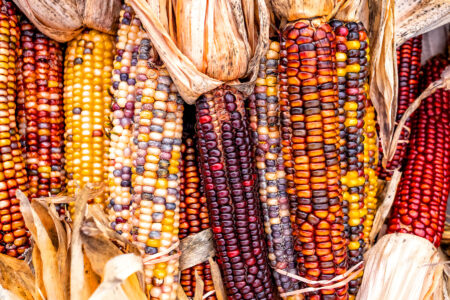
“The conversation just wandered back that maybe the best food is the most traditional food,” Dana says. He soon obtained some heirloom vegetable seed, which predated large-scale European settlements, from an Abenaki tribe in New Hampshire. With a $300 grant, he distributed the seed to five others in the Penobscot community, all of whom are growing in careful conditions to preserve the genetic integrity of the varieties. Dana has been focusing on cultivating corn, squash and pumpkin, considered traditional staples of the Penobscot Nation.
“‘The Three Sisters,’ it’s called,” he says. Indeed, it’s a slight twist on the conventional three sisters garden of corn, squash and beans.
For up-to-date information on this important issue, check out the Native American Food Sovereignty Alliance.
Across the U.S., Native American tribes are undertaking projects to strengthen tribal growing capacity. These projects, both large and small, hold out the possibility of providing better access to healthy food in remote areas, strengthening tribal economies, and preserving Native American cultural traditions.
Strengthening Native American Food Sovereignty
The report “Feeding Ourselves: Food Access, Health Disparities, and the Pathways to Healthy Native American Communities“, prepared by Echo Hawk Consulting, finds that there are many small farming initiatives under way to strengthen Native American food systems, including:
- In Mississippi, the creation of a 100-percent tribally owned brand of garden produce, fruit and herbs called Choctaw Fresh Produce, which sells to local supermarkets as well as offers a Community Supported Agriculture program and Farm to School program.
- In New York, the planting of dozens of raised beds and several community gardens through the Seneca Nation of Indians’ Food Is Our Medicine program.
- In South Dakota, the creation of a 2-acre garden to grow food for snacks and meals served at local youth centers on the Cheyenne River Sioux Tribe Reservation.
Farming on Native American Land
This back-to-the-land movement is not new, according to Janie Hipp, director of the Indigenous Food and Agriculture Initiative, but it has largely gone unnoticed by most of the mainstream media outlets.
Still, Hipp says, the different projects are creating a palpable sense of momentum in the quest to strengthen Native American food systems.
“It’s the most exciting time I’ve seen in 30 years,” she says.
How many of these kinds of programs are happening in Native American communities is hard to say, Hipp says. She’s found that the USDA often undercounts Native American farming activity in agricultural census reports. Also, many Native American groups turn to other U.S. agencies, like the Department of Housing and Urban Development and the Department of Health and Human Services, rather than to the USDA for agricultural grants.
In total, Hipp estimates some 50 million acres of Native American land are used for farming and cattle production. A good chunk of that land is leased to those outside these communities. Even when cultivated by local farmers, too much food leaves Native American communities, she says.
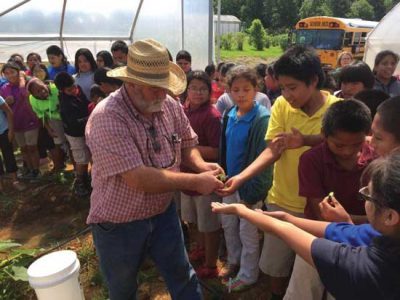
That’s a problem, because many of these communities are located in remote regions with little access to supermarkets or farmers’ markets. Nearly all these communities reside in what the USDA would categorize as food deserts.
The Problem of Food Deserts
As the Feeding Ourselves report highlights, there are only 10 full-service grocery stores within the Navajo Nation, an area that encompasses more than 27,000 square miles. Without access to food markets, many rural Native Americans buy food at local convenience stores and variety stores, which tend to stock highly processed food with long shelf lives.
Partly from this lack of access to fresh food, Native American communities must contend with a host of medical problems – more than 80 percent of Native American adults are overweight, childhood obesity exceeds 50 percent in some Native American communities, and half of all Native American children are expected to develop Type 2 diabetes in their lifetimes. Health advocates believe that access to good food is an integral part of confronting these health problems.
“We’ve got to focus like a laser beam on healthy local foods,” Hipp says.
A New Generation of Farmers
It can feel like a race against time. Clayton Brascoupe, president of the Traditional Native American Farmers Association, says the Native American farming community is graying, much like the farming community in the United States as a whole.
“Whenever I’ve gone to any of our meetings or conferences, most of the farmers are in that age category of 50 and above,” Brascoupe says.
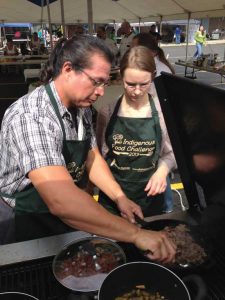
However, there are signs of hope. Brascoupe leads about a half-dozen workshops on small-scale, sustainable agriculture for Native Americans (and some non-Native Americans) who want to get into farming or gardening. Many of the participants who come to the workshops in northern New Mexico are in their 20s or 30s.
“Probably easily 80 percent of the participants are in that age group,” Brascoupe says.
And of that group, about a third of the would-be farmers come from urban areas and are interested in learning how to farm within city limits. This is an important development, since some 70 percent of Native Americans now live in cities, according to U.S. census data.
Brascoupe is hearing success stories of Native American communities creating profitable farming ventures. He’s in contact with a group of Native Americans in Arizona who have pooled together their ancestral land and water rights to create a co-op farm to grow traditional varieties of beans, squash and corn. He also keeps in touch with a group in the Green Bay area of Wisconsin that farms similar crops and maintains large orchards; much of the produce grown is sold to the local Native American communities.
No matter how many projects are being undertaken, there are always more needed, and even the projects now under way can expand in scope. Hipp says one of the biggest hindrances to keeping locally grown food in Native American communities is a lack of infrastructure, including greenhouses, freezers, and, in some cases, steady electricity.
Still, farmers like Barry Dana are buoyed by these small successes. Dana is happy with how his seed project has gone this year, but he has lofty goals that will take a lifetime to accomplish.
“My personal goal is total food sovereignty,” he says.