Follow these seed stories from time travelers of a lost world, impossibly brought to the present by small heroes in their own right.
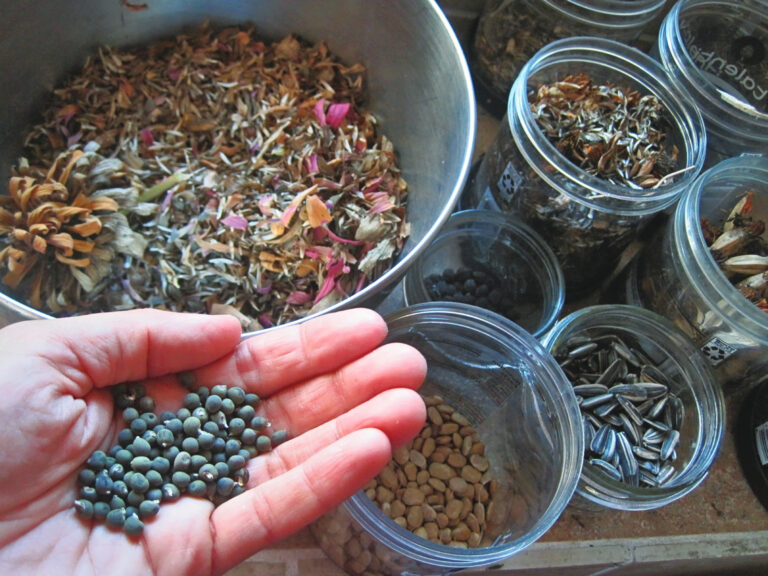
Everyone has that topic that’s close to their heart – the one that makes their eyes light up and, once started, is hard to stop talking about. Seeds are that topic for me. Their promise fascinates me: a tiny hard bit turning into a living thing, year after year. I started saving my own heirloom and open-pollinated seeds over 10 years ago. Yet I never lost that wonder – the delight of holding a handful of jewel-like bean or okra seeds and marveling over them.
There’s more to some seeds than their mere biological function; many carry stories with them. Some of the seeds have traveled across the Atlantic multiple times or have been stewarded by the same family for generations. Some have been rediscovered after centuries, while others teetered on the brink of being lost and were rescued at the last moment by dedicated growers. The lore behind these seeds is made up of human stories, woven with discovery, heritage, and even a bit of humor at times. It was hard to pick from the huge spectrum of seed stories, so I offer this sampling.
‘Nanticoke’ Squash
I wanted to start with this fascinating squash, as it symbolizes the beginning of many things. You see, if you were to plant a handful of ‘Nanticoke’ squash seeds and harvest the resulting fruit, you’d find that every plant produced a different color, size, and shape. That’s because this “cultivar” isn’t actually a cultivar at all – it’s an ancient, unimproved landrace of Cucurbita maxima historically grown by the Nanticoke (or Kuskarawaok) nation.
What we now call a “winter squash” or “pumpkin” is one of four squash species: C. maxima, C. pepo, C. moschata, or C. argyrosperma. These plants originated in Central and South America, where ancient farmers domesticated, harvested, and traded them. Though the Nanticoke nation traditionally lived in what’s called Delaware and Maryland, the C. maxima squash they grew had once, incredibly, come from Argentina.
Due to C. maxima‘s amazing, long-keeping qualities (we’re talking 18 months or more for some varieties!), squashes from the New World made their shipborne way to the Old World during the Columbian exchange and were grown and selected by a whole new continent’s worth of gardeners. It’s believed that some beloved varieties, such as France’s ‘Galeux d’Eysines’ and ‘Rouge Vif d’Etampes,’ as well as Japan’s kabocha and ‘Hokkaido’ squashes, owe their existence to ‘Nanticoke’ ancestors.
This old landrace represents what I consider a “pre-fracturing” of the species. In essence, the ‘Nanticoke’ squash is the wolf, and the many squashes derived from it are the golden retrievers, poodles, and black labs. The fact that it still exists in its unrefined landrace form is a fascinating look into both past and future. Growers who welcome it can begin their own selection processes and create their own unique winter squash.
Many thanks to Nate Kleinman for introducing me to this squash and making it available to growers through the Experimental Farm Network.
‘Lillibridge (Kettle Family)’ Runner Bean
When it comes to interesting seed stories, you need look no further than the world of beans. These easy-to-save plants produce a dazzling array of colors and shapes and don’t require the huge isolation distances that corn and squash do, meaning one person could grow dozens of varieties and still maintain seed purity. Probably no one knows this better than folks like John Coykendall and John Withee, two bean collectors from Tennessee and Massachusetts, respectively. Their impressive collections of hundreds upon hundreds of beans contain family varieties that are (or were) firmly rooted in specific communities and regions.
The problem with bean collection is that it’s not a permanent preservation. For those gem-like seeds to endure, they must be routinely grown out to produce fresh seeds. Otherwise, time robs the seeds of their viability, and they’re lost permanently.
Such was (almost) the case with several packets of rare ‘Lillibridge (Kettle Family)’ runner bean seeds that Withee shared with Seed Savers Exchange (SSE) back in 1981. The seeds – potentially the only collection left in existence – sat in storage for decades. When SSE staff decided to try growing them out again in 2016, their test yielded a disappointing 0 percent germination. Total failure. There seemed to be no life left.
Undeterred, they planted as many seeds as they could and somehow ended up with four sprouts. From four plants, 46 seeds were produced. And from those purple-and-black-streaked seeds, the runner bean variety was resurrected from the dusty demise that has taken many other worthy varieties in the modern day.
Thanks to Meredith Burks of Seed Savers Exchange for sharing the story of these nearly lost seeds (and many more like them). Selections from both Coykendall and Withee’s collections (including the ‘Lillibridge (Kettle Family)’ runner) are readily available there.
‘Peter’ Pepper
Freud might’ve had a field day with these peppers. If you look one up online, you’ll probably agree that this rare cultivar’s fruits have a particularly specific anatomical resemblance that’s impossible not to see. Sure, the pepper has a good balance of heat and flavor that’s a little spicier than a jalapeño, but we can assume that’s not the main reason many people grow this pepper. Now, the reason I’ve included this ridiculously phallic cultivar in my list is that its existence is a fascinating story in itself.
I couldn’t find records of any seed company selling this pepper until the late 1990s, assuredly because of its “indecent” appearance. Its origins are cloudy – probably near Texas. I found records of famed chile-appreciator Frank X. Tolbert’s Dallas newspaper column featuring the unusual chile willy, but little else. The best part: The only way this crude capsicum survived is through gardeners with a sense of humor. They grew it, saved its seeds, and passed them along to keep them alive, all under the radar. Did someone gift a start to a prudish gardener, giggling in anticipation for the day fruits formed? Has it been passed along in goofy seed trades with a wink and a nod? How many times did snail mail carry seeds from one garden to another, keeping the private pepper alive until today?
However it came about, it’s here, and it’s given us a snicker. That said, reputable sellers of ‘Peter’ pepper seeds are pretty scarce online. If you look hard enough, you’ll find seeds for your own X-rated gardening and keep some absurdity in your pepper plot.
‘Judean’ Date
Once upon a time, a ‘Judean’ date fruit was harvested from one of the many trees in ancient Judea. It was full of an “extremely sweet sort of wine-like flavor like that of honey,” as Pliny the Elder wrote. The fruit was plucked by hand and probably sold at a market. It was packed into a basket and destined to be eaten like all the other fruit harvested alongside it. But this particular fruit was fated for something different. It became part of the food stores in the ancient stronghold of Masada, where Jewish rebels kept it during their last stand in the first Roman-Jewish War. Then, though the date couldn’t hear, the clamor of war and screaming and dying suddenly went quiet. It sat silently in a razed fortress as years passed. More wars and crusades followed. Jerusalem was destroyed, and with it, all the trees that had produced fruit like this particular date were destroyed too.
After 2,000 years, you’d think that a forgotten fruit of an extinct cultivar lost in the ruins of a fortress would just become dust. But you’d be wrong. It was found during an archaeological excavation. In 2008, researchers Sarah Sallon and Elaine Solowey attempted to germinate the seed – seemingly just another cataloged archaeological finding – to the bemusement of their colleagues.
To everyone’s shock, it grew.
The impossible seedling was the spark that sent Sallon’s team searching for more ancient date pits at additional archaeological sites, including Qumran (the site where the Dead Sea Scrolls were discovered). They’ve now produced seven trees – some of which are beginning to bear fruit – time travelers from a lost world, impossibly brought to the present, and ever declaring the amazing nature of seeds.
‘Grandma Gina’ Bean
You’ve likely never heard of this bean, seen it in a glossy seed catalog, or found it online. It’s special to me for that reason. Not every heirloom or open-pollinated seed works for a seed company. Some have endured simply because people grew and shared them.
And that’s how I originally got my ‘Grandma Gina’ seeds: in a seed trade with another gardener. She’d mentioned that she didn’t have time or space to grow them anymore, so she sent some my way. They were unexpectedly large, onyx-shining things, tucked into a handwritten envelope. When I turned to the internet to see what they’d look like, I unexpectedly found nothing. Intrigued, I planted the beans and became awestruck by the huge, ‘Roma’-style pods they produced. Their huge size made seed saving difficult, but I saved as many as I could so I could grow them again.
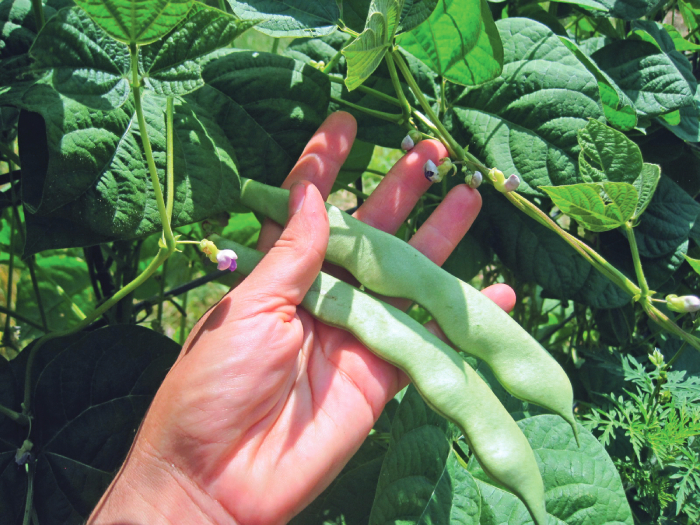
Doubly intrigued, I put on my detective hat and tried to figure out the seed’s story. It took a few months, and a lot of help from Mary Menniti of the Italian Garden Project, but I eventually got in touch with Grandma Gina’s 70-year-old granddaughter over in Pittsburgh, Pennsylvania. She told me that her grandparents had immigrated from a small farming community in Palagano, Italy, in 1921 and had brought the beans with them. They grew them every year until Grandma Gina passed away. While going through their grandmother’s kitchen, the granddaughters had found the beans and decided to keep growing them and sharing them. Because of their generosity, their shared beans passed through several sets of hands until they finally arrived in my own.
I’m now honored to be part of the “unbroken chain of seed savers” (as seed saver Suzanne Ashworth termed it) that has brought these beans on several trips across the Atlantic, from the gardens of Indigenous farmers to those of Italian immigrants and now to the little off-grid Ozark homestead that I call home.
Starting the Seed
This handful of stories doesn’t even begin to scratch the surface of the unusual, unexpected, and intriguing tales held inside the seeds we grow. If you’re hungry for more, you might uncover stories about tomatoes that traveled on the Underground Railroad (‘Aunt Lou’s Underground Railroad’ tomato); corn that defies our understanding of the progression of history (‘Japanese Black Sticky’ corn); and collard greens that aren’t a single type, but a joyful genetic mix that gives a new generation of gardeners the ability to refine their own varieties (‘Utopian Ultracross’ collards).
Try perusing some of the curated collections I studied while writing this article. You can find fascinating stories on the Seed Savers Exchange and Baker Creek Seeds’ YouTube channels, as well as fascinating stories hidden in the seed catalog of the Experimental Farm Network. But don’t limit yourself to the internet – some of the best, yet-untold stories may be hidden within gardeners and elders in your own community, if you just take the time to ask and listen.
Most of all, remember that the world of seed stories isn’t complete. Though older, heirloom seeds are often credited with holding history, the story-worthy seeds aren’t limited to them alone. For those growing and saving both heirloom and open-pollinated seeds now, the stories are still being written.
And if you’re the one carefully growing, harvesting, collecting, replanting, and sharing seeds, you’ve become one of the storytellers.
Wren Everett and her husband quit their teaching jobs in the city and moved back to the land on 12 acres in the Ozarks. There, they’re happily learning to live as modern peasants, off-grid and as self-sufficiently as possible.
Originally published in the July/August 2026 issue of Grit magazine and regularly vetted for accuracy.