Learn how to change perspective when mayhem starts to take over on the family farm; a new perspective is in order.
Life is messy.
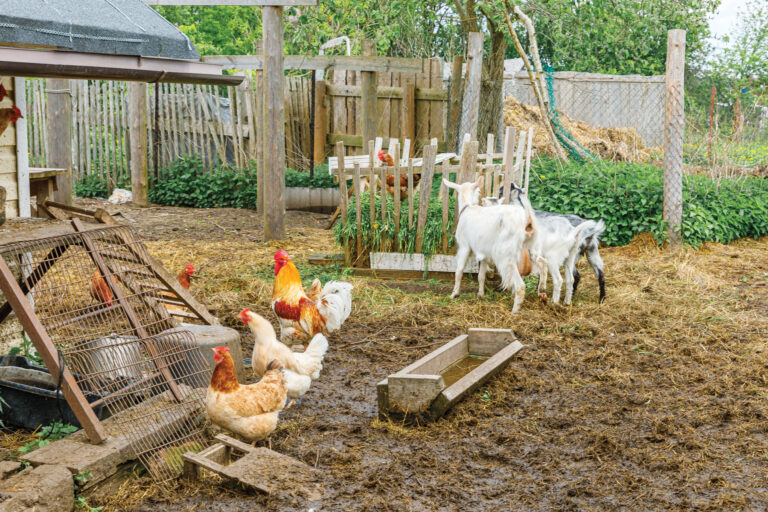
Plans fail, spills happen, things go awry. In general, chaos is apt to reign. The second law of thermodynamics, that processes move toward disorder over time, confirms this scientifically, and anyone who’s lived for more than about two minutes can affirm it from life experience. It’s inevitable, and no matter what we might do to prevent it, something else invariably goes wrong. The more contributors there are, the higher the probability that chaos will invade – and frequently. Particularly with six boys, 60 chickens, 12 geese, 15 turkeys, 24 ducks, 30 pigs, 40 cows, and whatever new experimental creature my husband might be testing. Denying or fighting this reality will leave you angry, bitter, frustrated, and unsatisfied. I’ve discovered over the years that the only thing to do is to humbly accept the chaos as a fact of life; after all, the worst of it is confined to summer.
Once you realize that acceptance is the only possible means of survival, you’ll still have several options for adaptive attitudes. There’s the cynical one, where you anticipate disaster wherever you go and therefore can’t be disappointed when you’re proved right. There’s the lighthearted approach, which cleverly reverses the damage by making a joke out of the joke life has played on you. Or, my preferred strategy, squeezing dignity out of the shame, which is equivalent to making pink lemonade out of lemons and a bloody finger. Requiring creativity and resourcefulness, this approach seems to be the best long-term option and most conducive to the continual pandemonium of homesteading.
So, when you live in a perpetually crowded, decrepit farmhouse, in general disarray as well as disrepair, the thing to do is dig up some dignity. What I needed was a way to find the positives and enhance them, so I started with a list: 1. We had a roof over our heads; 2. The floor, though dirty, wasn’t actually dirt; and 3. It was a bit less drafty than living in the barn. From there, it was just a matter of shifting my state of mind from looking down my nose at my home, to looking at it with a rosy sheen. That’s when I appealed to the Victorians and their aristocratic manner of description. The solution became simple. “Small” became “cozy,” “old” became “quaint,” “messy” became “comfortable,” and voila! We created dignity. It’s all in the words you use.
Relishing the elegant “Wyndencroft Cottage” sign outside our door, I found it was easier to imagine our life as idyllic. It’s all about appearances, perception, and image. Psychologically, to a small extent, things become what you think they are. And I’ll take whatever small improvement I can get. If we could appear dignified, we might begin to think dignified thoughts, and maybe, just maybe, some chaos would take care of itself. I was essentially dressing our house for success.
The first tantalizing taste of self-respect was inspired using this philosophy more broadly. Muffins that don’t rise were served with enough whipped cream to make them look sophisticated. And how could they taste bad, covered with whipped cream? Unidentifiable cuts of meat, an inevitable result of our amateur home butchering, became “perry steaks.” The stain-speckled fashion we used to wear daily became the “distressed fabric look.” The weeds we collected became bouquets of wildflowers. And the unpainted barns flaunted the much-coveted weathered-wood style and looked especially chic in black and white.
Of course, we also had the justification that we were farming naturally and there was a higher good we were achieving in connecting with history and preserving the environment. Doing a good that you can’t always see might be noble, but frankly, some days it wears a little thin. Amid a mess, some sort of tangible goodness is needed just to maintain sanity. When you’re short on time, resources, and real solutions, a new perspective is your answer. Psychological strategies win the day. Rename your troubles as something else, and there’s a possibility they might grow easier to bear. If nothing else, at least you’re fighting the despondency that’s certain to result in giving in to the inevitable chaos – at least until the end of summer.
Originally published in the January/February 2026 issue of Grit magazine and regularly vetted for accuracy.