How is knowledge passed from one generation to the next? It’s the small things that matter most, especially with children.
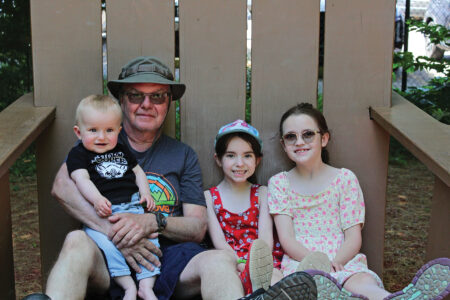
I’m a big proponent of the concept of passing knowledge on. Knowledge and skills aren’t things to be hoarded and stored away. They’re meant to be shared. None of us was born knowing all the things we do. Someone had to show and teach us. My Native ancestors firmly believed in the need to pass our knowledge down to the next generation, and this is something I try to do in the articles I write and the programs I do on HCTV. Becoming a grandfather drove home the need to pass on the skills I have, the skills needed to protect the environment and sustain ourselves. This is especially true in the absurd world we live in now. To survive, we all need to remember that we’re part of a big circle, and we need to respect all beings within that circle.
Every chance I get, I try to show someone something different, and usually, it’s my grandchildren – Sophia, Emma, and Noah – who get the lessons. While nobody is too old to learn something new, most adults are so set in their ways that they don’t want to listen. Children are like sponges and take everything in. This makes them the perfect candidates for my “words of wisdom.”
Sophia, who’s now 11, was the first to fall under Grandpa’s spell. One of my first gifts to her, even before she could walk, was a dream catcher made by a Pawnee Elder, and things just went on from there. It was Sophia who rode in my sled, along with my dog Chipper, to collect maple sap. Sophia could barely walk when we started spending winter days looking for animal tracks in the snow.
One day when Sophia was little, she’d been out for a walk with her babysitter when she found a piece of weather-beaten glass. Thinking it was some kind of “gem” (and it would be to a child), she picked it up and brought it home. She asked the babysitter about it, but Sophia wouldn’t believe that it was just a simple piece of glass. She decided she wanted to call me. The babysitter asked why, and Sophia simply answered, “Because Grandpa knows everything.” Ask Sophia today what she wants to be, and she’ll tell you that she wants to be a veterinarian, because she wants to help animals.
Emma, who’s now 7, is the one who’s the most mechanically inclined. When she was small, we sat at the kitchen table and made an airplane using a recycled paper-towel tube and some scrap paper. She loves the outdoors, and she’s the one who really likes the hands-on aspect of it. She wants to own a big farm when she grows up and have all of us adults working on it.
Noah, who’s 18 months, is still a bit young for hikes in the woods and fishing trips, but he loves his Grandpa. He gets excited when I visit and wants to “talk” to me whenever I call. Just because he’s small, that doesn’t stop me from getting him involved. We go to state fairs where he can see the animals, and we sit on the deck of my daughter’s home to watch the birds at the feeder. On my last visit, I took him into the woods and started talking to him about the trees, showing him the leaves and allowing him to touch them. He even found a stick that he wanted to bring home. It won’t be long before we’ll visit the local pond or stream to catch frogs, look for snakes, and even do some fishing. I already have a rod and reel waiting for him.
I received a call from my daughter about six years ago that made me laugh, and one I’ll remember forever. Sophia and Emma had heard an owl hoot in the wee morning hours. Of course, they asked their mother what kind of owl it was, and, of course, she had no clue. Sophia then suggested that they call me, because she just knew that I would know. My daughter suggested that they pull up the National Audubon Society site instead and see if they could find out before they called me. They were able to identify the owl as a barred owl, but both girls were unconvinced and said they should call me anyway, just to be sure. I’m always getting calls from the girls asking me about the hawks they’ve seen, a snapping turtle they found, or just to tell me about the deer and turkeys they saw in the yard.
Of course, Grandpa doesn’t know everything, though sometimes I like to think I do. Sophia and Emma like to think that I do too, and that’s all that matters. My daughter likes to say, “Grandpa knows a lot, and what he doesn’t know, he makes up.”
Even now, I take the girls out to look for animal tracks in winter. We often discuss what we see and try to identify the animal that made it. We discuss how each animal leaves a different track, and if they pay attention, they can learn a great deal about the animal that left it. When we come upon a group of tracks in the same area, we try to learn the complete story about what happened. Wing marks in the snow and small tufts of fur may mean an owl caught a mouse earlier in the morning; bobcat and rabbit tracks together may tell the story of a chase; and fox and coyote tracks look like dog tracks, but they’re different.
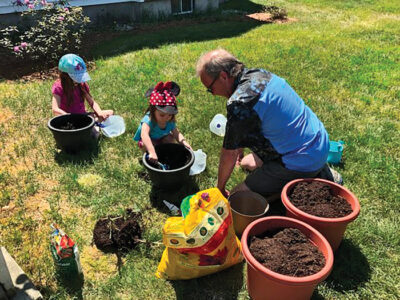
Once the snow is gone, we work in the garden, planting seeds as soon as the soil warms. We spent one spring day building a raised-bed garden in their yard and putting together container gardens. Of course, Emma was in there, handing me the tools I needed, while Sophia picked the seeds they wanted to plant. Both girls have proven themselves to be great gardeners, being successful with tomatoes, cucumbers, carrots, and strawberries (though Emma tends to eat them as fast as she can pick them).
Both of the girls love to go fishing, but anyone who’s gone fishing with kids knows fishing trips are about much more. Sometimes it’s about watching the ducks (where I teach them how to identify them). Sometimes it’s about catching frogs or identifying other things in the environment. Sometimes we spend more time picking up other people’s trash and then talk about the importance of keeping the water and land clean. Sometimes we even catch a fish or two.
One time, while I was fishing with the girls, Emma yelled over to me to say that she had something on the end of the line. I couldn’t see any action, but she insisted, so we reeled her line in. Come to find out she had a freshwater mussel on the other end. We all had a good laugh, and I use this as a learning moment for both of the girls.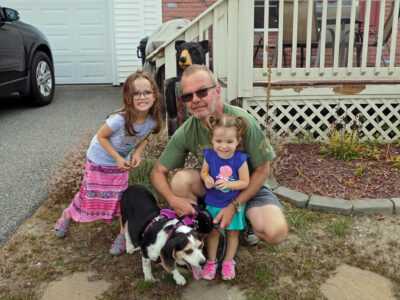
I remember, before Emma was born, taking Sophia for a walk across the field and into the woods near her home. As we walked, I pointed out blackberry, raspberry, and blueberry patches that we’d come back to when the berries were out. This conversation led to how bears and other animals also eat the berries. I explained that it was very important to leave some of the berries so the animals would have something to eat.
As we walked, we came to some poison ivy. I showed Sophia what it looked like, how to identify it, and how important it was to stay away from it. We discussed the different trees and how you could identify them by their leaves and from their bark. How much sank in is anyone’s guess, but I know some of it did, and that’s a start.
The trail eventually brought us to a small brook that fed into a small pond. I showed Sophia the different grasses and other plants that grow along the edge of the pond, and how they were important to all the animals and birds. It was then that Sophia saw her first muskrat collecting grasses and taking them back to its den. Together, we spent several minutes watching the muskrat go about its daily business.
While Grandpa clearly doesn’t know everything, it’s a good feeling knowing that two little girls and their brother think so. There will come a time when I’ll no longer be here to answer their questions, so I need to make the best of the time now. When the time comes, I hope they’ll tell their kids about how Grandpa passed those lessons on, and that they’ll know and know Grandpa will always be there , even if he can’t be reached by phone.
Dana Benner has been writing about all aspects of the outdoors, self-reliance, and the environment for over 35 years. His work appears in numerous publications, including Mother Earth News, Grit, Countryside & Small Stock Journal, and more. He also does outdoor-related programs on HCTV in Hudson, New Hampshire.