We’d been living in Oregon for several years after I’d accepted a teaching position at Lewis & Clark College, while my wife found a nursing job in Portland and our son attended junior high. We purchased a hilltop home on 4.5 acres with stunning views of both Mount St. Helens and Mount Hood. As time passed, my wife developed a passion for orchids, but the winter temperatures in Oregon were about 5 degrees F too cool for outdoor growth.
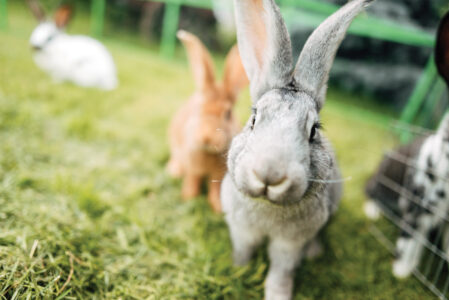
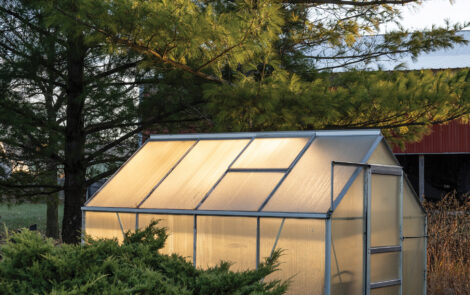
To solve this problem, I found a used 12-by-9-foot fiberglass greenhouse and placed it on our cement side porch. While researching how to keep the greenhouse warm enough during the cooler months, I discovered an unusual solution: rabbits. Since rabbits have a body temperature of 102 degrees and release warmth through their ears, we calculated that 4 to 8 rabbits could provide the extra heat needed for the orchids. What a concept!
Finding those rabbits proved more challenging than expected. After several dead ends, we piled into my wife’s 1968 VW Bug and set off toward Mount Hood on a beautiful fall day. Our 13-year-old son sat in the back seat, eyes bright with excitement. These family outings had become our sanctuary – precious moments away from the busy schedules that often pulled us in different directions.
Driving along a country road, we spotted a small sign: Rabbits for Sale. Following the directions, we turned onto a dirt road that led to three medium-sized barns and a two-story older farmhouse. An older gentleman appeared at the farmhouse door as we pulled up.
“How may I help you?” he called out when I rolled down my window.
“Saw your sign about rabbits for sale,” I replied.
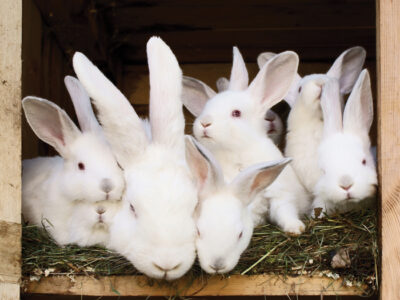
The farmer welcomed me warmly, took my arm, and led me toward the first barn. Inside, rabbit cages were stacked three and four high in rows. As we walked through, I noticed he was naming and talking to each rabbit individually, and I asked if he knew every name. He smiled. We moved through a hallway to the second barn, again filled floor to ceiling with cages, rabbits, and watering systems. “Well,” I said, feeling overwhelmed, “I’ve seen enough.”
“No, not yet,” he insisted. “You need to see my dozen bucks responsible for almost all the rabbits you’ve seen.”
Ten minutes later, we returned to our car. The farmer looked at me thoughtfully. “Have you ever butchered a rabbit? Dressed it? I expect you can handle the rabbits. Be happy to take you behind the barn and show you.”
“No,” I said, “It’ll be fine. How much do you want for eight female rabbits?” I asked him directly.
“Eight?” He seemed surprised. “I’m selling the entire colony! I may keep a few, but I’ll make you a good deal.”
“Make me a good deal on eight rabbits, please,” I insisted.
“Tell me why you’re so opposed to my herd?” he questioned.
I explained that only I came for eight rabbits and didn’t have the feed or infrastructure for more. The farmer interrupted, “What if I included all the cages, watering systems, and feed bags piled up inside the barn?”
“Not possible,” I replied. “Even if I accepted your offer, I still have no barn, and the price would be out of my reach.”
The farmer paused, glanced at the VW with my wife and son inside, and asked them to join us. As they approached, the farmer addressed my son, “Your dad tells me you’re 13. Do you see that third building behind me?” My son nodded. “What if you and your dad could take that building down and rebuild it on your property at home? Would you be interested in helping your dad?”
My son’s eyes widened at the prospect. I recognized that look – the same one he’d had when we built his treehouse the previous summer, a mixture of awe and determination. He reached for my hand, something he hadn’t done in public for nearly a year, and squeezed it. In that simple gesture, I felt his silent plea. This wasn’t just about rabbits anymore but about building something together.
Seeing the gleam in both my wife’s and son’s eyes, I asked them to return to the car. Once they had, I turned to the farmer, ready to counter his proposal. The farmer had already taken out a notebook and pencil. He handed it to me and said, “Write down what you would consider a fair price for all the rabbits, cages, watering systems, feed bags – about 20 of them – including the third barn. Don’t be shy. I’ll turn around and give you a moment.”
I consulted with my family for a short time, then returned to the farmer. I wrote down a deliberately low amount – $450 – hoping to end our discussions. The farmer studied the figure, raised his eyebrows, drew a line through my offer, and wrote his counter. Folding the paper in half, he reminded me of everything included in his revised amount.
I couldn’t believe my eyes when I saw what he’d written: $200 for everything! I quickly signaled to my wife and son to rejoin us and bring a check!
The next three months flew by as we prepared for our rabbit adventure. We selected a secluded area a short distance from the house, mostly hidden from the road, driveway, windows, and backyard patio. Next, we had to coordinate schedules around my university teaching, my wife’s hospital duties, our son’s school and paper route, and several family outings to dismantle the farmer’s barn, transport the materials to our home, and rebuild it before moving approximately 1,500 rabbits, cages, and equipment.
What initially seemed like an insurmountable task became a joyful family project. Week after week, we made progress and found time to laugh and help each other through difficult tasks. Tearing down the old barn took three weeks. Those summer evenings became touchstones in our family story. We’d work until sunset painted Mount Hood in shades of pink and orange, our hands calloused but our hearts full. At dinner, conversation centered around rabbit names, cage designs, and feed mixtures – topics that now united us in a shared vision.
We converted the barn into a pole structure with enough room for stacked cages inside and outside, with large overhangs to protect the rabbits from weather changes. I noticed how much our son enjoyed the carpentry – climbing up to attach the waterproof roof, constantly smiling, singing, and embracing the hard work. My wife and I marveled at our son’s transformation that summer. The boy who’d been glued to video games and reluctant to engage in family activities now rose before dawn to check on the progress of “his” rabbits’ new home. He created a naming system for our breeding stock – all females named after flowers, males after famous explorers. His compassion extended beyond names; he developed an uncanny ability to detect when a mother rabbit was nearing delivery and would sit patiently nearby, watching for the first signs of life.
Finally, we needed to transport everything else 75 miles in mid-July. College students and friends volunteered to help load and unload rabbits and equipment. With a rented flatbed truck, it quickly became apparent that we’d need at least three trips. We completed one trip on Friday and three more on Saturday, leaving everything in our backyard near the newly converted pole barn. It took our family an entire week to install everything and establish daily routines.
Initially the most hesitant about the endeavor, my wife became our recordkeeper. Her nursing precision was perfect for tracking breeding cycles, weight gains, and health observations. She developed a special touch with the weakest baby rabbits, crafting tiny feeding tubes and setting her alarm to feed them. “Every life matters,” she’d say softly, cradling a tiny bundle of fur in her palm.
Ironically, the greenhouse that was supposed to house her beloved orchids gradually filled with more rabbit cages as our operation expanded. The warmth generated by our growing rabbit population would’ve been perfect for tropical plants, but no room was available. My wife’s orchid dream remained deferred. Sometimes, I’d catch her looking wistfully at the greenhouse, now humming with rabbit activity instead of blooming with exotic flowers. “Maybe someday,” she’d say with a gentle smile, never complaining about how our modest heating solution had grown into something that consumed our lives.
Our last task was locating a meat processor in Oregon. We discovered that California had a processing company that utilized every part of the rabbit for different purposes. They sent a truck up Highway 5, stopping at various rest areas between California and Washington every other week. We registered with them and learned about their payment system.
In our green VW, with the front passenger seat and back bench removed, we loaded five cages with rabbits weighing 4.5 to 5.25 pounds each, which paid about $4.50 per pound. At the appointed rest stop, we waited our turn, observing how the truck driver interacted with other rabbit sellers. Most arrived in station wagons or pickups with no more than five or six rabbits. Our first trip included 32 rabbits, surprising the driver, and we gradually improved our methods until we could safely transport up to 180 rabbits on our bimonthly trips.
We never lost sight of the business aspect of our venture, but we also never hardened our hearts. Each rabbit received tender care until the end. Our son insisted we thank God for their contribution to our family. This ritual initially made me uncomfortable, but eventually felt proper and necessary. We rarely ate rabbit meat ourselves, especially after my first attempt at cooking it when our son declared he would never eat them again. It became a valuable lesson in the circle of life – one I hadn’t expected to teach through raising rabbits, but perhaps one of the most important.
A little over a year later, I was offered a teaching position in Texas. Along with selling our home, I needed to find a buyer for the rabbits. We refreshed the barn and reduced the population to 1,000 female rabbits and 14 bucks that serviced the herd. We placed advertisements everywhere within a 25-mile radius and started receiving calls from various buyers, but no one inquired about purchasing the entire herd.
Then one day, we received an unusual call asking to speak to the rabbit owners who met the processing trucks on Highway 5. When I answered, the caller explained, “We’re contacting all people who’ve been providing rabbits this past year to let them know we’re proposing to open a rabbit-processing plant in Oregon. We want your ideas and suggestions about the plant’s location, size, and other relevant details.”
“Why me? What could I possibly suggest?” I asked, surprised.
“Our records indicate that you’re the largest independent rabbit producer in Oregon. Your ideas would be most valued.”
After explaining our plans to sell and move to Texas, the caller understood and asked if we would pass their contact information to the new buyer. He ended the call by thanking us for our contribution to growing Oregon’s rabbit industry.
The news both surprised and saddened us. At dinner that night, our son pushed his food around his plate. “I didn’t know we were the biggest,” he said quietly. “Doesn’t that mean we should stay?”
My wife reached across the table and took his hand. “Sometimes life takes unexpected turns, but think about what we’ve built together. That doesn’t disappear just because we move.” She was right – the rabbits had given us more than warmth for her greenhouse; they had given us strength and unity as a family that would travel with us to Texas and beyond.
“And maybe in Texas,” I added, catching my wife’s eye, “we can finally get those orchids you’ve been wanting.” She smiled, but we both knew that what had started as a simple heating solution had blossomed into something much more significant, leaving little room for her original passion.
About a week later, a man drove up our long driveway. “How can I help you?” I inquired as I met him in the drive.
“I’m considering buying at least 100 rabbits every month,” he responded.
“Well, come with me, and I’ll show you the rabbits for sale.”
As we entered the pole barn, I talked to each rabbit by name, stopping to give details or explain our breeding rotation and recordkeeping system that helped us track rabbits until they were sent to market. After touring the facility, my son and I walked with the stranger back toward his car. The man expressed interest but said he could only purchase 100 rabbits at a time.
“I’ll give you a wonderful price on the entire herd. You won’t find a better deal,” I offered. “What are your concerns?” He listed several issues – no cages, no watering or feeding system, and no connections for selling the rabbits. I quickly addressed each concern, mentioning what the old farmer had told me and adding information about the planned processing plant in Oregon.
I handed the man a pad and pencil, asking him to write a price he could accept. After hesitating briefly, he wrote down a figure. Taking the paper and studying it momentarily, I asked to borrow his pen. I crossed out his number and countered with half his offer.
“Are you sure?” he asked in disbelief. “You’ll sell me the rabbits, cages, watering system, and your bags of rabbit food for this price?”
“Yes,” I confirmed. We shook hands, he wrote a check, and we agreed on a date for him to collect the rabbits. As the buyer’s car descended our driveway, our son tugged on my pants and asked, “You didn’t throw in the barn, Dad. Why?”
“Son,” I replied as we continued waving, “he didn’t ask for it!”
Later that day, we laughed together as our son told his mother how I had addressed each rabbit by name while showing them to the buyer. Rich laughter echoed across our property and bounced back, filling our minds with wonderful memories. It was the sound of a boy becoming a young man who had learned the value of hard work, the circle of life, and the art of negotiation.
At that moment, standing with my family, watching the Oregon sunset paint the sky above our rabbit barn for one of the last times, I noted a certain irony. The greenhouse that was supposed to nurture orchids had instead become the catalyst for an unexpected rabbit business venture. Not a single orchid had ever bloomed there – our rabbit enterprise had completely overtaken the space meant for my wife’s flowers. Yet somehow, in our efforts to keep those never-realized orchids warm, we cultivated something far more valuable: a family bound together by shared purpose and unexpected success.
Daniel Viamonte, an educator and a lifelong learner, journeyed from New York City’s Foundling Home (1942) to multiple advanced degrees, finding his biological roots later in life through faith and DNA. Married for 57-plus years with one son, he currently lives in Dallas, Texas.
Originally published in the July/August 2025 issue of Grit magazine and regularly vetted for accuracy.