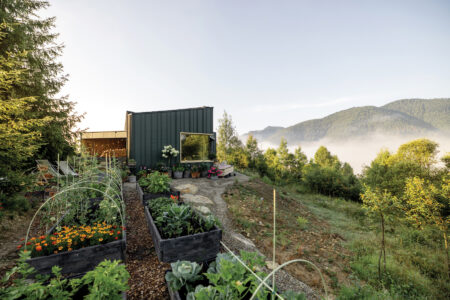
Family farming in America can be a challenge from scratch; discover what it takes to build your family legacy.
My grandfather was born on Detroit’s west side and spent just shy of 40 years working at Detroit Diesel as a hydraulic machine repairman. His hands were strong and square, calloused, and precise. And usually stained with engine grease. He was a brilliant tinkerer and could build anything, and he had countless old Dutch Masters boxes in his workshop, all neatly painted the same shade of campground brown and organized meticulously, each carefully labeled and holding assorted sizes of hardware and bits and bobs harvested from anything he’d ever gotten rid of.
After decades of working long, hard hours, he retired, and instead of living out his days watching his beloved Detroit Tigers play ball, he took his savings and bought a farm on the very edge of the Michigan border where it meets Indiana and Ohio, in the middle of a cornfield. After a lifetime of being a city man, we watched my grandfather transform into a farmer. With heart and soul, he worked the land, grew an endless ocean of soybeans, tended his orchard, and cultivated a huge garden.
The call of the farm life is deeply rooted in American life. Some of us come from generations that have farmed from sunup ’til sundown, from childhood until passing on the torch in old age. Some are first-generation farmers. Others, like me, have experienced this sort of multigenerational revolution; in the time since my grandfather bought his farm and my parents bought their farm, I somehow went from working in the city with a career in advertising to falling in love with fungi, moving with my husband and children to a farm in the rural town I grew up in, and becoming a mushroom-farming agricultural educator.
The insidious rotten core of all of this is the immense struggle that America’s farming families often face in trying to make a living wage while literally putting the food on everyone else’s tables. In my experience across business, advertising, and agriculture, this struggle stems from the same monocultural approach to conventional farming that’s stripping the country’s farmland of its nutrients and biodiversity.
In a similar way, aggressively pursuing a single stream of income creates limited resources for small-to-midsize farming families, and it often leads to burnout and boredom when the time comes to hand the tractor keys to the next generation. Despite all of that, with creativity and teamwork, the dream of having a family farm is very much a viable possibility.
Having been a bug on the wall for my grandfather’s and parents’ journeys and forged my own path to where I am now, I’ve noticed some interesting patterns both in our family and in other families that have chosen this path. From that, here are my notes on taking a soulful, long-term approach to establishing (or resetting) your family farm with a legacy vision to thrive for generations to come.
Why?
It’s absolutely essential to have a clear understanding of what’s driving you to farm. What do you want out of it? Is it something you want to do for a season of your life, or do you picture it being the story of your life? Are you passionate about keeping the family farm going? Do you just want to feed your family by canning and keeping your cellars full, or do you want an operation that’s providing tons on tons of produce to grocery stores? Any one of those is a noble cause, and your reason doesn’t have to be all of them (or maybe you’re driven by something else entirely!), but clearly defining your reason for farming up-front will help keep you on track with your vision.
Whether you’re a young family with a handful of kids, empty nesters, or a solo act, you need to figure out who’s in on this! (You can’t force farming on someone who just isn’t into it, so be conscious of the perspective of everyone in your household, and talk it out.) What is each person enthusiastic about? What skills does each person bring to the table? What sounds exciting about this that none of you has a clue how to do? Put it on paper. Write lists of skills that each one of you has and skills each person is interested in learning. Some people are happy as can be to work the farmers market booth, while others would much prefer to weed a garden by themselves or work with livestock.
Not every kid is going to want to grow up and follow in their parents’ farming footsteps. Sometimes, the first type of farm animal you get isn’t going to be your thing. Once in a while, you might come up with a product that’s too much work to produce. That’s all just fine. Don’t be rigid in your approach to building your farming dreams – adapt as you learn and as you grow together as a family. Build on your strengths and be aware of your weaknesses; never be afraid to chart a new course when it’s time to adjust.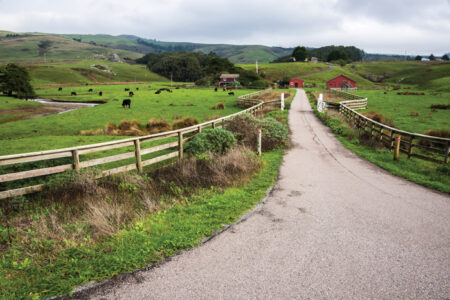
Building Resilience
Do you already have a farm? Or are you working with a tiny plot of land? Or in an apartment with a windowsill garden? Those are all fine starting points, and being realistic about what you have to work with will set you up for success. You can reverse engineer this and make it much easier to figure out what crops or creatures will be doable right away by looking at what you have to work with. Do you have fenced pastures, a coop, or an outbuilding? Or if you have limited space, do you have a corner where you could put up a shelf and grow microgreens?
Often, one of the biggest investments in starting with a new kind of livestock is getting your fencing right. Where we live, the fences wouldn’t work to keep sheep in, and it’d take a pretty significant amount of money up-front to make that doable, but it can already keep cattle in fine. Of course, sometimes you just have to make the investment to make the vision happen, but if you start with what you currently have, you’ll have a leg-up on getting things to a profitable point, and then you can explore adding the fences or equipment you need to level-up to the next goal.
The most successful independent farming families I know balance multiple endeavors with careful time management. This might mean diversifying crops and livestock, or even having family members run separate businesses that support each other. For example, one family I know raises beef cattle and meat birds, sells fresh vegetables and cut flowers, and hosts farm-to-table dinners featuring their products and others from local farms. Their children grew the business alongside them, with one daughter focusing on flowers and a son becoming a competitive shearer. This diversification gives everyone a chance to shine and protects the whole farm when tough times hit one specific area.
My mom attended Michigan State University’s organic farming program several years after they bought their farm, and well into a chapter when she already had a great deal of knowledge up her sleeve. It was an absolutely transformative experience for her that inspired all of us. I certainly wasn’t looking for a new career when I stumbled into a mushroom-foraging workshop a decade ago, but it grabbed me by the heart and here we are. I teach a lot of mushroom-growing workshops, and one of the interesting things is that many of the students who attend are farmers and homesteaders actively working to add new skills to their tool kit so they can diversify their skill set.
It’s a certain kind of person who lives in a state of constant willingness to learn new things, and usually those are the people I see thriving. If you don’t have workshops near you, there are so many amazing books and podcasts out there to help fuel you with new knowledge, and there are YouTube videos on nearly anything you could want to learn how to do. I try to keep at least one book in my reading queue at all times on something I don’t know how to do – currently I’m reading a great book on vermiculture; it could be small-engine repair next week, who knows? Keeping that information flowing will give you a whole lot of skills that can come in handy.
Community
No farm is an island! Find your people. Business in general is a big weight to carry, from the day-to-day work of keeping things running to taking care of your customers. Having others in your life – while they may not be growing the exact same tomatoes as you – who get what you’re going through makes it a whole lot easier to get through the tough times. Victories are a whole lot more fun to celebrate with friends who have a glimmer of an idea of what you went through to get there.
Someone set up a local Facebook group a few years ago called “Livingston County Homesteaders Unite!” and it’s connected so many of us who’ve lived here for years but were totally unaware of each other – from that group have come many amazing classes, partnerships, and events. Find your local social media groups, attend regional seed exchanges and events, join online forums, and talk to people who are raising the same things as you. Whether you’re a homebody or a social butterfly, there are more ways than ever to connect with people who “get it” in your own comfort zone.
You can grow or raise just about anything with the right set of information, but you’ll still need to be able to sell it! Farmers markets, community-supported agriculture (CSA) boxes, and farmstands are classic ways to put your farm products in front of buyers, but so many new options have popped up in the past few years – sharing the goods and goings-on at your farm on social media, various virtual farmers market platforms, and businesses like Barn2Door will help set up your farm’s online presence if you aren’t sure where to start. I’ve had a huge amount of success on Faire, which has been instrumental in getting my mushroom-growing kits into over 300 stores (if you have handcrafted products or shelf-stable food products that you can produce enough of to sell in wholesale quantities and rates, I highly recommend signing up).
Tell Your Story
You’re the only person who gets to live your life, on your farm, your way. Sharing your journey, processes, and experiences as you build your family farm is a great way to put what you have to offer in front of the right people, a way to inspire those who hope to be on that journey someday, and a gift for your family in the future to be able to see those moments you’ve documented and saved. Instagram, Facebook, and YouTube are great for this. If you aren’t comfortable in front of the camera, start by taking photos of the happenings, animals, and wonderful things growing on your farm.
It’s easy to get so caught up in keeping things going that you forget to pause for a moment to celebrate your wins. You need to celebrate those wins with the people who helped make them happen – your first strawberries of the year, a great day at the farmers market, a ribbon at the fair – always share those moments of joy together!
My grandfather would be so proud to see what arose from the path he unexpectedly started us down. His love of the land, his work ethic, and his quiet courage to completely reinvent himself – these are the seeds from which our own endeavors grew.
Across this beautiful country are countless families like mine, pouring their hearts into the dirt, finding new ways to work together. That enduring spirit is what keeps America growing, in every sense of the word.
Erin Hamilton is the founder of The Mushroom Conservatory, nestled in the rural heart of Howell, Michigan, where she resides with her husband and creative co-pilot, Elijah, and their lively brood of children.
Originally published in the January/February 2026 issue of Grit magazine and regularly vetted for accuracy.