Our allies against bugs aren’t as scary as they seem. Learn many of the benefits of spiders to humans to better appreciate our eight-legged friends.
Many of us have seen friends or family react to a spider with shrieking, foot-stomping panic – we may have even been that person. But what threat does a spider pose to a comparatively huge human? Is this fear reasonable, especially in a spider-filled place, such as a farm or homestead?
Historically, spiders were seen in a different light, often featured as representatives of intelligence and skillfulness in many cultures. Spiders are something to celebrate, not exterminate.
5 Reasons to Appreciate (Or, at Least, Not Kill) Spiders
Helpers, Tricksters, and Good Omens
Spiders have overwhelmingly positive roles in the folklore of cultures worldwide, revealing that those same cultures viewed these diminutive creatures with respect and admiration. Consider the following:
- The Anishinaabe (Ojibwe) began creating the original dreamcatchers to aid Asibikaashi (Spider Woman), who was their protector.
- In ancient China, the spider was called “ximu,” translating to “happy insect.” The appearance of a spider was typically associated with good news, as proved by abundant, happy stories where they were featured.
- For the Hopitu (Hopi), it was Koyangwuti (Spider Grandmother) who created them from clay and breathed life into them with the help of Tawa.
- In Hebrew folklore, a spider helped save the life of David when he was fleeing from the enraged King Saul.
- West African Akan and Caribbean legends are often told through the storyteller and trickster spider Anansi. He’s both mischievous and cunning, usually triumphing over his enemies with creativity and wit.
- In Diné (Navajo) religion, Na’ashjé’íí Asdzáá (Spider Woman) is a helper and taught the people agriculture and weaving, and often restores harmony to the world.
Garden Allies and Helpful Hunters
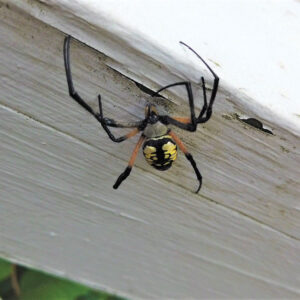
Spiders eat insects that would otherwise nibble on your produce. A gorgeous black-and-yellow garden spider (Argiope aurantia) is a gift to your food plot, as she patiently waits in her orb web for dinner to arrive. Wolf spiders (Lycosidae spp.) live up to their name, relentlessly scoping the ground for their prey: beetles, grasshoppers, and roaches. Crab spiders (Thomisidae spp.) lie in beautifully camouflaged ambush, pouncing on flies.
Spiders are voracious. Though it’s impossible to truly quantify, a 2017 study in The Science of Nature by a team of Swedish researchers revealed spiders eat anywhere from 400 to 800 metric tons of insects a year worldwide. While you’re trying to envision what 800 writhing tons of crop-gobbling bugs must look like, go thank a spider for its service.
Spiders Don’t Want to Bite You
With how they’re feared, it would seem spiders must be salivating for human flesh. Nothing could be further from the truth. They neither seek us out nor have a vendetta against us. Spiders aren’t interested in humans. Spiders are only interested in biting things that are food, and we are too big to be food. As McGill University arachnologist Chris Buddle says, “You really have to work to get bitten by a spider; they don’t want to bite you.”
So why do we get bitten at all? The truth is, we don’t actually get bitten that much in the first place. Many bites are misattributed to spiders. One 2009 study at the University of California published in Jem Journal analyzed 182 “spider bite” cases over the course of two years. Only seven patients had spider bites – the rest were infections or irritations of some sort.
The most common way to get bitten is to put on a piece of clothing and inadvertently press a hidden spider against your skin. This puts them in an uncomfortable, threatened position, and their last resort of defense is to bite. Most true spider bites would be averted if folks were simply a little more thoughtful with their clothing, shoe, and glove storage.
Most Spiders Can’t Bite You
When I worked as an environmental educator, I’d shock my students with a seemingly horrifying act: I’d allow wolf spiders to walk across my hands. Inevitably, they would shriek about how the spiders would bite me, and then fall silent when, of course, they didn’t. Even though this is one of the spiders that can bite through human skin, it usually doesn’t. Spiders’ fangs are designed to bite through insects, not humans. As such, many spiders are physically incapable of biting through human skin.
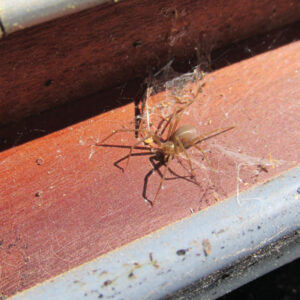
Even the brown recluse – a common spider – won’t actually bite unless it’s pressed against your body. Otherwise, its tiny fangs can’t penetrate through clothing. And even if perfectly imperfect circumstances prevail and you happen to get bitten by the aforementioned Loxosceles reclusa (even taking into account incorrect identification and misdiagnoses), only 10% of bites are medically significant.
The Biggest Threat Is Fear Itself
In a given year, there’s a creature in the United States that’s responsible for biting 4.5 million people, hospitalizing more than 12,000, and killing 30 to 50. It’s often responsible for recklessly killing livestock as well, wiping out chicken flocks, slaughtering newborn lambs, and running cattle to death.
What is this creature? The domesticated dog. Despite the statistics surrounding dogs, people’s reactions to seeing a cute and cuddly “fur baby” is often to pet it, welcome it into their home, and even allow it to sleep in their bed.
Now, I’m not picking a fight against sweet Prince Floofy, but let’s look at those same statistics for spiders. Annually, fewer than seven people die from spider bites each year in the U.S. That desperately feared brown recluse has caused few, if any, deaths. You’re more likely to die from choking on your lunch than from a spider bite, but no one sends a baleful glare at their soup and salad combo like they do at a spider on the wall.
The Surprising Beauty of Wonderful Weavers
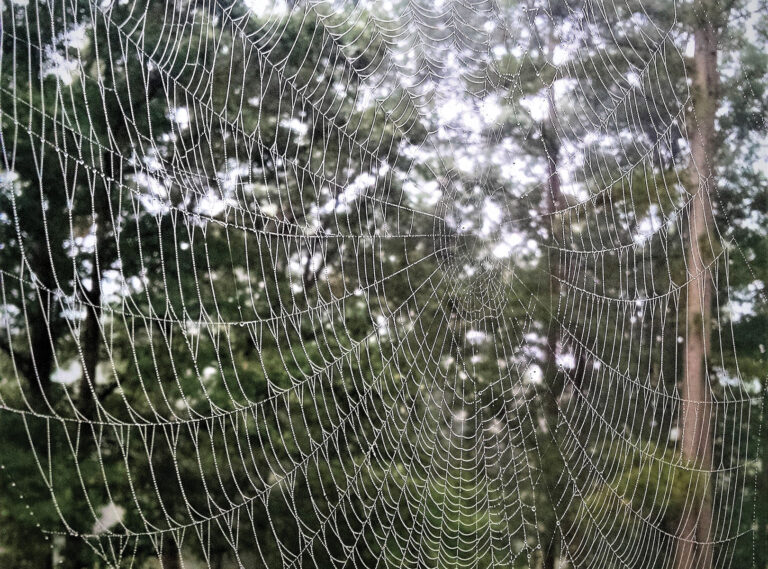
Those who find eight-leggers unpalatably freaky probably take umbrage with me calling spiders beautiful, but I contest it’s because they’ve never taken a good look at a spider without shuddering. Try appreciating the intricate patterns painted on a mature orb weaver’s abdomen or meeting eyes with the adorably disproportionately large eyes of a zebra jumping spider (Salticus scenicus), held above iridescent green chelicerae. Watch a castleback orbweaver (Micrathena gracilis) weave the bright disc in the middle of its impossibly huge web, and then marvel as the sun transforms it into a floating ring of reflected light. Have you walked in the early, dewy morning as the sun broke the horizon and seen the dawn illuminate a trillion droplets of water hanging like crystal beads on a perfect web? If you can overcome the knee-jerk reaction of “gross,” you may see something that amazes you. And when something you once feared can become something you appreciate, your land becomes that much more of a gift.
Arachnid Roommates
I understand some aren’t willing to share their living spaces with eight-legged neighbors. But if you’re using traps and toxic chemicals to banish them from your home, I’d like to advocate for some less poisonous means, for your sake and theirs.
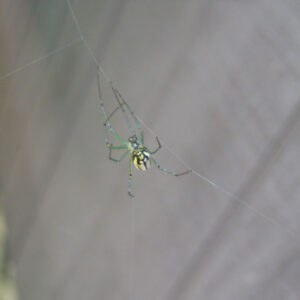
One way to banish arachnids is to make your home a place they don’t find appealing. Spiders like quiet, undisturbed corners to hunt or hang in peace. If you dust regularly and make a habit of tidying up, spiders won’t get the opportunity to settle in like they could in a cluttered, untended space. You can also deter them with plants, such as mint, marigolds, rosemary, lavender, or lemon balm.
I hope these ideas, stories, and statistics have prompted you to reconsider the presence of spiders in your world. I once feared spiders but have since grown to treasure these meticulous, marvelous, and methodical creatures. I hope you may be able to see spiders for what they truly are: an integral part of the intricate web of life that surrounds our fields, forests, and homes – more worthy of appreciation than a frenzied squish!
Plants to Encourage Spiders in Your Garden
Spiders tend more toward the plants that attract their prey, these usually being plants that thrive in humidity and dampness. Here are a few plants for your garden to get these wonderful critters where you need them.
- Allspice
- Cosmos
- Lilies
- Meadow Grass
- Monstera
- Pitcher Plant