Discover the caterpillar to butterfly process and provide a home for them based on their life cycles and food needs.
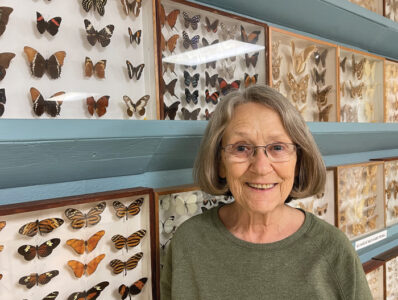
As a child, butterflies delighted me. In late 2001, I was inspired to create a butterfly garden, beginning with three butterfly bushes and a lot of research into other plants. The following spring, I took my list of plants to a gardening store to buy seeds. There, I met Lois Hansen, who guided me toward understanding butterflies and moths. She told me most of the plants on my list wouldn’t attract butterflies and gave me a list of necessary plants for my garden. I had no idea where to purchase these plants, so Lois recommended several native-plant nurseries and offered me some of her plants. A few months later, she brought over plants from her garden and my first monarch eggs. She also brought over several books about butterflies for me to read. That was it. I was hooked. From then on, I began reading every book I could find about butterflies and moths.
Since 2002, I’ve raised thousands of butterflies and moths. I bring most of the eggs I find into my house so I can help the butterflies, because a lot of their habitat is being destroyed. When they come out of their chrysalises, cocoons, and pupae, I release them back into the garden. I’ve gained a lot of knowledge about butterflies and moths by observing their life cycles.
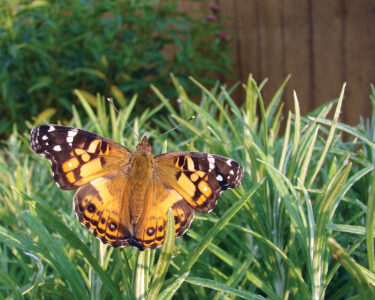
Anyone can have a variety of these winged creatures in their yard by planting the plants they need. Even though I have a small city lot, 60 by 120 feet, I have many species of butterflies and moths in my yard because of the diversity of native host plants I grow. Each year, I increase my variety of host and nectar plants. If the butterflies and moths can complete their life cycles in your yard, you’ll have more fluttering about than you would by growing only nectar plants.
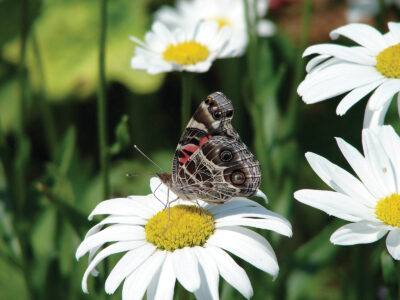
We need to give back to the Earth, and we can do this by establishing native plants that were intended to grow in our areas. Native plants typically have higher nectar content than most non-natives, and they help produce a healthy ecosystem by attracting a wider variety of birds and insects, which enhances an area’s overall biodiversity.
Butterflies Versus Moths
Butterflies and moths make up the insect order Lepidoptera. Lepidoptera is derived from the Greek words lepido for “scale” and ptera for “wings.”
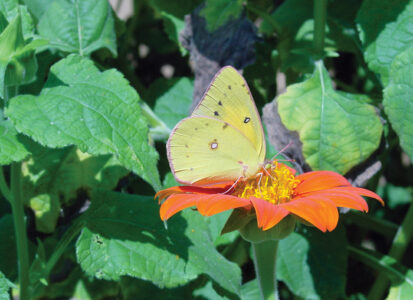
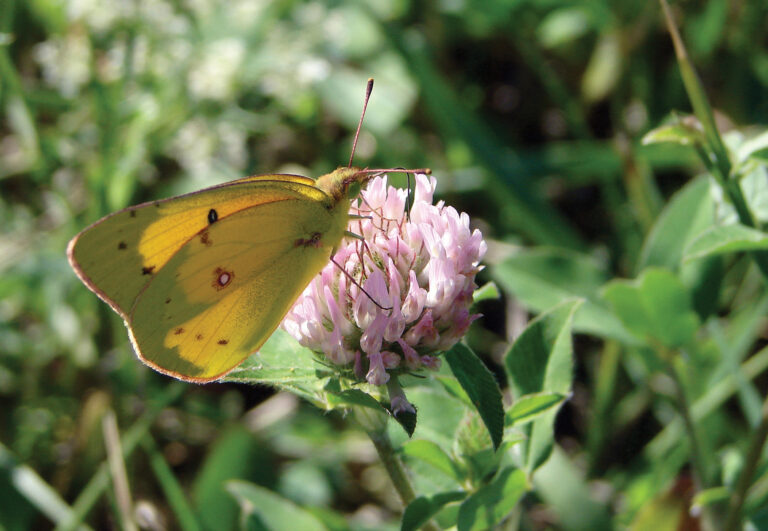
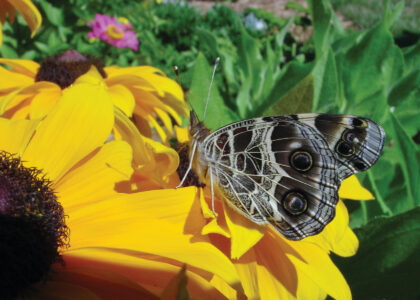
While there are exceptions, butterflies and moths have a few characteristics that differentiate one group from the other. Butterflies generally have clubbed antennae, hold their wings upright over their backs when at rest, and have thin and smooth bodies. Moths generally have thread-like or feathery antennae, fold their wings over their backs like tents or wrap them over their bodies when at rest, and have fat hair-like scales on their bodies.
Butterfly and Moth Life Cycles
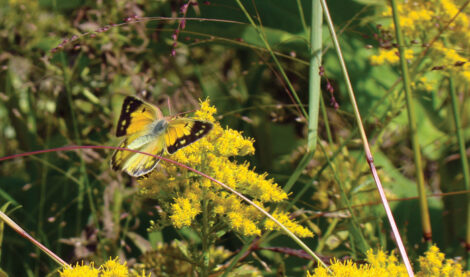
Both butterflies and moths undergo complete metamorphoses consisting of four distinct stages: egg (“ovum”), caterpillar (“larva”), chrysalis or pupa, and adult (“imago”).
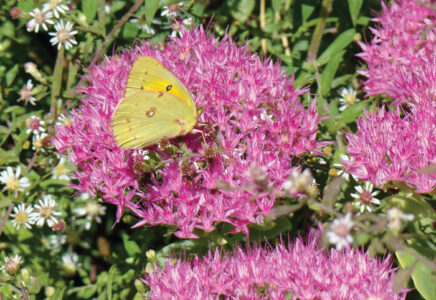
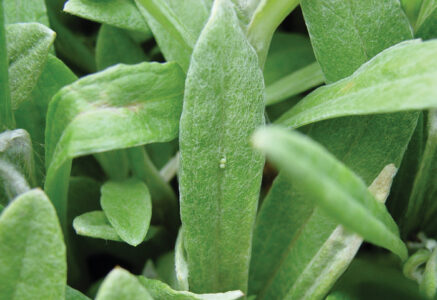
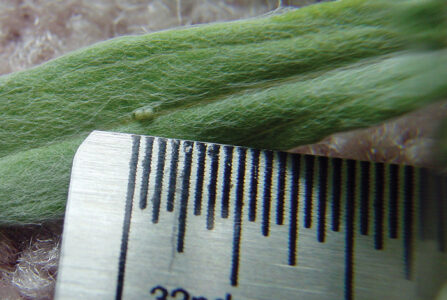
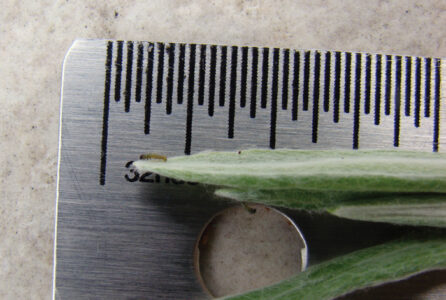
Eggs come in various shapes, colors, and sizes. Some of the shapes and textures include barrel, conical, elongated, oval with a flat bottom, spherical, sculptured, and smooth. They come in beige, cream, green, light green, light yellow, blue, and white. Egg sizes range from about 1/64 inch to a little over 1/16 inch.
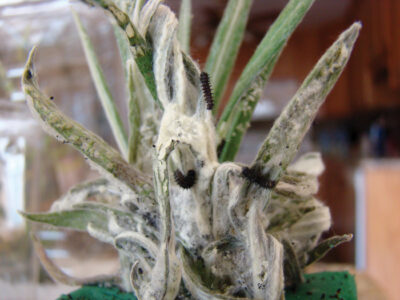
A caterpillar has three parts: the head, thorax, and abdomen. The head usually has six pairs of simple eyes (“ocelli”). Even though caterpillars have so many eyes, their vision is poor. The head also has a spinneret that produces silk. The body consists of several segments: thoracic segments and abdominal segments. The thorax usually has three pairs of true legs, and the abdomen usually has five pairs of prolegs. The prolegs have small hooks that enable the caterpillar to hold onto a leaf or a silk mat. Spiracles, holes in the sides of the thorax and abdomen, enable the caterpillar to receive oxygen.
Caterpillar to Butterfly Process
The caterpillar will go through 3 to 10 (typically 5) instars, which are periods of growth between molting (the act of shedding its exoskeleton, or skin). When a caterpillar becomes too large for its skin, it’ll molt. Before molting, the caterpillar will attach itself to an object with silk. This will help it crawl out of its old exoskeleton. After the caterpillar attaches to an object, it’ll stop eating and won’t move for about a day. Then, it’ll molt. Once the caterpillar molts for the last time, the chrysalis or pupa will be revealed.
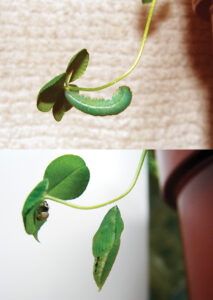
The prechrysalis or prepupal stage happens when the caterpillar empties its gut and seeks out a safe place to make its chrysalis or pupa before molting for the last time. A butterfly caterpillar will spin a silk pad to which it attaches its rear-most pair of prolegs. Some will hang downward in a J shape, while others will also spin a U-shaped girdle, which they position between their first and second abdominal segments to hold them upright. A moth caterpillar, however, won’t make a silk pad. Many moth caterpillars will spin silk cocoons or bind together pieces of leaves and debris with silk to pupate in. Others will burrow into the soil and make a chamber to pupate in.
The chrysalis or pupa will become visible when the caterpillar’s exoskeleton splits during the final molting. Then, the caterpillar’s tissues will break down and rearrange within the chrysalis or pupa, and the adult will form.
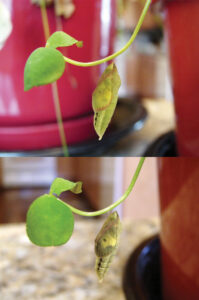
When the adult butterfly or moth emerges from its chrysalis or pupa, its wings will be tiny and its body large. As it pumps blood into its wings, the wings will elongate and the body will shrink. After a few hours, the wings will harden and dry, and the butterfly or moth will be ready for flight.
How Do Butterflies Reproduce?
Butterflies and moths have a hard exoskeleton and three main body parts: the head, thorax, and abdomen. The head has two large compound eyes and two antennae. Most have a proboscis, a flexible straw-like structure that’s used for drinking nectar and fluids. Butterflies and moths use their antennae for smell, touch, and balance. They also smell with sense receptors that are in their legs and other parts of their bodies. The thorax has two pairs of scaled wings and three pairs of jointed legs. The abdomen contains the reproductive, digestive, and excretory systems. It also has spiracles, breathing holes that run along the side of the abdomen. The genitalia are located at the end of the abdomen, which are unique to each species and allow male and female organs of the same species to match up. The two structures of the male’s genitalia are called “claspers,” while the female has a notch. These are easily visible with monarch butterflies, but the structures can be difficult to see on other species.
Both males and females will release pheromones to attract a mate. Some butterflies and moths can mate several times in their lives. The male will deposit a package of sperm in the female. As each egg is laid, it’ll pass through the sperm and will be fertilized. A female can lay anywhere from several eggs up to hundreds of eggs at a time. For example, a monarch butterfly will lay an average of 300 to 500 eggs in a lifetime. In nature, only about 2 percent of monarchs make it to adulthood.
Consider transforming parts of your property into an oasis for whatever moths and butterflies are native to your area!
What Do Caterpillars eat?
A host plant is a plant an organism lives from and needs to survive. For example, milkweed is a host plant for monarch caterpillars, as the larvae are laid and hatch upon milkweed, and monarch caterpillars only consume milkweed leaves.
A nectar plant provides food for adult butterflies and moths. For example, prairie blazing star is one nectar plant that attracts butterflies and moths during summer in the Midwest.
The Life Cycle
To learn more about what native plants grow in your area and which would be beneficial for butterflies and moths, use Native Plant Finder from the National Wildlife Federation.
This adapted excerpt was taken from Raising Butterflies and Moths in the Garden by Brenda Dziedzic, with permission from Firefly Books Ltd.