What do you do if an animal suddenly appears on the road? Learn about the dangers of deer accidents, moose accidents, and more (to both you and the animal) and how to stay safe on the road.
Anyone who drives has likely had the misfortune of running over a squirrel. Terrible for the squirrel, and it can upset the driver, but that’s usually the extent of the harm. However, when a larger animal is involved in a vehicular collision, there can be major damage to the vehicle, and the driver and passengers can be injured, sometimes even fatally.
In the United States, an estimated 2 million collisions occur between vehicles and large animals every year, and according to a 2008 U.S. Department of Transportation report to Congress, about 4 to 10 percent of these collisions result in injuries. In fact, animal-vehicle collisions account for some 200 fatalities and between 10,000 and 20,000 injuries each year. As for vehicle damage, this can range from no damage to a complete total. The average damage per collision can reach $4,000, and in all, these collisions rack up billions of dollars in medical expenses and vehicle damage. Let’s look at the common factors involving animal-vehicle crashes, common animals encountered on the road, how these collisions affect drivers and wildlife, and what you can do to avoid them.
The When, Where, and How
How bad a collision with an animal is depends on the speed of the vehicle, the size of the animal, and whether it was a direct or glancing blow. Many times, directly hitting an animal doesn’t cause the worst of the accident; it’s after impact or swerving, when your car could hit another vehicle or a tree, that could cause more damage and injury.
Most of these accidents occur between dusk and dawn, and most collisions occur from October through December. In State Farm’s annual list, it ranked Pennsylvania as having the most auto insurance claims for animal-vehicle collisions, followed by Michigan, Texas, California, and North Carolina. Factoring in the number of drivers in each state, West Virginia drivers have the greatest risk of hitting an animal (a 1 in 37 chance). Montana is a close second, followed by South Dakota, Michigan, and Pennsylvania, respectively.
Common Creatures in Vehicular Crashes: Moose, Bear, Hogs, Alligators, and Deer Accidents
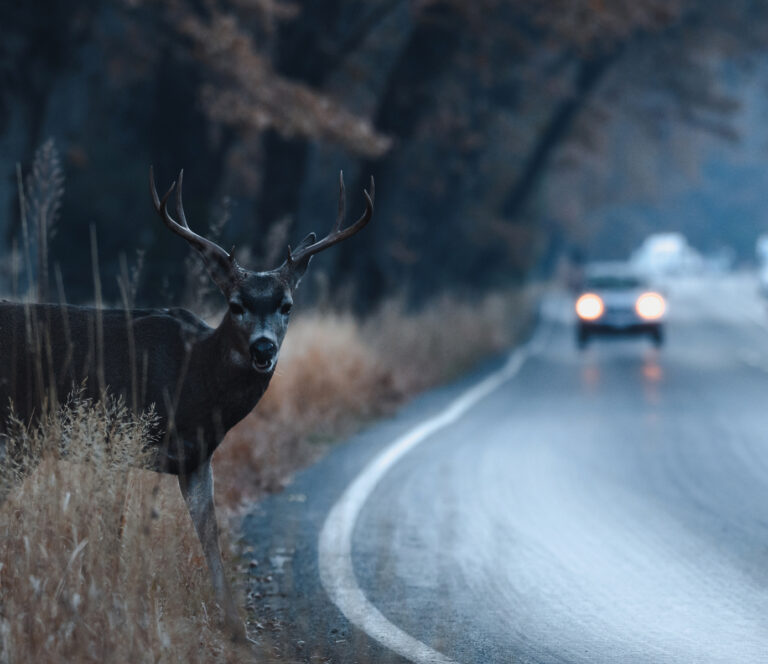
Deer lead the list as the most common animal involved in significant vehicle-animal collisions. According to the 2008 U.S. Department of Transportation study, the majority of reported wildlife-vehicle collisions involve deer, up to 90% in certain states. This isn’t surprising, considering there are an estimated 36 million deer across the U.S., with 30 million of them being the ubiquitous white-tailed deer. Deer can stand 3 to 4 feet tall at the shoulder and weigh an average of 150 to 200 pounds.
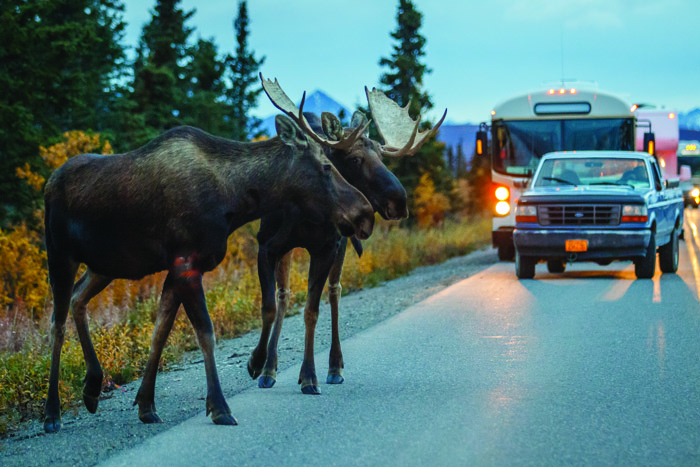
For those living in northern states, there’s an even larger problem: moose. The largest member of the deer family, a moose can stand up to 7 feet tall at the shoulder and weigh over 1,500 pounds. Hitting a moose will do significant damage to your vehicle — and quite possibly to you. Per mile driven, the Alaska Department of Fish and Game reports that Alaska has one of the highest rates of moose-vehicle collisions in the world; estimates range from 500 to 800 accidents a year. In Maine, studies indicate that about 500 moose-vehicle collisions happen every year, and they’re 13 times more deadly than deer-vehicle collisions.
Bears are another common animal found across the continent — and, inevitably, on roads. Black bear populations exist in Alaska, Canada, some northern tier states, mountainous areas across the U.S., and even along the Gulf Coast into Florida. Estimates of the North American black bear population range from 500,000 to 1 million. Bears can travel tens of miles each day foraging for food, often crossing roads. Weighing up to 500 pounds, they pose a significant threat for accidents. Bear-vehicle collisions number in the thousands each year, according to a State Farm collision report, with California having the most.

Another animal that’s become a recurring road risk in recent years, primarily in southern states, is the feral hog. From California to North Carolina, the feral hog population has exploded to as many as 6 million. Feral hogs are large animals, sometimes weighing over 200 pounds. They’ve been responsible for vehicular damage, injuries, and even fatal accidents, amounting to tens of millions of dollars of damage each year in the U.S. In Hawaii, hogs and pigs are involved in more traffic accidents than any other animal.
Finally, alligators do occasionally get hit by cars. They can be found from the coastal areas of Texas through Florida and up the Atlantic coast to North Carolina. In Florida, about a million alligators live all over the state. With large gators measuring over 10 feet long and weighing 500 pounds or more, hitting one can result in a serious accident. A Florida man was killed on March 24, 2022, when his car struck a large alligator in the road and veered off into a ditch. Both the man and the alligator were dead when authorities arrived.
How Collisions Harm Animals
The flip side of the vehicle-wildlife collision issue is the effect on some animal populations. With the massive number of deer in the U.S., their population isn’t threatened. But in Florida, both the black bear and the already endangered Florida panther are at risk for local extinction. According to the Florida Fish and Wildlife Conservation Commission, 92% of recorded panther deaths in 2022 and 90% of known bear deaths are due to vehicular collision. In California, both the black bear and mountain lion populations are significantly affected by fatal collisions with vehicles. I recently wrote about coyotes, particularly coyotes in urban areas. Vehicular collisions are the No. 1 cause of death for urban coyotes.
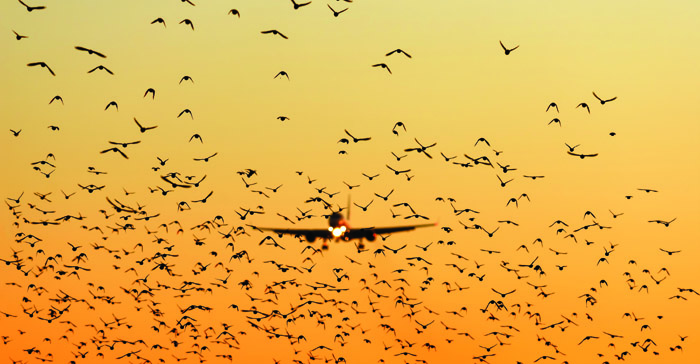
Birds are often struck by motorists. In fact, hundreds of millions of birds die this way each year in the U.S. Most were on the ground in the road, but some were flying close to the ground when struck. Some, such as owls and pelicans, are large enough to damage a car. And it’s not just vehicles on the ground that have problems with wildlife. In the past 30 years, there have been around 250,000 reported bird strikes on planes and helicopters in the U.S., resulting in a total economic loss of around $871 million. Although the famed “Miracle on the Hudson” disaster was averted by the great work of the pilots and their crew, people have been killed in some bird-strike incidents.
Snakes are often run over on roads. The eastern indigo, the longest snake in North America, is often a roadkill victim, so much so that local populations are adversely affected. Some studies indicate that a small portion of drivers deliberately try to run over snakes and other small animals. On the flip side, some drivers actually stop and cautiously help the snakes cross.
Besides wild animals, vehicular accidents take a great toll on pets. Cats and dogs are often killed on the road. Larger dogs could do damage to a car and, again, swerving to avoid the collision can be risky. As for farm animals, about 20 people are killed due to vehicular accidents with cows every year.
Watching Out for Wildlife
What’s being done to reduce the number of vehicle-wildlife accidents? Educating the public about the risks is a good start; insurance companies, wildlife agencies, and local governments do this to different degrees. Wildlife information along travel routes, such as at rest stops and tourist information areas, is also standard.
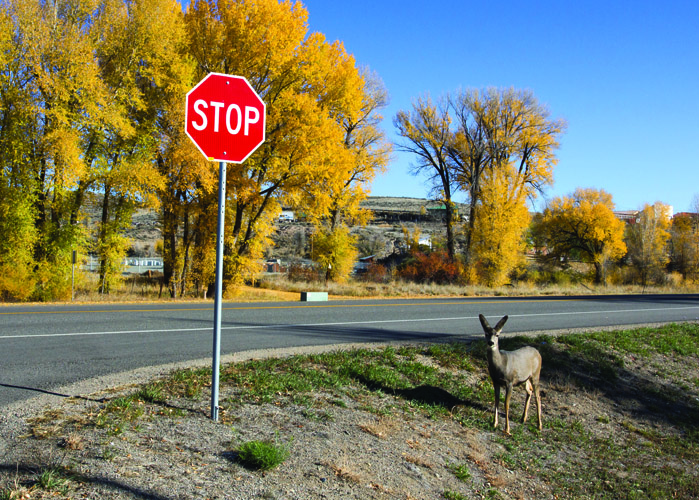
In places along the road where wildlife crossings or accidents are common, there may be road signs in place that warn you of the specific animal that’s common to the area and require you to reduce your speed. In locations where accidents are particularly frequent or dangerous, wildlife crossings can be constructed. These can be underpasses beneath the road or overpasses above it. Out west, they’re used along established seasonal wildlife migration routes. There are about 1,000 wildlife crossings in the U.S. Their cost, typically in the millions of dollars, has hindered their development. However, besides helping animals and preventing human injuries in accidents, the savings in accident costs can make a crossing “pay for itself” in a few years. And the infrastructure bill (Infrastructure Investment and Jobs Act) recently passed in Washington in late 2021 allots $350 million for animal crossings.
Wherever you may drive, animals are bound to be nearby. Knowing what wildlife is in the area and understanding how to respond can help protect the creatures we share this world with, and help you safely arrive at your destination.
If an Animal Suddenly Appears on the Road
How can you try to avoid colliding with an animal in the road? AAA offers some safety tips.
- Scan the road and shoulders ahead of you. This will give you more time to react.
- Stay focused on the road.
- If you see one animal, especially a deer, assume more are behind it.
- Use high-beam headlights if there’s no oncoming traffic. You’ll see wildlife sooner, and their eyes will often reflect the light.
- If an animal is in the road in front of you, honk your horn. Only swerve to avoid it if you’re sure you won’t hit another car or a tree or lose control of your vehicle. Apply your brakes firmly to lessen the impact.
- Be most cautious at dawn and dusk. Many animals, especially deer, are most active then.
- Slow down in areas where wildlife is known to be active. Look for animal crossing signs, and allow for more room following another vehicle. This is especially true during hunting and mating seasons.
If your vehicle does hit an animal, don’t touch it. A frightened, wounded animal can be dangerous, or it could further injure itself. Get your vehicle off the road, if possible, and call 911.
For more than 30 years, Ed Brotak taught thousands of college students about weather, and he’s helped many of them pursue careers in meteorology. He lives in Asheville, North Carolina, with his wife, Liz.
Originally published as “Critters and Cars: Avoid Costly Collisions” in the May/June 2023 issue of Grit magazine and regularly vetted for accuracy.