Since moving to our farm 11 years ago, I have dreamed of having a nice flock of poultry. I have always loved chickens and ducks, and as we take our baby steps toward becoming more self-sufficient, this was one of the bigger steps I couldn’t wait to take. I have always been concerned about keeping poultry alive, however, as the layout of our barnyard is pretty conducive to all sorts of vermin … raccoons, skunks, coyotes, owls, etc. I wasn’t sure it was worth the effort just to prove to the local carnivores that we ran a free meal site.
But, last spring we finally took the plunge. We purchased eight guinea keets from a local feed store, put them in a cardboard box, and moved them into one of our bathrooms in the house. Soon after, the hubby came home triumphantly with eight ducklings, having scored an end-of-season sale in which we got “ducks for a buck!”
Once old enough, we moved the ducks and guineas out to the barn into a couple of our plywood-sided stalls. These made good brooders, and allowed me to escape the twice-daily cleanup. Yeesh, ducks are MESSY!!!
This all went fairly well until we decided the guineas were old enough (fully feathered) to be turned out into the fenced-in barnyard. After all, it was time they started earning their keep by eating the pesky insects in the yard.
I don’t think we ever saw them again. Sigh. Lesson learned.
The ducks, however, have been wonderful. I guess that is kind of an unwritten rule in livestock, isn’t it? The more something costs (or is worth, or is needed), the more likely it is to die, get injured, or become ill. See, the ducks were $1 each. The guineas … well, we invested around $50 in them and didn’t get so much as one feather from any of them. Theory proven.
We still have seven of the original eight ducks. We lost one this winter to an unfortunate water heater incident. It was one of five drakes, so it ultimately was not a huge issue to lose him. We had the requisite funeral (the joys of having a 6-year-old fledgling farmer) and moved on.
Now the three duck hens are of breeding age. YAY! This was an adventure in learning as well. I grew up around poultry and we always let Mother Nature raise her own (i.e. we didn’t artificially incubate eggs). So, when they started laying eggs this spring, I watched the ducky mating dances and waited anxiously for one of the hens to get that motherly feeling and start sitting on a nest.
But not one of them showed any inkling of interest in sitting on a nest. I didn’t want the eggs to go to waste, so I gathered them every other day or so. Duck eggs are FABULOUS to use for cooking, by the way! But my dreamy visions of mommy ducks quacking and waddling around the farmyard being followed by a small herd of scurrying fluffy ducklings was not looking too good. Why weren’t they sitting on the nests?
I finally Googled it. And it was (another) moment of enlightenment for me. Unlike chickens, ducks will lay eggs until they feel they have enough worth sitting on, and THEN they will start sitting on the nest. Who knew? Well, maybe some of you who have more experience raising ducks the old-fashioned way knew this, but I didn’t! So I began resisting the urge to collect the eggs that I feared were just sitting there going to waste, and waited. And waited. AND WAITED. I could hardly stand it. There were like 20 or more eggs in that nest and NO ONE WAS SITTING ON THEM! Finally, just when I was about ready to give up and start researching incubators online, our mallard hen claimed the nest. Yay!
The incubation period for ducks is about 28 days. So we anxiously awaited the date, which we counted out and marked on the calendar. And, we soon had a second hen sit on another nest, so there would be a second batch about a week or so after the first one hatched! The nests each had 20 eggs or so in them, but I didn’t expect them all to hatch. In fact, the barn has taken on somewhat of an offensive odor because some of the eggs weren’t any good and the hens have kicked them out of the nest.
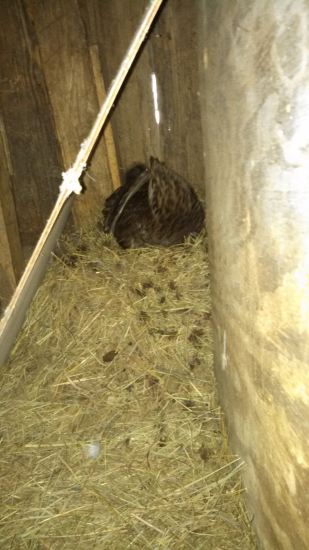
The hens took their nest sitting quite seriously, and sitting hens do not move from their spot but once or twice per day. They come out when I feed in the evenings to eat, drink, and take a dip in the duck swimming pool. The mallard hen is especially vocal in letting everyone know she is out and about. She quacks and squawks, flaps her wings, chases the other ducks around, and generally causes quite a bit of barnyard drama. The other hen is a Blue Swedish and is much more demure. Both hens look like they have been on the losing end of a barroom brawl, however. Guess we human mommies aren’t the only ones. Thank goodness for coffee.
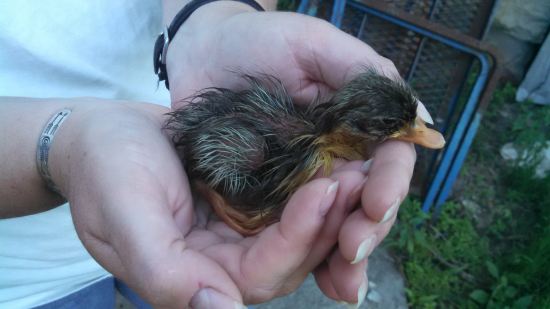
And so, this past Monday I went to the barn to do chores, as usual. The hens were not on their nests, but were out gossiping with the rest of the flock and taking a bit of a break. I checked the Swede’s nest, and WHOA!!! There was a little duckling, freshly hatched!
I scooped him up to take inside to our indoor brooder, and checked the other eggs. Almost all of them had little cracks and pips in them. I started out of the barn, checking the other nest on my way out. I was stopped COLD.
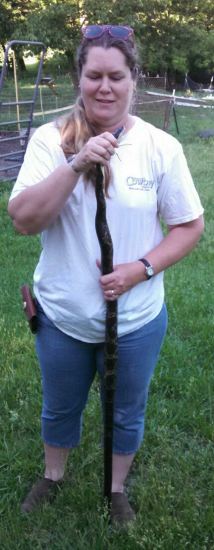
There was a long, thin, black tail sticking out of the nest. Snake. BIG BLACK SNAKE. I called the hubby for assistance and had him hold a flashlight for me so I could wrangle the snake. This one was absolutely HUGE. She was only a couple of inches shorter than I am tall, and I am 5 feet 8 inches tall.
She had gobbled up two or three eggs already, but no other harm done. I’m pretty sure the eggs weren’t any good anyway, as these should have hatched by now and they are smelling pretty ripe. But anyway, we took the monster snake waaaaay far away and let her go. Black snakes are generally good snakes and I don’t mind having them around, but when they cross the line to egg pilfering, it’s time to relocate.
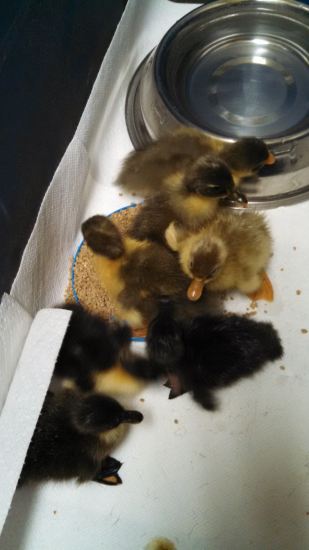
I took the eggs to the house and over the next several hours I watched them hatch. My biggest disappointment with their timing was that our 6-year-old daughter, Kate, was spending the night elsewhere and didn’t get to witness the hatching. But she is loving on them now! We ended up with seven ducklings.
We lost a few, but the ones we have now are healthy and doing great. They are inside where they are safe, and we will move them into a stall in the barn when they are a bit bigger.
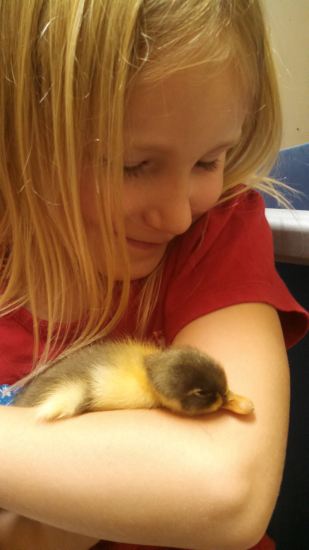
There isn’t much on this earth cuter than a fluffy baby duck. Except maybe a fluffy baby duck being cuddled by a cute little girl.
And singing them lullabies. All is good.