This story starts off with our realization that Silas, our Anatolian Shepherd (a.k.a. super-hero livestock guardian dog), is getting old. Granted, eight years doesn’t sound old, but in dog years, he’s getting pretty close to over-the-hill. So we decided it was time to get another LGD (livestock guardian dog) puppy that Silas could help us raise and train.

Meet Brina (her name means “Guardian” or “Defender” in the Celtic language), the newest member of our farm! She is full-blood Anatolian Shepherd and a sweetheart to boot! Her frame is large, so we expect her to be a big dog. She is doing well with the poultry and Silas will help teach her the ropes.
Well, OK, Brina isn’t actually the newest member of our farm. Since Silas has been guarding just ducks and chickens, we thought it would be a good idea to get something larger for Brina to learn and grow up with. I ended up stumbling across an ad for a pair of bottle baby lambs. I grew up raising and showing sheep in 4-H, so I pounced on the chance to have sheep again!

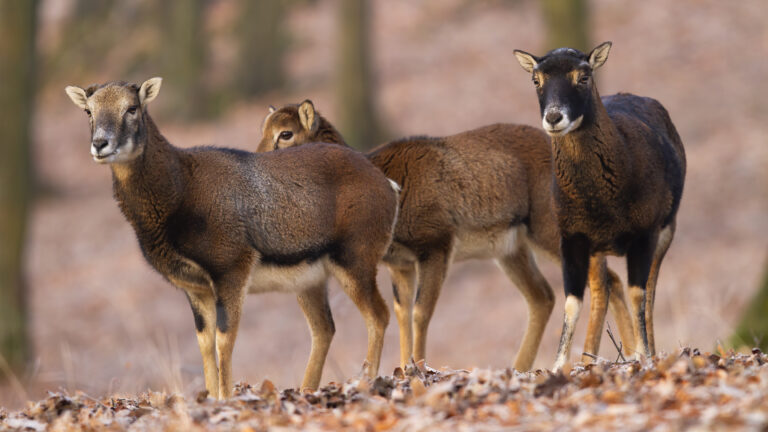
So, meet Stella and Star! Stella (white with red patches) is a red Painted Desert sheep, and Star (chocolate brown with a white star) is a European Mouflon. I had never heard of European Mouflon sheep, so I did some research. Turns out this breed is an “exotic” breed, and is thought to be the breed most of our domestic sheep breeds descended from. She looks and acts more like a deer, with her big, dark eyes and gazelle-like movements. Both breeds are hair sheep, so they will not grow fleece that needs to be shorn.
Both breeds are partly raised for recreational hunting. The bucks grow large, beautiful, spiral horns that are prized by exotic game hunters. They are adaptable to many climates and are naturally resistant to pests and disease. They are great for pasture management, as they prefer to eat weeds, brush, and other normally less-desirable plants. Their carcass yields meat reminiscent of venison or goat. The meat is lower in fat and healthier than traditional red meat. Mothering instincts and milk production are excellent in both breeds. As far as I can see, these breeds seem perfect for our farm!

Personally, I am fascinated by these non-traditional breeds of sheep. They are a unique niche market that we are considering for our own farm. For now, the bottle babies are coming along nicely. Our daughter, Kate, is getting great experience learning how to care for young livestock, and our puppy, Brina, is learning how to become a superstar LGD like Silas!