Learn to turn a profit by shearing fiber animals such as sheep, alpacas, or llamas on a small wool farm. Learn the basics of farming wool from sheep to yarn.
When posed with the question of what I do here on the farm, I respond that I am a “yarn farmer.” If I were to say, “I raise sheep, alpacas and llamas,” it would imply that I actually breed the fiber animals. I don’t, however, breed anything. In fact, I have a very strict ‘no-males-allowed’ policy.
I do miss out on the overwhelming cuteness of newborn lambs this way, but I don’t have to spend sleepless nights in the barn during lambing season either. I also don’t need to castrate the young ram lambs or take care of many of the other activities with which breeders must contend. In that way, yarn farming is a way of farming that suits me just fine.
In fact, I have recently discovered yarn farming was an occupation of my fourth-great-grandmother. Around the year 1820, her husband was killed, leaving her alone with seven small children. She kept a flock of sheep for fiber animals and took in weaving to support herself until the children were old enough to help her work a full-scale farming operation. So you might say fiber farming goes right down to my roots.
Bringing Home the Herd of Fiber Animals
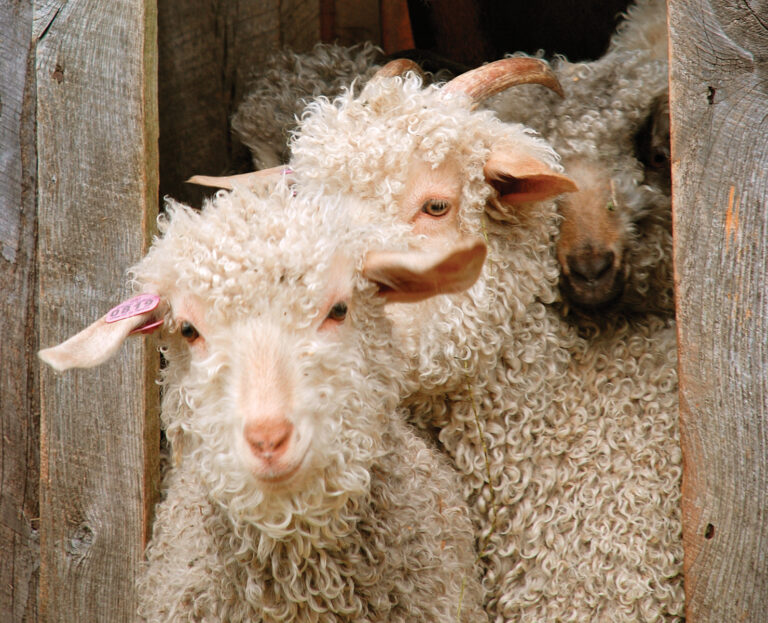
The first step of yarn farming is determining what breeds you are interested in, and then establishing relationships with quality breeders in your area. I chose the Shetland sheep breed due to its hardiness, the fineness of its fiber, and the variety of natural colors available. I found a reputable breeder in my area to make arrangements for a farm visit. Every breeder reaches a point where he or she needs to choose which animals to keep for their breeding program and which animals to cull. They are perfectly healthy animals, but may have body conformation issues that the breeder finds undesirable. For instance, they may be slightly cow-hocked, or their ears might hang too low. These are minor issues most of us never notice, but a big deal in the show ring.
These are the animals that can be purchased at pet-quality prices, even though their fleece is just as nice as the blue-ribbon winner standing next to them. I don’t show the animals competitively, so they don’t need to be pretty. They could be ugly as mud, and it wouldn’t matter to me as long as they have nice fiber. By not maintaining my own breeding stock, I also have the luxury of being able to pick and choose whatever color and texture I want to add to my flock or herd, instead of being stuck with whatever lambs, kids or crias are born to my flock.
The alpaca and llama industries have been going through a rightsizing of sorts the past several years. The astronomical prices once asked for breeding stock have plummeted, leaving breeders with pastures full of animals they can’t sell. Breeders in some cases are practically giving away juvenile males and geldings. In my case, they even threw in free delivery.
Animal rescue groups are another source. Several are inundated with llamas and alpacas needing homes. The organizations I worked with had access to qualified veterinarians, who performed complete examinations before making them available for adoption. I cannot stress enough how important a thorough vet examination is — picking up a cheap animal at an auction may seem like a bargain, but you’ll probably end up paying more in the long run. There is value in the knowledge a breeder or rescue organization can provide.
Barnyard Preparation
Before you bring any animals onto your property, you’ll need to make sure you have adequate shelter and storage room for hay and supplies. The animals can survive in a three-sided shelter, but they’ll like you a heck of a lot more in the winter if you can give them a proper barn. You’ll also need to consider manure handling: You’ll need a small rake, a shovel, and a really big compost bin. Figure three times the size you think you’ll need, and that probably still will not be big enough.
Processing Wool: From Sheep to Yarn
There are multiple ways to harvest the wool. Only you can decide what works best for you. I shear the animals myself — the old-fashioned way with hand shears — instead of hiring a professional shearer. The neighbors think I’m crazy, and yes, it takes forever, but it provides me with a higher quality fleece. Electric shears can get the job done much faster, but tend to leave too many second cuts in the fleece, which results in lumpy yarn. I use an aluminum shearing stand for the sheep, and a wooden chute I built using plans I found on the Internet for the alpacas and llamas. This allows me to do the work alone, but I generally still try to have someone else around, more or less as a spotter, to call 911 in case of an emergency. It’s amazing how strong and unruly the sheep can get when they think they’re about to get a bad haircut.

Washing the Wool
After shearing, the wool is skirted, a process very similar to watching a monkey groom its mate. Once all the vegetation and dung are removed, the wool is ready for processing. There are fiber mills where you can send your fleeces and they do all the work for you, even going so far as to spin the yarn. It does, however, add to your expenses, and there is generally a four-to-six-month waiting list. The other option is to process the fiber yourself. To do so, you first must wash the fleece to remove the dirt and lanolin. There are many methods, but I find the easiest way to do this is in the washing machine:
- Fill the tub with warm water and stop the wash cycle.
- Add a generous amount of grease-removing dish soap.
- Gently add wool to water and let soak for 20 minutes without any agitation whatsoever.
- Drain and spin.
- Remove the wool and refill the tub with warm water.
- Gently return wool to tub.
- Repeat steps 4 through 6 until water runs clear.
- Remove wool and spread on a wire rack to dry.
Combing and Carding
There are a variety of tools available to process the washed fleece, and each one has its merits. Like humans, some animals keep themselves cleaner than others. For the filthy or double-coated animals, double-row fiber combs work best. They are the most tedious to use, but can separate the fiber and remove all the vegetable matter. For nice, clean, single-coated fleeces, hand cards can be used to make rolags, or a drum carder can be used for making roving or batts.

Once combed or carded, the fiber is ready for spinning. At this point, it is a product ready to be sold to hand spinners. Or you can take it one step further and do the spinning yourself, creating yarn for knitters or weavers. There is a market for both products, as well as products you can have processed by a commercial mill. The best places to market your wares are fiber festivals, local yarn stores, farmers’ markets, or even online at sites such as Etsy.com.
It is a long, rewarding journey from sheep to shawl, especially when using the old-fashioned methods. Yet, the only difficult part of the entire process is parting with the finished yarn. I mean, it does take longer to create a skein of yarn than to give birth to a child, and in some ways, it’s just as much work. So it’s kind of hard not to become emotionally attached to that which one has devoted so much time.
I may not make the Fortune 500 by farming this way, but it is a simple and honest life that suits me. Every day I am reminded where I came from and to be grateful for the luxuries living in this century provides.
Yarn and Fiber CSA

Christine Byrne owns and operates Front Porch Indiana Fiber Farm and markets her fiber through social media platforms and through her Front Porch Indiana blog. She raises Shetland sheep, huacaya alpacas and llamas.