Learn about these parasitic flies, the symptoms they cause, where in the country they appear, eradication efforts, and new world screwworm prevention you can take with vector control.
- New World screwworm lives in tropical and subtropical regions. It affects warm-blooded animals, mostly livestock, and rarely affects humans.
- Screwworm flies lay eggs in animal wounds and orifices, then eggs hatch and larvae feed on the animal’s flesh, causing pain and worsening wounds.
- The best ways that animal owners can battle New World screwworms are with vector control and hygiene.
Most folks don’t spend much time thinking about flies. They buzz around barns, hover over feed buckets, and show up uninvited at backyard cookouts. Usually, they’re just a nuisance. But sometimes, a fly is more than an annoyance.
Enter: New World screwworm.
Across Texas, New Mexico, and the broader Southwest, animal-health officials and livestock producers are paying especially close attention as New World screwworm has moved north through Mexico and, in June 2026, was confirmed in both Texas and New Mexico. That shift changed the conversation from distant concern to active regional response. While most flies are harmless irritants, New World screwworm has the potential to cause serious harm to livestock, wildlife, pets, and — rarely — humans.
The good news is that this isn’t a mystery problem. It’s a management problem. And the front line isn’t just federal programs or laboratories — it’s barns, pastures, kennels, and backyards. For ranchers, livestock producers, homesteaders, and animal owners, the issue isn’t just one dangerous fly. It’s the conditions that allow dangerous pests to thrive in the first place.
That’s where vector control comes in. “Vector control” may sound like a technical term reserved for scientists and government agencies, but the concept and practice are surprisingly simple: reduce the insects that spread disease and parasites. And when it comes to New World screwworm, some of the most effective tools are already sitting in your barn, feed room, and cleaning shed.
What New World Screwworm (NWS) Is
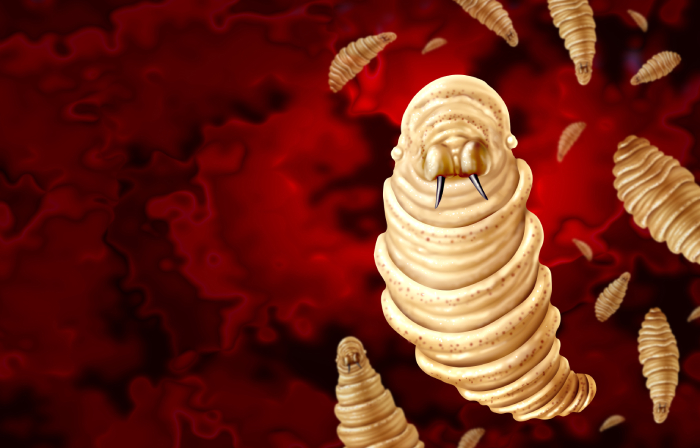
Despite the name, New World screwworm isn’t a worm. It’s the larval stage of a fly called Cochliomyia hominivorax that thrives in tropical and subtropical areas. It resembles a common housefly in size and appearance. Adult females lay eggs in open wounds or moist body openings of warm-blooded animals. When those eggs hatch, the larvae burrow into living tissue and feed as they grow.
Unlike most fly larvae that feed on dead matter, screwworm larvae feed on living tissue. That’s what makes it dangerous. As infestations progress, wounds expand, tissue damage increases, and secondary infections often follow. Animals may become lethargic, isolate themselves, or show signs of pain. Without treatment, infestations can become life-threatening.
Cattle are often mentioned first, but screwworm isn’t cattle-specific. It can affect cattle, horses, sheep, goats, swine, dogs, cats, deer and other wildlife, birds in rare cases, and occasionally humans. Any warm-blooded animal with a wound can be at risk.
A single female fly can lay hundreds of eggs at a time and thousands in her lifetime. Even small injuries — tick bites, scratches, branding sites, ear tags, surgical wounds, or newborn umbilical areas — can attract egg-laying flies.

Previous Screwworm Eradication
For decades, New World screwworm was considered one of the greatest victories in agricultural pest control.
The United States successfully eradicated the pest through an innovative program that released millions of sterile male flies. Female screwworm flies generally mate only once. When they mated with sterile males, no offspring resulted, and populations gradually collapsed.
This strategy, combined with effective vector control, worked. For years, New World screwworm remained largely contained south of the United States. But the recent northward spread through Mexico and the confirmation of cases in Texas and New Mexico have renewed concerns among livestock producers, veterinarians, wildlife managers, and public-health officials. Federal and state agencies are once again investing heavily in surveillance, trapping, epidemiological investigations, movement controls, and sterile fly programs designed to stop the pest from becoming established north of the border.
New World Screwworm Location
For my home state of Texas and our neighbor New Mexico, this isn’t distant agricultural news. It is a frontline issue. The Southwest combines long warm seasons, large cattle and small-ruminant populations, active wildlife corridors, expansive rural acreage, and constant animal movement for grazing, sale barns, shows, breeding, and veterinary care. Those realities make the region both economically vulnerable and logistically challenging when a pest targets wounds on warm-blooded animals.
South Texas brush country, the Hill Country, ranch country stretching west toward the Pecos, and cross-border livestock and wildlife pathways all raise the stakes. In these landscapes, routine realities such as calving season, branding, ear tagging, castration, dehorning, predator encounters, fencing injuries, tick bites, and transport stress can create exactly the kind of openings screwworm flies seek. Add summer heat, scattered moisture, manure accumulation, or delayed wound care, and the risk picture sharpens quickly.
That’s why vector control matters so much. Even though most flies on a property are not screwworm, reducing overall fly pressure makes a place less attractive to pests, improves animal comfort, and lowers risk when animals are already coping with heat or injury.
The Screwworm Fly Problem
Flies need three things: moisture, food, and breeding sites. When a property provides all three, populations can explode quickly. Manure piles, trash, wet feed, stagnant water, and neglected corners of barns all contribute to the problem.
You may never encounter a screwworm fly. But reducing fly populations still improves animal comfort, reduces disease pressure, and strengthens overall biosecurity. Fewer flies simply mean fewer opportunities for something worse to take hold.
New World Screwworm Prevention Methods
- Keep Things Dry. Moisture drives fly activity. Fix leaking troughs and valves, improve drainage around pens and working areas, clean around shaded loafing spots, and replace wet bedding often. Mud, damp bedding, and chronically wet corners of barns create the kind of micro-environments where flies multiply fast.
- Manage Manure Consistently. Manure is one of the biggest drivers of fly populations, especially where animals are concentrated. Frequent removal from pens, alleys, kennels, loafing sheds, and trailer staging areas matters. Compost piles should be maintained correctly, not left as unmanaged heaps, and manure should not be allowed to build up near feed storage, barns, or water sources.
- Control Feed and Waste. Spilled grain, wet hay, garbage, afterbirth, and spoiled feed all attract flies. Keep feed rooms sealed, clean up spills quickly, and dispose of carcasses and birthing waste promptly and according to local guidance. In calving, lambing, or kidding seasons, sanitation discipline becomes even more important because newborns and post-birth tissues can attract flies immediately.
- Use Fly Bait and Traps Strategically. Fly bait can quickly reduce adult fly numbers, especially when placed where flies congregate but away from feed and water. Traps can help around barns, kennels, and work areas. For livestock, producers should work with their veterinarian to choose appropriate insecticides, sprays, pour-ons, wound dressings, or repellents for the species and situation. The key point is that chemical control works best as a support for sanitation and wound care, not as a substitute for either.
- Reduce Fly Resting Areas. Mow tall grass around facilities, remove brush piles near barns and pens, clear cluttered corners, and improve airflow where possible. Adult flies rest in protected, shaded areas, so basic groundskeeping can make a real difference in reducing local pressure.
- Treat Wounds as a Priority, Not a Side Task. Because screwworm targets wounds, even small injuries deserve attention. Check for cuts, scrapes, tick bites, branding sites, ear tags, dehorning sites, surgical wounds, and newborn umbilical areas. Clean wounds promptly, follow veterinary guidance for treatment, and protect healing tissue from flies. If possible, avoid scheduling elective procedures that create open wounds during periods of peak fly activity, or increase monitoring when those procedures cannot be delayed.
- Adjust Seasonal Management When You Can. In much of the Southwest, fly pressure rises with sustained warmth. When practical, producers can reduce risk by aligning breeding, birthing, and elective management procedures with cooler periods, then increasing observation during hotter months. That isn’t always feasible in the real world, but even partial scheduling changes can reduce how many fresh wounds are exposed during the height of fly season.
5 Screwworm Symptoms
Not every wound is screwworm, but certain signs should raise concern — especially in warm, humid conditions or when flies are heavy.
- New World screwworm symptoms include rapid worsening instead of gradual healing. A normal wound improves day by day. Screwworm-infested wounds often get worse quickly.
- Strong or unusual odor. A foul smell coming from a wound can indicate deep tissue damage and active infestation.
- Visible movement in the wound. Any sign of larvae (maggots) actively feeding in live tissue should be treated as an emergency.
- Excessive irritation or abnormal behavior. Animals may isolate themselves, bite or lick the area repeatedly, or show signs of pain disproportionate to the injury.
- Expanding tissue damage around a small original wound. A minor scratch or bite that suddenly becomes a large, open lesion is a major red flag. If any of these signs are present, contact a veterinarian immediately.
Watch Animals Closely
Routine inspection is one of the strongest defenses available.
- Cuts and scrapes
- Tick bites
- Branding or ear-tag sites
- Surgical wounds
- Newborn umbilical areas
- Wounds that are swollen, foul-smelling, or slow to heal
Early detection makes treatment more effective and reduces damage.
Report Screwworm Immediately
Quick reporting is critical. If you suspect New World screwworm wounds, contact your veterinarian immediately. Veterinarians are often the first line of diagnosis, treatment, sample collection, and coordination with state and federal animal-health officials. In Texas, livestock and pet suspicions are routed through the Texas Animal Health Commission, while wildlife concerns are typically directed through Texas Parks and Wildlife and allied response partners. In New Mexico, animal-health agencies have likewise centralized guidance and reporting so that suspicious cases can be investigated quickly.
For wildlife concerns, USDA Wildlife Services can be reached at: 866-4USDA-WS (866-487-3297). State wildlife agencies may also coordinate local response depending on the location and species involved.
Pet owners should seek veterinary care immediately.
New World Screwworm in Humans
Human cases are rare in the United States, but public-health agencies are watching this issue closely because New World screwworm is a One Health problem — one that intersects animal health, wildlife health, environmental conditions, and human health. The risk to people remains low, but anyone with a suspicious wound exposure should seek medical attention promptly rather than attempting to manage it alone. Screwworm symptoms in humans resemble those of animals: a wound that continues to grow and worsen or becomes swollen or infected.
Don’t wait. Don’t assume someone else has reported it.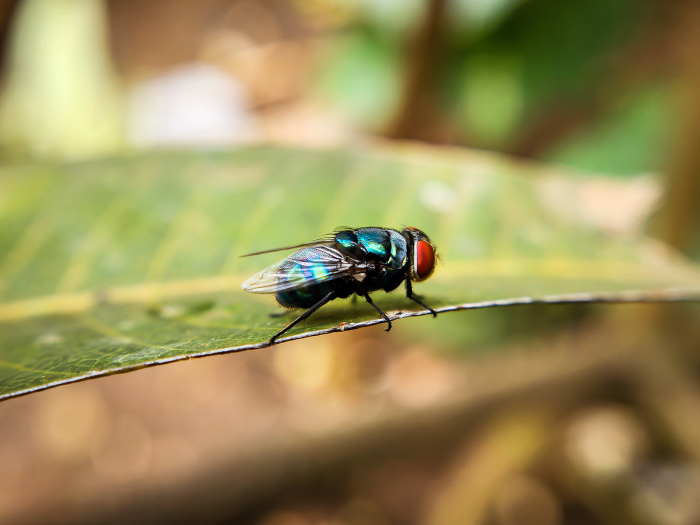
What Quarantine Typically Looks Like
Quarantine measures are usually targeted rather than widespread. They focus on restricting movement of potentially infected animals until they are inspected, treated if necessary, and cleared for transport. The goal is containment, not disruption. In Texas, current response measures include an infested zone and inspection requirements before warm-blooded animals move out of affected areas. Those controls can feel burdensome, but they are designed to buy time for surveillance, treatment, tracing, and sterile fly response before the pest gains a stronger foothold.
Sterile Fly Programs
The sterile insect technique remains the backbone of screwworm control, and it’s one of the most successful examples of large-scale biological pest suppression in agricultural history. Sterile male flies are released in large numbers so that wild females, which generally mate only once, produce no viable offspring. Today, that strategy is being supported by a broader response network that includes border surveillance, fly trapping, outbreak mapping, laboratory confirmation, public outreach, and expanded sterile fly production and dispersal capacity in Panama, Mexico, and South Texas. In other words, the response isn’t one tool — it’s a layered system, and each layer matters.
Community Efforts Matter
One property can reduce fly pressure, but a region working together can suppress it far more effectively. That is why officials keep emphasizing coordination. Vector control only works when everyone participates — ranchers, veterinarians, pet owners, wildlife managers, sale barns, animal shelters, extension agents, and rural communities alike. Early reporting from one ranch, one clinic, or one household can trigger surveillance that protects a much larger area.
This is a situation that calls for attention, not alarm.
New World screwworm is serious, but it isn’t unmanageable. The tools are already on the table–surveillance, sterile fly programs, veterinary treatment protocols, movement controls, and everyday fly management practices that most rural folks already know well, even if they don’t always think of them as “biosecurity.”
What matters now is consistency at ground level, where small decisions add up quickly.
- Keep properties clean.
- Cut off breeding sites.
- Watch animals closely.
- Treat wounds immediately.
- Don’t give flies standing water or rotting feed to work with.
- Use fly bait and traps where they make sense.
- And when something doesn’t look right — report it fast, not later.
None of that is complicated. The challenge is doing it every day, not just when problems show up. Because with screwworm, the margin between a contained issue and a wider one can be smaller than it looks.
And in the end, the simplest truth still holds: Don’t roll out the welcome mat.
Why is New World screwworm a problem?
While screwworm flies are simply an annoyance, the larvae hatch inside wounds and orifices of warm-blooded animals. The larvae then consume flesh as they grow. This causes growing wounds and pain, leading to infection and additional complications. Currently, the biggest threat from screwworm in the United States is to the meat industry.
Where does New World screwworm live?
New World screwworm thrives in tropical and subtropical regions, such as Central America, Mexico, and the southern United States. Larvae and pupae die in temperatures below 45 F, restricting them to a warm-weather problem in the United States.
Are there screwworms in the U.S.?
As of this article’s publication on June 10th of 2026, five cases of New World screwworm have been reported in cattle, dogs, and goats.
Can humans get screwworms?
Screwworms are unlikely to affect humans because flies must have time to land on wounds and orifices, then lay eggs. But if a fly is allowed to lay eggs and those eggs hatch, the human could potentially contract a parasitic infection in which the larvae consume flesh. Humans must immediately seek medical attention if they suspect a screwworm infection, including wounds that worsen despite treatment or become infected.
How can I stay safe from screwworm?
The best way to avoid screwworm is with hygiene and vector control. Keep areas dry, clean up animal waste, and dispose of damp bedding. Use topical fly control on animals if necessary. Apply clean dressings to open wounds on animals and humans.
Karmin Garrison is a word nerd, herbalist, “accidental gardener,” and DIYer, living on a 1-acre almost-homestead in East Texas. When not magicking up words or chasing after kids or grandkids, she can be found wandering the woods, fishing, beading or sewing, sharing wild stories, gallivanting across the South, or with her nose in a book. Sometimes she sleeps, but that’s usually on accident.
Originally published in the September/October 2026 issue of Grit magazine and regularly vetted for accuracy.