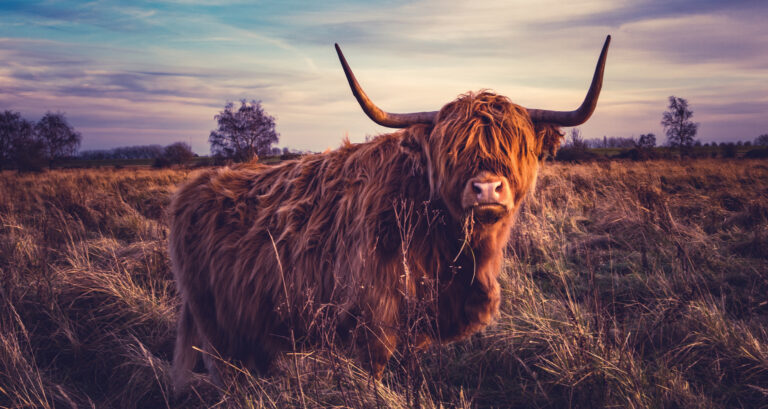
Bulls can be invaluable additions to small homesteads, but these animals have a deserved reputation for being difficult to handle. Why are bulls so aggressive? Conquer your fears and adopt these management methods for how to keep a bull in the pasture on your farmstead.
With their propensity for aggressive behavior and temperamental attitudes, mature bulls can pose risks that seem to outweigh the benefits for small family farms. In some instances, though, you may not have the option of alternative breeding methods, such as leasing a bull or using artificial insemination. While housing a bull definitely brings challenges, some considerations can help you in this venture. Your first task it to learn why bulls are so aggressive, and how to avoid the problem in the first place.
I’ve been raising Miniature Jersey dairy bulls and selling them to small farms across the United States for more than 17 years, and most of these folks have kept their bulls successfully. While good genes definitely have a significant impact on a specific animal’s disposition, I’ve also found the following six management considerations have great potential to increase the odds of a favorable outcome. Keep in mind that all bulls should be respected for their potential to cause injury and damage to people and properties.
Allow Adequate Acreage
When considering how to keep a bull in the pasture, note that the most aggressive bulls tend to be those kept in small quarters, or those not provided with space to move around freely. Why are bulls so aggressive? Consider what it’s like when you as a human feel backed into a corner rather than being able to maintain personal space. For a bull, an uncomfortable situation might spark its behavioral instinct of engagement, even when a human perceives the same situation as non-threatening.
Only once did a bull’s threatening behavior result in physical injury to me. The bull was raised on an extremely small property where it came into close daily contact with humans. Being raised from birth with no room to escape direct contact with people, it learned to engage rather than step away. Because of this, the bull’s previous owner often used determined measures to force it back. As the bull matured, it began to regard humans as a source of irritation. Despite the bull’s great conformation and pedigree, its lack of regard for personal boundaries meant we were unable to keep it. We couldn’t sell it to anyone else as a herd sire in good conscience, either.
Adequate acreage for a bull doesn’t mean you need dozens of acres, but it does mean you should have enough space and facilities so both the animal and you can move about freely without constantly being in contact — about 1 acre per beast. Bulls with adequate space aren’t as likely to feel pressured and reactive. Instead of engaging physically, they’ll typically turn away and mind their own business.
Maintain Quality Fencing
The old adage “good fences make good neighbors” is especially true when you’re keeping a bull. The nature of bulls is to test boundaries. They use their heads to butt and their weight to push around anything that isn’t nailed down, and they can destroy many objects within their reach. Bulls also push through weak fences to reach cows that are ready to be bred. Bulls have an excellent sense of smell and can detect a cow in heat up to 6 miles away. A weak fence is an open invitation for your bull to visit the neighbor’s cows — a situation that probably won’t be acceptable to either party. These things don’t make a bull inherently bad. Expecting a bull to ignore its natural instincts is like expecting a bird not to sing or a dog not to bark. Sturdy fences will help keep bulls in their proper place — keeping peace with the neighbors — and protect your property as well as the bull itself.

Good fences are worth the initial expense and the follow-up time to maintain them. The correct setup of perimeter and cross-fencing will allow you to move cattle successfully with less effort. You can use cross-fencing to create separate but connected paddocks within the perimeter fencing, and then move your animals securely between the paddocks via gates. This will make it simple to separate a bull or cow from the rest of the herd without a lot of undue stress to you or the animal — often as simple as opening a gate and allowing the animal to pass through to a new pasture once it’s been separated from the herd.
Create a Herd Lifestyle
As herd animals, bovines are happiest when they’re in a group. They form lasting bonds and consider their herd mates to be part of a large, extended family. Bulls have the same instinctual desires to reside with their herd, but, of course, bulls must sometimes be kept separately from cows. Examples include when heifers are too young to breed, or when cows that’ve recently calved need a rest before being bred again. The same holds true when you want all of your cows to calve during a particular season, such as a uniform spring or fall calving.

On our homestead, we typically allow the bull to remain with the herd, pulling cows when necessary. We may pull cows with similar calving dates when they’re getting close to delivery, keeping them together as a smaller herd in a separate lot until they’ve calved. We return them to the larger herd to be bred by the bull after they’ve had an adequate postpartum rest period. Young heifers (cows that haven’t given birth) are grouped by age and also removed from the herd until they’re of breeding age. In this manner, the bull remains with his core herd while we add and remove smaller groups of cows and heifers as necessary.
When it occasionally becomes necessary to remove a bull from the herd, we pasture him with several steers. Under this arrangement, it’s not uncommon for a bull to walk the fence lines and fret about not being with the cows, even though he has other herd mates.
Handle Bulls Infrequently
We prefer to purchase bulls that haven’t been haltered and lead-trained. We walk and work among all of our cattle daily, and they become familiar and comfortable with humans from the time of their birth. But our calves are dam-raised, as bottle-feeding and even grain-feeding bulls may increase aggressive behavior toward humans. By purchasing dam-raised calves with great grass-fed genetics and keeping bulls that can maintain their weight without being grained daily, we can distance ourselves from our bulls.
Why are bulls so aggressive? Bulls that’ve been raised as pets or handled daily are more likely to approach humans and insist on having their way. They may use their head to push you around. Although this type of behavior may be cute when the animal is small, it can cause serious injury to humans when done by a mature bull weighing up to several thousand pounds. Head-butting, pushing, mounting, and riding are instinctual and acceptable behaviors within the herd, but unacceptable and dangerous when directed at humans.
Consider this expert advice from animal behaviorist Temple Grandin, who wrote in her 2006 updated report “Preventing Bull Accidents” for Colorado State University, “The most dangerous dairy bull is a bull that has not been properly socialized to his own kind [emphasis added]. When a young bull calf becomes mature at age two, he needs to challenge the top bull in the herd. If the bull calf has been raised alone and has not had the opportunity to interact with other cattle, he thinks he is a person and he wants to exert his dominance over the ‘herd.’ This can result in dangerous attacks on people.”
Grandin continues, “Ed Price at the University of California found that bull calves raised in groups were much less likely to attack people than bull calves raised in individual pens. Bull calves raised on a cow were the least likely to attack. When they are raised with their own kind, they know who they are and they are less likely to think that people are part of the herd.”
Observe Bovine Behavior
If you choose to keep a bull on your property, you should work to understand the animal’s natural instincts and needs. Spend time in the field observing bovines to understand how to keep a bull in the pasture. Pay attention to how they interact with one another to better understand how a bull might react in any given situation. Instead of guessing at the reasons why bulls are so aggressive in general, you should get to know your own animal and the subtle signs it gives before it reaches the engagement level. For example, a bull will present itself broadside to another bull to display its strength and to give the competing bull a chance to submit without a fight. Waiting until the bull is lowering its head, bellowing, and pawing the ground in anticipation of charging may be too late for removing yourself from potential harm.

Another benefit to understanding bovine behavior is that it can decrease your stress level and help you exhibit quiet, calm confidence without being rash or aggressive around bulls. This, in turn, will lower the bull’s stress level and make it more cooperative. Neither over-confidence nor great fear are ideal in a bull’s presence. You can access excellent resources on bovine behavior through a simple online search. Grandin’s website (www.Grandin.com) includes some of her research projects. I also recommend her book Animals Make Us Human, which dedicates an entire chapter to understanding bovine behavior.
Reduce External Stimuli
Figuring out how to keep a bull in the pasture becomes simpler when you house only one bull at a time. While some mature bulls learn to live in peace with one another, others find it difficult to even share a fence line with a neighboring bull. The bulls can become stressed and physically weary from constantly posturing and bellowing across the fence. They can damage fences and injure one another if they do manage to get together. I recommend you house your animal in a different area from your neighbor’s bulls.
Tammy Cupp and her husband, Mike, raise and train dairy cattle on 50 acres in the Blue Ridge Mountains. Follow them on Instagram (@Maplelawn_Farm) and Facebook.
Originally published as “Bulls On the Farmstead” in the July/August 2023 issue of Grit magazine and regularly vetted for accuracy.