
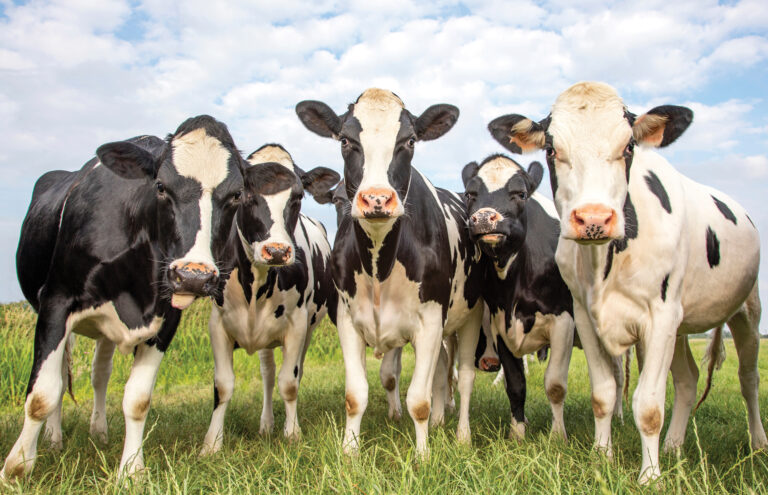
The majority of dairy cattle in the U.S. are now infected with BLV. Virus control through bovine leukemia virus testing and infected animal segregation are among the next steps against BLV in cattle.
 This article is also in audio form for your listening enjoyment. Scroll down just a bit to find the recording.
Bovine leukemia virus causes a devastating illness in cattle. The virus currently infects almost half of all dairy cows and about a third of beef cattle in the United States. It reduces milk production, shortens the infected animals’ life spans, and disrupts their immune systems. The virus is so widespread today that it’s the leading cause of cattle being condemned in the U.S., because of virus-induced lymphoma. And now, some new and highly controversial findings are causing scientists to reexamine if the bovine leukemia virus (BLV) causes health problems in humans. Unfortunately, bovine leukemia virus testing is rare and expensive when applied to an entire herd.
The prevalence of BLV in cattle has slowly been increasing since the 1960s and 1970s, when only about 10% of all U.S. cattle were infected. Back then, generations of North American animal scientists and veterinarians were taught that BLV wasn’t worth controlling unless you wanted to export livestock to nations that demanded BLV-free animals because they had eradicated BLV. Virus-induced bovine lymphoma had been observed, but the cancer was rare because of the low incidence of the virus in North American herds. We didn’t yet understand its other effects.
Infected for Life
BLV is a retrovirus, a cousin of the infamous HIV retrovirus that causes AIDS in people. Cattle are infected with BLV for life, and transmission occurs from the DNA version of the virus, called the “provirus.” This provirus incorporates itself into the DNA of many cell types, but most notably into the blood lymphocytes (a type of white blood cell), which then can proliferate to very high concentrations. These infectious lymphocytes transmit the infection to new hosts through direct nose-to-nose contact or via blood transfer (including dehorning, foot trims, and shared hypodermic needles). Calves can be infected before birth, or from colostrum or milk from infected cows.

As with HIV (the virus that causes AIDS in humans), BLV in cattle compromises the immune system, clearing the way for the development of many other diseases and conditions. A Michigan study showed that BLV-infected cattle were 23% more likely to be culled or die than their uninfected herd mates of the same age. This study was repeated a few years later using herds from nine U.S. states, and that time, a 30% difference was found. Other studies have repeatedly shown an association between BLV infection and reduced milk production in dairy cattle, particularly in older animals.
Humans with AIDS have written books about the experience, and we can surmise that cattle with BLV-induced immune dysfunction are also suffering. Animal welfare is becoming an important issue for the livestock industries. Ideally, animals should live healthy and free of pain until they’re humanely slaughtered to become our food. BLV is one of the diseases preventing us from reaching this goal.
Audio Article
BLV: Cattle Illness and Transmission
The traditional way to control BLV was to do an enzyme-linked immunosorbent assay (ELISA) blood test for antibodies, and then cull all the positive animals. This has been done by more than 20 countries (mostly European) that’ve already eradicated BLV. Cattle ranchers in these countries, however, were usually dealing with an extremely low prevalence, so it was only a matter of culling a few infected cows per herd. Plus, these governments usually compensated owners for the culled animals.

In the U.S., where BLV is now found in almost half of all cows, culling so many animals is cost-prohibitive. Fortunately, a promising new diagnostic test has been developed in the past few years. We can now measure a cow’s BLV proviral load, which is the concentration of the infectious provirus in the blood or other body fluids. This testing is available nationally through the lab service of the Dairy Herd Improvement Association.
Through testing and follow-up, we’ve learned that cows with extremely high proviral loads (called “super-shedders”) are responsible for most new infections. As many as two-thirds of the ELISA-positive cows are of minimal infectious risk to their herd mates, because their proviral load is low. This means that when super-shedders are removed from the herd, the rate of new infections drops rapidly. Over time, after the prevalence drops to a sufficiently low level, the producer can cull all the ELISA-positive cows and be done with the infection for good. Several U.S. producers have used this method to eradicate BLV from their herds, and it was much less costly than culling all infected cows at once. Surveys also have shown that BLV-negative herds can be maintained even when neighboring herds are infected.

We’ve also recently discovered through bovine leukemia virus testing that many North American cattle have a genetic susceptibility to becoming BLV super-shedders. In selecting for high-producing dairy cattle, we may have unknowingly selected for genes that confer a high proviral load if infected with BLV. Cattle with the resistant version of these genes can still get infected, but they’ll rarely develop a high proviral load that facilitates transmission to their herd mates. Breeding cattle without the genetic susceptibility for BLV could reduce transmission of the virus.
Genetic diversity is one way a species protects itself from infectious diseases, but unfortunately, North American cattle are highly inbred. Wildlife specialists commonly estimate the effective breeding population of endangered species on the basis of their genetic diversity. They estimate the effective breeding population for all U.S. dairy cattle at just 39 individuals for Holsteins and 30 individuals for Jerseys. Our livestock has become a monoculture. Most breeding dairy bulls are selected on the basis of their daughters’ performances in their first lactation. As BLV primarily impacts older cows, this may be one reason why this genetic association with BLV proviral load wasn’t noticed for so long. I anticipate that cattle breeders will soon start offering bulls carrying genes associated with BLV resistance, to the extent this can be done without hurting milk or meat production.

Vaccination for BLV is another possibility, although many attempts to develop a vaccine have been unsuccessful. Developing vaccines for retroviruses is a notoriously difficult process — we still don’t have one for HIV. However, vaccine technology has advanced substantially in the past few years, and perhaps a BLV vaccine could be developed if manufacturers see a market.
Creating a BLV-Free Future

At this time, government-mandated control of BLV in the U.S. would likely be disastrously unsuccessful. Over the past several decades, federal control of bovine tuberculosis, brucellosis, and other animal diseases has been massively expensive and extremely protracted in the absence of strong support from producers. Little will change until consumers ask for BLV-free animal products, as they did for cage-free poultry meat and eggs, pork raised without farrowing crates, and a wide selection of organic foods. It’s a wonder BLV hasn’t attracted more attention from consumers who might prefer meat and milk from uninfected cattle that experienced happier and healthier lives. Unless the animal industries become proactive, the increasing prevalence of BLV in our nation’s herds will likely encourage the growth of industries that remove farm animals entirely from the production of dietary protein. BLV is one factor that will make it more difficult for animal agriculture to compete with the growing number of plant-based alternatives.
Where can you currently buy commercial BLV-free dairy and meat foods? Nowhere. Consumers must first express a preference for BLV-free dairy and meat products.
Prevention of BLV: Virus Testing and Control
You can ward off BLV by improving the cleanliness of your livestock management practices. Prevent the exchange of blood between infected and uninfected animals by disinfecting equipment contaminated with blood. This includes castration implements, ear taggers, dehorning gouges (electric are best), and hoof knives. Discard needles after one use. Control the population of biting flies on your property.

If possible, conduct bovine leukemia virus testing on your entire herd and segregate the infected animals to prevent spreading through contact.
— Grit Editors
Dr. Paul Bartlett is a professor emeritus in the Department of Large Animal Clinical Sciences at the College of Veterinary Medicine, Michigan State University.





: Virus Transmission in Cattle)