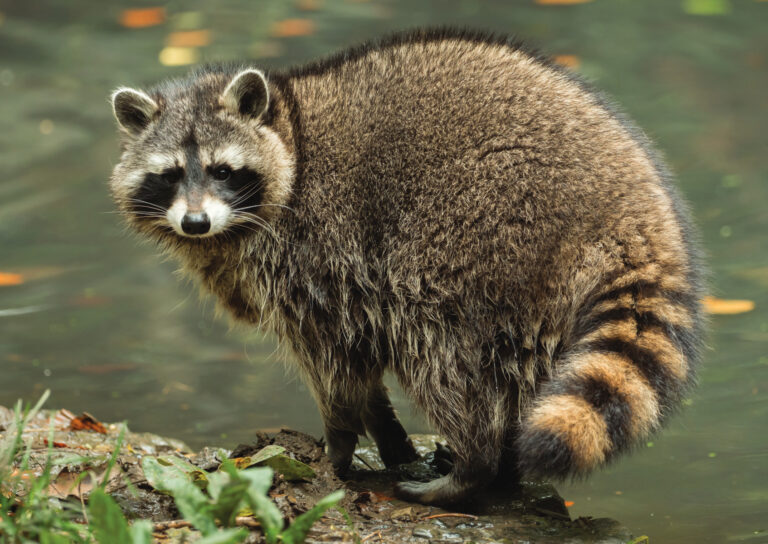
Who traps animals today? Learn about fur-trapping animals, its history, what modern trapping looks like today, and what to consider when capturing them.
Decades ago, as novice homesteaders, we had occasion to butcher our first steer, an animal we had raised from babyhood. A friend made a bet with me that we wouldn’t be able to eat the meat because of our long association with the animal.
She lost the bet. The steer was delicious, and my conscience didn’t bother me in the slightest. Why? Because with that first steer – and every other animal we’ve butchered in the decades since then – we knew exactly how it was raised. Just as importantly, we knew how it died: quickly and humanely.
And that quality, humaneness, continues to guide our choices as we maintain our rural homesteading journey. I don’t consider myself an animal-rights activist, but it’s not hard to recognize when animals are needlessly suffering at the hands of humans.
From a personal standpoint, I’m revolted by trapping. Even mousetraps often produce such mangled results that we’ve switched to using live traps and mouse repellents. While I recognize there are times trapping is justifiable, that doesn’t mean I like it.
Last year, Grit featured an article from a professional trapper outlining various techniques for trapping furbearing animals, both on water and land (“Beginner’s Guide to Trapping,” March/April 2025). Clearly, this person knew his stuff. What he failed to do, however, at least in my opinion, was justify his decision to harvest furbearing animals through the cruelest methods imaginable.
Fur Trapping History
Trapping has an ancient lineage dating back to the dawn of human history. Snares are among the oldest trapping techniques, used worldwide by hunter-gatherer societies. Spring traps have been traced back to the late 16th century and were considered standard among American settlers for harvesting fur and controlling pests.

Modern traps range from the ubiquitous snap mousetraps for pest control to live traps for scientific purposes (which, as a former field biologist, I’ve used many times). With the exception of live traps, even trapping for pests has its cruel features. Snap traps, which generally are lethal within seconds, too often merely maim the animal. Even worse are glue traps, which cause gruesome injuries, intense suffering, and slow, painful deaths. They frequently catch unintended animals, including birds, snakes, and cats. Veterinarians and wildlife rescue organizations hate glue traps with a passion, because they’re the ones who try – and often fail – to save the unintended animals caught. In fact, glue traps are considered so cruel that the U.S. may soon ban their use, joining numerous other nations around the world.
A Trapping Resurgence: Who Traps Animals Today?
Many people think trapping furbearing mammals in modern America is a dying art (no pun intended). But, in fact, trapping might be experiencing a revival.
The popularity of trapping tends to follow the rules of supply and demand. When furs are valuable, trapping increases. When the interest in furs tanks, so does trapping. However, trapping also faces societal pressure – even if the demand is there, trappers face pressure from anti-trapping groups and state legislation to give up the practice.
The national and international demand for furs took a nosedive in the late 1980s, when anti-fur campaigns succeeded in convincing consumers that it was both cruel and unnecessary to harvest animals solely for fashion. Additionally, farm-raised furbearing animals largely took over whatever remained of the fur industry, making it even less economically feasible to trap wild furbearers. It’s no accident that the U.S. saw an increase in anti-trapping legislation in the 1990s.
And yet the practice never fully died out. In fact, certain government agencies, most notably the Association of Fish and Wildlife Agencies, began issuing standardized guidelines and pushed for increased education and licensing to improve techniques and reduce “incidental take” (meaning, catching non-targeted animals), all in an attempt to redeem trapping’s image in popular opinion.

The resulting document, “Best Management Practices for Trapping Furbearers in the United States,” is still in use today. Trapper education includes promoting methods that kill animals quickly to prevent undue suffering.
While trapping education and techniques may have improved because of these guidelines, it’s fair to surmise that it did little to redeem trapping’s reputation among non-trappers, i.e., the general public. Trapping is still seen as low-hanging fruit for activists and environmentalists.
Now that trapper education is mandatory in many areas, its popularity has never been higher, particularly since the COVID-19 lockdowns, when some people used trapping as a way to get outside. However, the market for furs has shifted. A pelt isn’t worth much. But if the trapper makes something out of it, the pelt becomes worth a lot more, thus economically justifying the practice.
Trapping Animals Today
Does trapping have a place in a modern world? Yes and no.
Trapping is still the most efficient method for thinning or removing some unwanted pests. It’s hard to shoot a weasel, for example, so if that predator is a regular visitor to your chicken coop, trapping might be the most efficient method to remove it. Trapping can also serve as a necessary tool in habitat preservation for controlling species overpopulation and disease and maintaining a healthy and balanced ecosystem.

In general, however, the issue of trapping comes down to the difference between necessity and recreation. In generations past, trapping was often a vital fiscal component of a family’s income. My own grandfather was a fisherman and trapper on the bayous of Louisiana during the Great Depression. His activities were essential to feed his family. In years past, trapping was something children could do to supplement household income and help their families. In parts of the world where people live a subsistence lifestyle, trapping is vital for obtaining both food and commercial components (glands, leather, furs, skulls, etc.).
Even now, trapping has its place. There are times when human and livestock health and safety are at risk from extensive rat and mouse populations, rabid animals, disease carriers, and invasive species. Occasionally, large carnivores, such as mountain lions, grizzly bears, and polar bears, can become a direct physical threat to human life.
But most people who trap today don’t do it for economic necessity or pest control; they do it for recreational purposes, as a means to enjoy the great outdoors. Some argue that trappers are instrumental in protecting wilderness areas from industrial development, but trappers aren’t wildlife managers and don’t address management issues, such as wildlife population status, birth and mortality rates, age and sex ratios, home ranges, habitat changes, manageable populations, reintroduction programs, etc. The vast majority of recreational trappers don’t even benefit economically from the practice. They just like trapping because it’s “fun.”
That said, wildlife biologists can rely – sometimes heavily – on commercial or recreational trappers for tissue or blood samples, which aid in tracking health and disease among mammalian populations.

For whatever reason, there are times when killing animals is either necessary (pest control, disease control, or invasive species control) or useful (for meat or fur). However, there’s little excuse to use practices that expose both targeted and untargeted animals to cruel pain and torture lasting hours or days. The objections to trapping (usually) don’t center on the need to control pests, diseases, or invasive species – they center on the tortuous techniques used.
Unintended Catches
Even the most skilled and experienced trapper has little control over unwanted catches, i.e., animals that weren’t targeted. When a hunter shoots at an elk, there’s no chance he’ll kill a beaver by accident. But when a trapper sets a snare or a steel-jaw trip, the trap can’t distinguish between a dog, a cat, or a fox. Aside from the cruelty of traps, the likelihood of torturing an unintended animal is simply too high.
In fact, this is exactly what happened in our rural neighborhood a few years ago. We live in a place with vast trails adjacent to wilderness land. Most of the surrounding property belongs to either a timber company or the state. Unbeknownst to a neighbor, someone was setting snares. Our neighbor went walking with her dog off-leash, when the animal disappeared without a sound or trace. After a frantic search, she found her dog in a snare, so tightly caught that it couldn’t make a sound. She barely found it in time to save its life, and she was justifiably furious with whoever set snares so close to rural landowners, where domestic animals could get caught.
Illicit trapping is almost impossible to control on the ground level, as our neighbor found out when her dog was caught. Regardless of how much classwork, reference guides, standards, or licenses are required or issued, anyone can trap. It is, for the most part, invisible and lethal. The results are untold numbers of animals dying a needless, tortuous death. And for what?

Toward Ethical Trapping
Interestingly, the U.S. is lagging in adopting the ethical trapping methods currently followed in Europe. An August 2007 review of European and American trapping methods in the Animal Welfare scientific journal found that “many of the practices commonly used to trap mammals cannot be considered humane. Current legislation fails to ensure an acceptable level of welfare for a large number of captured animals. New welfare standards for trapping wild mammals need to be established so that in the future a minimum level of welfare is guaranteed for all trapped individuals.”
In a chapter titled “The Five Ws of Mammal Trapping” from the 2022 edited collection Mammal Trapping – Wildlife Management, Animal Welfare & International Standards, Canadian wildlife biologist Gilbert Proulx notes that it’s “likely that the issue of animal welfare in mammal trapping will never be resolved conclusively to the satisfaction of all opponents. … However, if wildlife professionals, trappers, and governments work together to develop improve[d] trapping systems that are representative of state-of-the-art trapping technology and implement best animal welfare practices in the field, the gravity of issues raised by anti-trapping organizations will be significantly lessened.”
Of the five general categories of justifying trapping that Proulx examined (sustenance, research, human-wildlife conflict, fur trapping, and wildlife management), all are subject to questions of whether the practice is defensible and has no viable alternatives. He recommends that, in any of the above categories, if trappers can’t – or won’t – use state-of-the-art trapping technology and selective trapping systems, then the trapping should be canceled.
I’m not an animal-rights activist or a vegan. I’m a former wildlife-biologist-turned-homesteader. Both fields attracted me because I love animals and don’t want to see them suffer needlessly.
At the risk of sounding like I want to have my cake and eat it too, I don’t argue that trapping – even recreational trapping – should be made illegal, any more than I’d argue that hunting should be made illegal. What I do urge, however, is the creation of modernized trapping methods that better ensure quick kills and limit the accidental trapping of unintended species, and that in all cases where trapping is an option, to consider humane alternatives.
Patrice Lewis is a wife, mother, homesteader, homeschooler, author, and speaker. An advocate of simple living and self-sufficiency, she has practiced and written about self-reliance and preparedness for almost 30 years.
Originally published in the September/October 2026 issue of Grit magazine and regularly vetted for accuracy.