
The bees are all tucked away for winter. There really isn’t much for the beekeeper to do this time of year, (except maybe check in on the bees on a warm day to make sure every one is making bathroom runs out of the hive etc.) There are a few things a thumb twiddling beekeeper can do in the winter months to keep their bee brain active and prepare for another exciting season.
I am a firm believer that even if you have been a beekeeper for 50+ years there is ALWAYS something new to learn about bees. Reading something from a new perspective can be refreshing and eye opening and you may learn that you can alter your approach and get different or better results. I think by now my readers know that I tend to take a “different” approach when it comes to beekeeping … and just about everything else too … This is what works best for me as a beekeeper and I love to share what I know. My bee knowledge has come from my wonderful bee mentors over at Steller Apiaries, numerous books, studies, some great scientists that I have had to privilege to listen too, and seasoned conventional beekeepers alike. All offer great insights and ideas, making me into a better beekeeper than I was the season before.
I highly recommend going to your Beekeepers Association meeting! I usually try to attend the Michigan Beekeepers Association Spring Meeting every year. This is where I learned that for the most part beekeepers are some of the friendliest folks you will ever meet. Every one is there to expand their bee knowledge. The MBA always has some great speakers and “How-To” breakout sessions. You can learn about everything from the intricacies of honey bee pheromones to how to make candles and lip balm. They also usually have a number of beekeeping supply booths there too, so you can talk up the fellas from Dadant and maybe pick up a new hive tool or grab a new bee suit. I personally love stopping by the Wicwas Press table to pick up new books.
Now is the time to really brush up on your bee trivia too. I LOVE “Fun Facts” to the extent that it is most likely extraordinarily annoying (yet informative!). Like did you know that you can tell how many times an apple blossom was visited by a honey bee (or other pollinator) by how many seeds that particular apple has? OR that the first ever shipment of bees to the Americas in 1609 ended up lost somewhere in the Bermudas when the ship was blown off course by a bad storm? Here are some books that I like, some are for a nice pleasure read and others are more in-depth and technical.
Understanding Bee Anatomy: a full color guide; by Ian Stell. Oh my gosh this book is beautiful! It has lots of great photos and information, you can actually see how bees work. It is divided into chapters like “Legs” and “Wings and Flight Structures.” So when someone says “You know honey is bee vomit right” you can say “Well technically nectar is stored in the crop, which can hold 30% of the bee’s weight in nectar, and is prevented from continuing further into the digestive system.” But people usually don’t like fun facts when they are trying to make a joke, so don’t be surprised when they aren’t nearly as impressed with you as you are with yourself.
The Bee Friendly Beekeeper, A Sustainable Approach; by David Heaf. This book is great for those wanting to get a better understanding of Top Bar Hives, and it mainly discusses Warre type hives. It also goes into some history of beekeeping by ancient civilizations, like the Egyptians.
Bees In America, How The Honey Bee Shaped A Nation; by Tammy Horn. Seriously if you only pick up one singular book this winter pick up this one! It is chock full of amazing history starting from the colonization of the Americas all the way up until now. It explains how “Quilting Bees” got their name and lots of old beekeeping traditions and superstitions that were brought here by all the different countries that made America what it is today. It also explains how bees were used for motivation and a job to prevent depression and lethargy in the new world. And the role Native Americans played with “the white man’s fly.”
The Secret Life of Bees by Sue Monk Kidd. This book is not entirely bee related but is still a lovely read and one of my favorites. It details a young girl that ends up living with a woman beekeeper and her two sisters in a big pink house in the south around the time of the civil rights movement.
It is also a good idea to give your bee equipment a once through. Check for broken or missing tools that need to be replaced and restock your tool box. I like to keep a little baggie of mini marshmallows for queen cages, thumb tacks, cotton balls and lemon grass essential oils in there too. I plan to add some nice witch hazel and hello kitty band aids (hello kitty really takes the sting away …) to my box too for the occasional sting. I like to give my bee suit and gloves a nice wash too, it’s always a good idea to use scent free detergent. Often scented soaps contain ingredients that mimic the Alarm Pheromone which will earn you some stings in the bee yard. Always read your labels to make sure your soaps and shampoos are Ethyl Acetate or Butyl Acetate free. I just shove everything into the washing machine on gentle and let it air dry, no damage sustained yet. Feel free to use whatever approach you are comfortable with though … lord knows bee suits ain’t cheap. Be sure to check for any rips or tears in your protective gear too. Nothing like walking back up to the house while stripping off your suit … then your pants … then your shirt and ending up at your back door in your tightie whities because a leg zipper didn’t zip correctly. Rule #1 bees will find a way. A lesson painfully learned. I like to take the time to clean up and get old hives ready for the spring and prepare new equipment for use in the spring too.
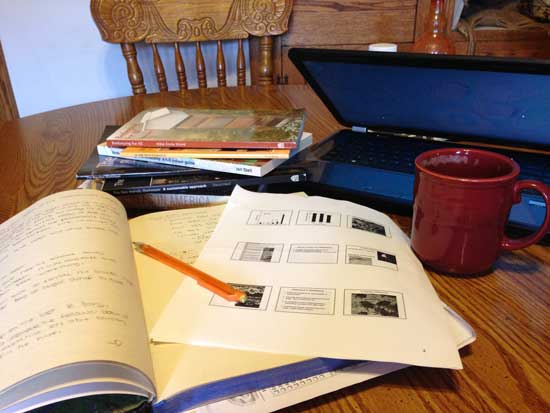
And lastly don’t forget to update your bee diary! If you don’t have one you should! Every hive that I have ever started has its own chunk in my book. This is where I add dates of capture/install, dates of swarms and any manipulations and behavior plus what I find in the hive during my observations. Write down the weather the time of day and how the bees smell too as these details can offer great insight into what is going on in the hive without you having to actually get in there and look at things. Check out At The Hive Entrance by H. Storch. I like to draw pictures in my book too. It’s kind of a mini history of each hive’s life.
What do you do in the off season? Maybe you cram info or maybe you just relax and hibernate. Have any book suggestions for me? I will take them! Also I realize that bees are a hot topic right now and people have a lot of interest. Is there some particular “bee thing” you want to know more about? Shoot your ideas and maybe I can come up with a post to help a little or maybe point you in the general direction. Please keep in mind that I know only Top Bar Hives and not a darn thing about Langstroth and I am still growing and learning on my beekeeping journey much as you are. I often change my stance on subjects depending on the resources I encounter. Like I said above, growing into a better beekeeper than I was the season before.
Rachel is a gardener, beekeeper, wife & mother of three wild and crazy boys, and lover of all things homesteading. Visit greenpromisegrows.com to see more!