Learn about the best natural garden pest control using poultry around the yard for an all-natural, animated insecticide.
Tired of slugs and bugs destroying your garden? Tired of picking ticks off your children and pets? Did you realize that birds on the farm aren’t just for eating; they can also play an important part in keeping all kinds of pests at bay? Chickens, ducks, turkeys and guinea fowl are not only entertaining and beautiful, but they can supply fresh eggs daily, offer effective bug and slug control, and make charming gardening companions to boot. Ridding your yard and garden of pests with these animated insecticides is the ultimate low-cost, chemical-free approach. (For more on ducks, see “Raising Ducks will Help Your Garden Patch.”)

Guinea Fowl
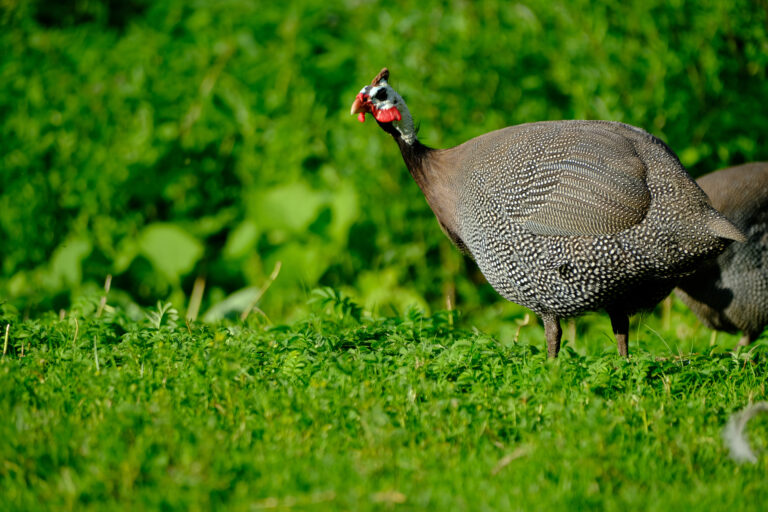
Although guinea fowl share a U.S. Department of Agriculture poultry classification with chickens, they range farther, fly higher, and are more active than chickens.
Guinea fowl guano is high in nitrates, making it an excellent free fertilizer.
Guinea fowl have an innate spring in their step that helps them bounce and keep their balance. Harvard scientists spent months chasing helmeted guinea fowl down a 20-foot plywood runway, trying to trip the birds. Their goal wasn’t to torture them, but to understand how ankles, knees, and hips react on uneven ground. This research aids in creating prosthetic limbs and legged robots than can move over rough terrain.
Guinea Fowl Sound the Alarm
Looking a bit like chicken-sized vultures, guinea fowl strut their stuff across lawns, fields or gardens – anywhere bugs, snakes, and rodents roam. Some suggest that their shrill cackle sounds like chicken claws scratching on a chalkboard. But to gardeners, these bizarre birds are on patrol – pest patrol. Any bird with a call like “buckwheat!” and a more or less naked helmeted head must have some redeeming qualities. These voracious eaters devour Lyme disease-bearing ticks, fleas, Japanese beetles, June bugs and many other uninvited creatures. And to top it all off, your crop is quite safe when you put guineas on garden patrol.
Guinea hens and roosters have keen eyesight. Not only do they spot pests from afar, but they also announce the approach of intruders with their distinctive call. Unfamiliar sights or sounds will always create a fuss, but the guinea hen is much noisier than the guinea cock. The male calls out only when there is good reason, and when he calls out a warning, the rest of the guinea fowl chime in, which creates an intimidating alarm.

Guinea Fowl are Fun to Raise
If you were to raise your own flock of guinea fowl, you’d likely come to adore – rather than detest – these wacky birds. Their caterwauling would soon be music to your ears, since the cacophonous sounds let you rest secure in the knowledge that your faithful, feathered “watchdogs” are hard at work.
“They are rough, vigorous, hardy, basically disease-free birds,” says Jeannette Ferguson, author of the how-to-book, Gardening with Guineas. “They are the most active ‘gardener’ on the farm. Continuously on the move, they pick up bugs and weed seeds with nearly every peck they take, and they do it without destroying plants because they do not scratch like chickens.”
Even the tenacity of a terrier doesn’t terrify guinea fowl. They may scuttle out of the way, but as they fly up to a high perch, they mock a barking dog with their “buckwheat” or “you lose” noises.
Every Silver Lining has a Cloud
Guinea fowl have several drawbacks that may make them unsuitable for some homeowners. They are noisy and may be objectionable to nearby neighbors. Their droppings, which serve as an excellent fertilizer, may be unpleasant if the lawn is used for a playground area. (Guinea fowl droppings do not, however, discourage Border collies from rolling in the fresh fertilizer to take advantage of the enticing smell. Or other dog breeds for that matter, but Border collies I can attest to personally.)
Guinea Fowl Prevent Disease
According to a study published in the Wilson Bulletin, guinea fowl reduced the number of adult deer ticks on lawns adjacent to dense foliage at two sites on Long Island. Adult deer ticks have a 50 to 100 percent probability of being infected with the Lyme disease spirochete, so the presence of free-ranging guinea fowl may help reduce the probability of contracting Lyme disease from adult ticks on lawns and lawn edges. In addition, guinea fowl reduced the presence of other arthropods such as grasshoppers, millipedes and spiders, suggesting they may help reduce the need for chemical insecticides.
Turkeys
Benjamin Franklin so admired the big bronze bird that he wanted it for our national emblem. Comparing it to the bald eagle, he said: “The turkey is a much more respectable bird, and withal a true original Native of America.”
Gobble up the bugs
For centuries, people have raised turkeys for food and for the sheer joy of it. Turkeys are excellent insect foragers — about the only insects turkeys will not eat are those they cannot catch. The major insect groups enjoyed by the turkey are beetles, true bugs, grasshoppers and leafhoppers. Young plants and new fruits may need to be protected from turkey pecking.
In spring, turkeys eat tender greens, shoots, tubers, leftover nuts and early insects. As the weather warms up, they eat more insects, including grasshoppers, beetles, weevils and larvae. Hens typically lead their young to vegetation-covered open areas rich with protein-providing insects, which make up 75 percent or more of the poults’ diet until four or five months old. As the poults grow, they consume spiders, ticks, millipedes, centipedes, snails and slugs. Turkeys eat a variety of foods depending on availability, preference and nutritional needs. All age classes eat insects when they are available, and nesting hens consume slugs to supplement their calcium requirements.
It’s all about the scratch
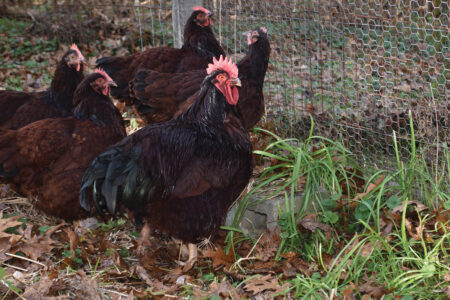
Chickens also are great for controlling pests, especially in the garden. Not only do they love grasshoppers, they are excellent at defending a homestead from scorpions, termites, mice, flies and June bugs. Chickens, in turn, provide fertilizer, fresh eggs, meat and entertainment.

Some folks let their chickens follow behind the garden tiller, catching squirming morsels that happen to turn up. Others use the chickens to till the garden with their endless scratching. This is best done when the garden is finished, or the birds should be confined to a portable pen (often called a chicken tractor). Otherwise, they will likely tear up your plants and poke holes in your prized tomatoes. Free ranging chickens will also help to break up horse and cattle manure, consuming fly larvae in the process, and if an unwise mouse decides to make a break across a hen’s path, there’s a good chance its life will be cut short.
Ducks
The Muscovy’s original name was “Musco Duck,” because it is known as the “Mosquito Duck” for eating mosquitoes. One of the main reasons they were brought to the United States several hundred years ago was to help keep down the mosquito and bug populations. That they do, and they do it well. There are billions of insects on an acre of land, and Muscovy ducks are worth their weight in gold when it comes to eating mosquitoes and insects. They eat mosquito larvae in the water, and they nip the flying insects right out of the air.
Multipurpose homestead partners
Whether you choose chickens, guinea fowl, turkeys or ducks for your homestead fowl, be prepared for the adventure of a lifetime. And even if you think you only want eggs, meat or living lawn ornaments, with a little management and the right attitude, you can put those birds to work and enjoy their entertainment at the same time.
Pamela Maynard writes from a 7-1/2-acre happy homestead in New Hampshire she shares with her husband, son, three dogs, two cats and nine guinea hens. In her spare time, Pam fills full-time roles as wife, mom and MRI technologist.