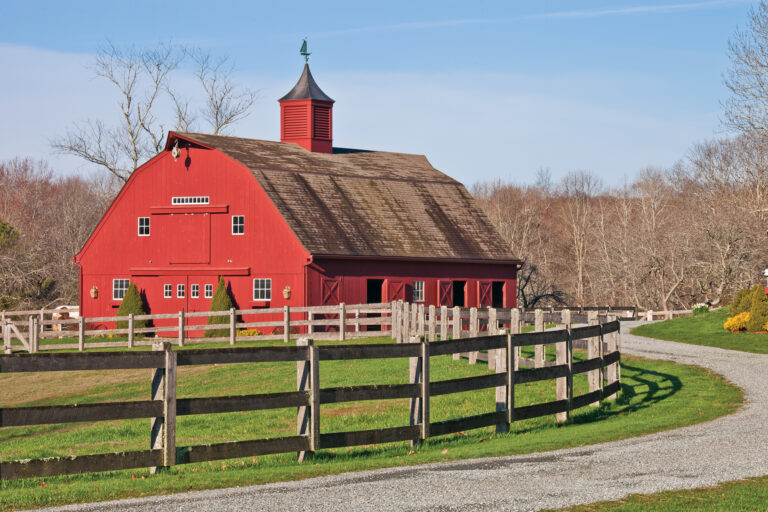
Join Hank Will in this how-to on grading a lane.

Even as the once ubiquitous gravel road faces extinction in some parts of the country, the unpaved country lane (driveway) is alive and well, thanks to the popularity of the rural lifestyle. Gone with the gravel roads are the fleets of municipal graders and their operators who, for a small consideration, might have been convinced to make a corrective pass on your lane the next time they were in the vicinity. But it doesn’t take a road grader or even any experience with heavy equipment to keep your lane in shape. With the right tools and a little know-how, anyone can keep the road to their place looking great and functioning well in every season.

The trick to keeping your lane in line, assuming it was constructed at least reasonably well in the first place, is in maintaining its water-shedding shape, and that’s pretty easy to do if the road in question hasn’t been neglected for too many years. Ideally, the road should slope evenly (at a rate of about a half-inch per foot) from the center to both edges to keep rainwater or snowmelt from accumulating on its surface. So if your lane is 14 feet wide edge to edge, then the crown should be about 3-1⁄ 2 inches higher than the edges. In some instances, such as when curves are cut into a bank, it makes more sense to slope the road from one edge to the other. In this case, a 14-foot-wide lane should vary in height by about 7 inches side to side.

According to gravel road builder Russ Lanoie of Conway, New Hampshire, in the long run, if you develop a maintenance plan and stick with it, you will not only have a better and safer roadway, it will cost less to keep it that way. A big part of that maintenance plan relates to managing water flow by moving gravel around. And the more often you do it, the less time and effort are required overall.
Routine Grading
The combined effects of gravity and simply driving on a gravel road will tend to push material to the edges — plowing winter snow before the lane is frozen and with a cutting edge set too close to the ground will significantly speed the process. If left to accumulate long enough, the displaced material can develop into berms, which actually trap water and cause ruts to form. The goal of routine grading is to pull the displaced material back onto the road, distributing it evenly and re-establishing the crown.
Pulling material back onto the lane is easily accomplished with a heavy-duty tractor-mounted landscape rake or front blade, particularly if it is fully adjustable. Set either attachment’s angle to draw material toward the lane’s centerline, and its tilt to cut the edge deeper than the road surface, which facilitates crowning. Take care not to be too aggressive on the edges or you will end up creating water-trapping troughs. On most farm lanes, one pass on both sides is all that is required to restore the optimal shape, unless there is severe rutting. Use additional light passes with the grading equipment to clean up remaining trouble spots. Although it is an oft-neglected step, once you have graded the road (especially if you cut its entire surface), take some time to compact it by running the tractor back and forth several times.
Subsequent passes with your vehicles will aid the compacting process — avoid driving on the same track until you have made some attempt to compact the lane’s entire width.

Periodic Surfacing
No matter how well you maintain the road, eventually you will need to add material to build up low spots, or replenish lost surface aggregate. Ideally, an unpaved lane’s surface layer will include angular (crushed) stone and some kind of binder material, such as very fine gravel, with a small amount of clay in it. Stone dust generated by crushing large rocks into graded sizes also works well as a binder. Avoid gravel that contains a high percentage of naturally weathered stone, which will have a tendency to roll around on the road’s surface; leave any washed material at the pit. In the northeast, 3⁄ 4-inch crushed bank-run gravel is the material of choice because it is both inexpensive and effective. Check with your local gravel pit for the availability of equivalent material in your area.

If you have a relatively long lane and intend to resurface it entirely, have the dump truck driver spread a thin layer of gravel along the centerline and use your landscape rake or blade to pull it toward the edges for even cover. If your driveway is a short one, or if you are resurfacing small areas, have the driver dump the gravel in a carefully selected location that is convenient to your tractor-loader and the lane, but won’t be in the way if left for a while. Many folks keep a supply of road-surfacing gravel on hand as part of their maintenance plan. That way, if a small problem develops at an inconvenient time, you need only carry a loader-bucket-full of material to the problem area to make the fix.
Snow Removal

You worked pretty hard all year to get your road in shape, so you’ll want to take care not to destroy it in the winter, although it’s likely that you will have some seasonal damage to repair the following spring no matter how careful you are. Removing snow from a gravel lane is a significantly different process than on hard pavement, where the goal is to scrape cleanly down to the smooth surface. Although the tools are the same, there is no hard smooth surface to scrape down to with a gravel road. Ideally, your gravel lane will be well-frozen before the first significant winter accumulation, and even if that first snow amounts to just a couple of inches, resist the temptation to fire up the tractor and have a go at it. Instead, work at compacting that precipitation into a thin coating that will help protect the lane and your equipment from damage later. If the road’s surface is unduly slick as a result of the packing, apply a little sand (not salt) to restore your traction. If you plan to use a tractor-mounted snow blower, remember that pieces of gravel and rocks make damaging if not deadly missiles, so set the attachment’s skid shoes to keep the cutting edge at least an inch and a half off the road’s surface (2 inches is better) and especially avoid straddling the peaked centerline. Similarly, if you are using a snow-pusher (box bucket) on the loader, or an angled snowplow to move the snow, keep the cutting edges off the lane’s surface to avoid damage.
Set the tractor’s hydraulic lift or loader valves to the float position to allow snow removal attachments to follow the lane’s contours and avoid driving them into its surface.
Making the Transition
A well-maintained lane adds utility to any rural property, but developing the transitions, which separate it from the surrounding landscape, will add beauty and even more value. At the very least, your lane’s edges (ditch or slope) should be planted with a good soil-holding ground cover. In many cases, turfgrasses, or turfgrass-clover mixtures, are ideal, and they can be easily controlled with mowing, which will reduce snow accumulation along the lane’s edges, make grading easier, and give your place a well-kept and tidy look that you can be very proud of.
The rural gravel driveway requires routine maintenance just like the rest of the property, and over time folks get more skilled at using their tractor’s blade or grading implement. A well-maintained lane not only looks good, but it’ll offer a smoother ride with fewer potholes and be easier on your vehicles.
Editorial Director Hank Will has graded miles of farm and ranch lane over the past 35 years. He says he’d need to move if they ever forced p4avement on him. He raises sheep, cattle, chickens and more on his Osage County, Kansas, farm.