Make the most of this delicious native fruit by making persimmon recipes to share with friends and family.
If I were restricted to gathering a single wild fruit or wild edible of any kind, then I’d certainly choose the persimmon. These gorgeous, golden, golf-ball-sized globes go great in bread, cookies, tarts, scones, pancakes, and just about any dessert my wife, Elaine, creates. Let’s take a closer look at this native fruit.
Persimmon Precepts
Known as the American, eastern, or common persimmon, Diospyros virginiana thrives in the United States from Connecticut to Florida, westward to Kansas and Iowa, and south to Texas. Colorful nicknames include winter plum, simmon, and, my favorite, possumwood. The trees themselves top out at about 60 to 70 feet and are best identified by their brownish-black bark that features small, square plates. The long, pointed elliptical leaves are about 3 to 6 inches long; they’re shiny green in spring and summer, and they turn yellow come fall. The closely related Texas persimmon, D. texana, grows only in Texas and northern Mexico.
I’ve found persimmon trees thriving on dry mountainsides, along streams and fencerows, and in the middle of old fields and cow pastures. The latter habitat is where our favorite persimmon tree grows. Every third week of November, we visit that hardwood, stepladder in hand, and fill our buckets with the ripe, sweet fruit.
Traditionally, rural folks have said not to harvest persimmons until after a frost or two. We’re not sure about that folklore, but we do believe that a “simmon” has to be almost mushy ripe or the fruits won’t have reached peak flavor. If you gather them too soon and pop one into your mouth, an unpleasant cottony yuck will assault your taste buds. Wait too long to gather your local persimmons, though, and you’ll find the deer, bears, turkeys, opossums, raccoons, squirrels, and numerous species of wildlife will have feasted at the tree. When the globes start to fall, it seems every wild animal is aware of that fact.
Persimmon Banana Bread
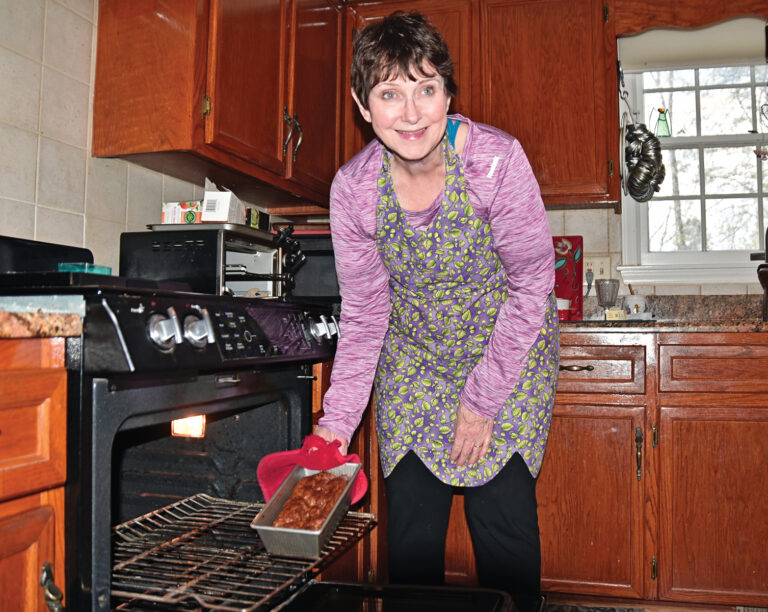
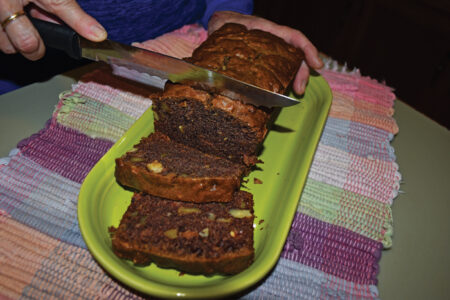
As I proclaimed earlier, persimmons are my favorite wild edible. My most desired way to enjoy this delicacy is through Elaine’s homemade bread. Here’s one of several ways she employs persimmons in bread. Also, we typically like to bake at least three loaves, eat one immediately, and save two for the winter months. Nothing brightens a cold winter day like a warm loaf of persimmon bread. Yield: 1 small loaf.
- 2/3 cup persimmon pulp
- 1 cup mashed banana
- 1 large egg
- 1/2 cup sugar
- 1 teaspoon vanilla
- 1/3 cup wild black walnuts or hickory nuts (domestic walnuts work well too)
- 1/4 cup melted butter
- 1-1/2 cups all-purpose flour
- 1 teaspoon baking soda
- 1/4 teaspoon salt
- 1/4 teaspoon cinnamon
- 1/8 teaspoon nutmeg
- 1/2 cup milk
- Preheat oven to 350 F.
- Grease a small loaf pan approximately 3-3/4 by 8 inches.
- In a large mixing bowl, combine persimmon pulp, banana, egg, sugar, vanilla, nuts, and melted
- butter. Mix with electric mixer until light and well-mixed.
- In a separate bowl, combine flour, baking soda, salt, cinnamon, and nutmeg.
- Add half of flour mixture to persimmon batter. Mix slightly and add half of the milk.
- Repeat by adding remaining flour, then remaining milk. Mix until combined.
- Pour into greased loaf pan.
- Bake 50 minutes or until toothpick pushed into center comes out clean.
- Cool in pan for 10 minutes, then remove from the pan to finish cooling.
Persimmon Tarts
We like to have meals consisting of game Bruce has harvested, wild edibles we’ve gathered, and vegetables we’ve grown. Persimmon tarts go especially well with venison entrées and salads made from wild greens and garden vegetables. Yield: 2 tarts the size of hamburger buns.

- 1 sheet frozen puff pastry
- 1/2 cup persimmon pulp
- 1/2 cup mascarpone cheese, softened to room temperature
- 1/8 cup sugar
- 1/8 teaspoon salt
- 1/8 teaspoon cinnamon
- 1/16 teaspoon each of ground ginger and clove
- Preheat oven to 350 F.
- Thaw puff pastry until it’s easy to shape.
- Use a jumbo muffin tin (mine was designed for bun-making). Cut the puff pastry in 2 pieces and shape into the muffin cup openings.
- Prick the pastry with a fork. Fill with dry beans or rice to keep pastry from puffing up irregularly.
- Bake for 15 minutes.
- While the pastry bakes, combine persimmon pulp, mascarpone, sugar, salt, and spices. Stir to mix well.
- Once puff pastry shells are baked, remove from oven. Use a spoon to remove the beans or rice.
- Spoon the persimmon mixture into the pastry shells.
- Bake an additional 18 to 20 minutes.
- Serve with whipped cream, if desired.
Tips: To assist in removing the beans or rice from the pastry shells, place a small sheet of parchment paper into the pastry cups before adding beans or rice. This will make it easier to lift the beans out.
If jumbo muffin tins aren’t available, use a tin with smaller cups, and make more tarts but shorten the second baking time.
Persimmon Scones
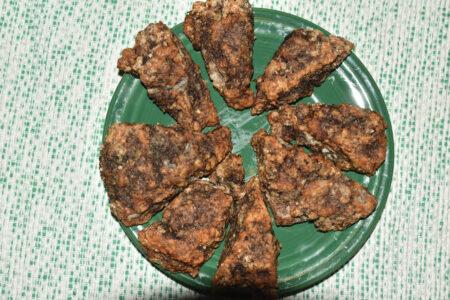
One of the most interesting qualities of any dessert made from persimmons is that they taste great when hot from the oven, but the flavor seems to intensify over the next few days. It’s almost as if the natural sweetness suffuses its way through the creation, especially if nuts are part of a recipe. Yield: 8 scones.
- 1 cup all-purpose flour
- 1/2 cup whole-wheat flour
- 1/6 cup sugar
- 1/2 tablespoon baking powder
- 1/4 teaspoon baking soda
- 1/8 teaspoon salt
- 1/2 teaspoon cinnamon
- 1/8 teaspoon cardamom
- 1/8 teaspoon cloves
- 1/2 cup black walnuts (or other wild or domestic nut)
- 3 tablespoons chilled butter
- 1/2 cup persimmon pulp
- 1/2 cup buttermilk
- 1/2 beaten egg
- 2 tablespoons sparkling sugar (optional)
- In a large bowl, combine flours, sugar, baking powder, baking soda, salt, cinnamon, cardamom, cloves, and black walnuts. Stir to mix.
- Chop chilled butter into pea-sized cubes. Mix butter into dry ingredients with hands or pastry blender, until mixture appears somewhat sandy.
- In a separate bowl, combine persimmon pulp, buttermilk, and half of a beaten egg.
- Make a well in the dry ingredients. Pour persimmon mixture into the well.
- Stir until just combined. Don’t overmix.
- Place parchment paper onto a baking sheet. Dump dough onto paper and pat out into a circle about 6 inches in diameter. Cut dough into 8 triangles and slightly separate from one another.
- Place scones into the freezer for 20 minutes so they chill until firm.
- While scones are chilling, preheat oven to 400 F.
- Remove scones from freezer. If desired, sprinkle scones with sparkling sugar for crunch and decoration.
- Bake scones on top shelf of oven for 18 to 20 minutes.
Persimmon Walnut Shortbread Cookies
For many years, Elaine only made “regular” persimmon cookies with black walnuts from the native trees growing on our land. Last autumn, however, for the first time, she made shortbread cookies with persimmon pulp. Now, that sweet treat is part of our traditional use of this fruit. Yield: 18 to 20 cookies.
- 1 cup all-purpose flour
- 1/2 cup whole-wheat flour
- 1/2 teaspoon cinnamon
- 1/4 teaspoon ground ginger
- 1/4 teaspoon nutmeg
- 1/2 teaspoon salt
- 1-1/2 sticks (3/4 cup) butter, softened
- 3/4 cup sugar
- 1/2 cup persimmon pulp
- 1/2 cup chopped walnuts
- Sparkling sugar (optional)
- Line baking sheet with parchment paper.
- In a small bowl, combine flours, cinnamon, ginger, nutmeg, and salt. Set aside.
- In a large mixing bowl, cream butter until smooth. Add sugar and mix until fluffy, about 2 minutes.
- Add the persimmon pulp and chopped walnuts to the butter-sugar mixture until well-combined.
- Add flour mixture to the mixing bowl and mix well. At first, it’ll appear lumpy, but as you continue beating, it’ll form a smooth, cohesive ball of batter. This may take around 3 minutes.
- Place a sheet of plastic wrap on work surface. Spoon batter onto wrap, form into a log, and wrap completely. Chill for 15 minutes in the freezer.
- While dough is chilling, preheat oven to 325 F.
- After dough has chilled, remove from freezer. Remove plastic wrap. Cut dough into 18 to 20 slices.
- To make slices more regular in thickness, score the top of the log at the halfway mark and then lightly mark where you’ll make cuts.
- Place slices on lined baking sheet. Pierce each cookie 4 to 5 times with fork tines. If desired, sprinkle with sparkling sugar for visual appeal.
- Bake 20 minutes until golden in color. If using two baking sheets, about halfway through baking, change sheets from one shelf to the other to avoid overcooking bottom pan.
- After baking, cool on baking sheet about 2 minutes before removing to finish cooling on rack.
Persimmon Pancakes
An autumn tradition for our two grandsons, Sam and Eli (who live with their parents across the hollow from us), is to go gather persimmons with us on a late November weekend. The most recent time the boys helped us, they came over a few days later for a persimmon pancake dinner with Vermont Maple Syrup as a topping – a dazzling combination for sure. Yield: 4 servings.
- 1 cup flour
- 2 teaspoons baking powder
- 1 tablespoon sugar
- 1/4 teaspoon cinnamon
- 1/8 teaspoon nutmeg
- 1/8 teaspoon cloves
- 1/4 teaspoon salt
- 1 beaten egg
- 1 cup plus 2 tablespoons milk
- 2 tablespoons vegetable oil (or melted butter)
- 1/2 teaspoon vanilla extract
- 1 cup wild persimmon purée
- 1/3 cup chopped black walnuts (or other nut)
- Maple syrup for topping
- Additional oil or butter to cook pancakes
- In a large bowl, combine flour, baking powder, sugar, cinnamon, nutmeg, cloves, and salt. Stir to blend.
- In a small bowl, stir together egg, milk, oil, vanilla, and persimmon purée until well-mixed.
- Pour persimmon mixture over dry ingredients and stir to mix well. Stir in black walnuts.
- Heat skillet or griddle over medium-low with small amount of oil. Cook pancakes, flipping once.
- Higher heat may work better on your cook surface, but watch carefully, as the outsides tend to burn before the insides are done. These pancakes cook best if very thin.
- Serve with maple syrup or topping of your choice.
Autumn is a fabulous time to trek across the forests and fields of America. Hunting for various game animals and searching for wild fruits, nuts, and mushrooms is a splendid way to take advantage of nature’s bounty. If the native persimmon exists in your home state, consider setting aside some time to search for this taste sensation.
Bruce and Elaine Ingram are the authors of Living the Locavore Lifestyle, a book about hunting, fishing, and gathering for food. For more information, email them at BruceIngramOutdoors@Gmail.com.
Originally published in the November/December 2025 issue of Grit magazine and regularly vetted for accuracy.