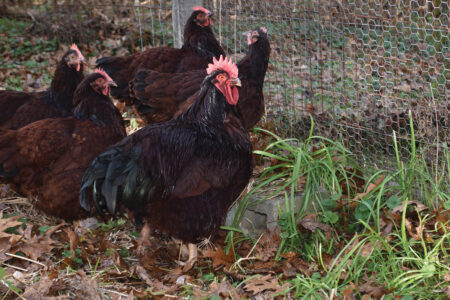
Go on a journey to pre-Columbian times to find unusual vegetables to grow that are little-known but flavorful plants.
I imagine many Americans can rattle off the rhyme about Columbus sailing the ocean blue in 1492, but that ditty doesn’t do justice to the massive changes wrought by what later became known as the “Columbian exchange.” Once this trade across the Atlantic was established, the gardens of both Europe and America were dramatically altered.
Most of the foods we readily associate with specific European countries, such as Irish potatoes, Italian tomatoes, and Hungarian peppers, were originally from the Americas. European arrivals to the North American continent introduced grazing cattle and horses, massive timber harvesting, and displacement of Indigenous nations that changed the way the “New World” functioned and grew.
But this article isn’t an exploration of the massive social, moral, and biological fallout of the Columbian exchange. This is, instead, an inquiry of what Native American and European gardens looked like before 1492. I asked this question years ago, when I was trying to find resilient, nutritious, and potentially perennial plants to fill my own droughty Ozark garden. And I’ve discovered some wonderful, underused, and unfairly forgotten plants.
American Plants
Beans, corn, squash, and potatoes are probably the most famous of the plants domesticated by Indigenous gardeners, but the impossible-to-produce “complete” list of perfectly adapted, nutritious foods produced and foraged in pre-contact soils is much longer and includes important plants, such as manioc (Manihot esculenta), manoomin or “wild rice” (Zizania spp.), and sochan (Rudbeckia laciniata). The ones listed below are those I grow myself.
Tepary Bean (Phaseolus acutifolius)
You may already know that the common bean (P. vulgaris) and the lima bean (P. lunatus) were domesticated by Indigenous American farmers, but they weren’t the only legumes to be raised in gardens. For some reason I can’t figure out, the tepary bean hasn’t been given the same attention as its two relatives. And that’s a real shame, because there’s likely no other plant you could grow in your garden that’s quite as simultaneously productive and drought-tolerant as this mighty little bean.

The name of the tepary bean likely comes from t’pawi, a Tohono O’odham phrase that translates to “it’s a bean.” And that declaration of absolute beaniness reveals what a truly important crop this bean was and still is in the gardens where it’s grown.
I acquired ‘Pinacate’ tepary beans from Native Seed Search, which originally got them from the Sonora region of Mexico. This specific strain of tepary is renowned for being able to produce a crop on a single rainfall, so I thought I’d see how they fared on my dry Ozark hill. In my first experimental planting of just 10 plants, I was able to score more than 2 cups of dry beans. And that was during a historic drought where we had no rain for more than 14 consecutive weeks!
Acorns (Quercus spp.)

Acorns are, perhaps, one of the most underutilized food sources in the modern West. Technically, nobody’s growing them in their gardens, but they’re certainly close by. The ubiquity of the oak in the American landscape and the fact that it produces boatloads of nutritious seeds without being planted, fertilized, sprayed, or tended should make anyone interested in self-sufficiency, food sovereignty, or local foods sit up and take notice.
The acorn was one of the staple foods of several Indigenous nations, but it was probably most prominently used by the Northern Californian Hupa, Karuk, Miwuk, Maidu, Pomo, and Yurok. Their ancient communal mortar stones can be seen in Yosemite National Park, and the Miwuk nation still holds an annual acorn festival to this very day.
You can’t just pick up a handful of acorns and get to munching, however. Like many foods, they’ll need to be processed to become palatable, and to learn that, you’ll need to do more research. There are many resources out there on how to hot-leach, cold-leach, and chemically leach the bitter tannins out of acorns (If you’d like to see a video of me processing acorns, you can find it on YouTube: www.Youtube.com/watch?v=qLo3UWh-BN4).

Amaranth (Amaranthus spp.)
When it comes to comeback stories, few top amaranth’s rise back from the near-dead. This nutrient-rich seed was one of the staples of the Aztec empire, where the heat-loving plant was called huauhtli. When the Aztec culture was decimated by Spanish conquistadors, so, too, was its amaranth cultivation. Anyone who grew or saved the seeds was severely punished, so the existence of amaranth to this day is a testament to both the resilience of the plants that escaped and grew wild and the daring of the generations of unknown seed savers who secretly continued to grow their staple food.
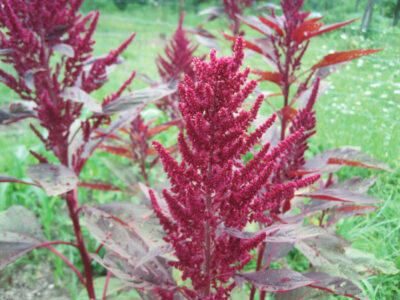
In the modern day, amaranth is often sold as a flower, such as the readily available cultivar called ‘Love Lies Bleeding,’ but there are many culinary varieties becoming increasingly available (such as the ‘Golden Giant’ cultivar that I’m fond of growing). One of my favorite parts about amaranth is its lightning-quick food production – it’s like the radish of staple crops! I plant amaranth in my garden after harvesting garlic, right at the beginning of summer. Within just a few weeks, the tiny sprouts will grow into seed-bearing, mature plants. The seeds can be cooked into porridge, ground into flour, and even popped like miniature popcorn.
Jerusalem Artichoke (Helianthus tuberosus)
Neither from Jerusalem nor an artichoke, this tuberous-rooted sunflower is definitely a contender for most inappropriate name in biology (although the peacock mantis shrimp, which is neither a peacock, a mantis, nor a shrimp, might be the winner). The literal translation of the Algonquin name, kaishucpenauk, is “sunroot,” which seems a far better name to me.
The original range of cultivation for this plant has been forgotten, but there are historical records of it being used by the Chippewa, Dakota, Iroquois, and Lakota, as well as others. For some nations, it was traditional fare; for others, it was famine food. That occasional use is understandable: While delicious, the tubers do cause a bit of auditory gastrointestinal activity.
Feast or famine, however, these plants are a prime example of easy food production. They’re typically propagated by tubers, which can be ordered from quite a few different suppliers and are relatively easy to find. Just drop said tubers in the soil in early spring and stand back! With little care, they’ll grow into over-8-foot-tall monsters, topped with pretty yellow flowers. They’re actually so successful that they can be downright invasive, and they’ll completely take over any soil they’re planted in. After the first frost, the tubers can be harvested and enjoyed raw or cooked.
Prairie Turnip (Pediomelum esculentum)
Prairie turnips are one of those special plants that most of us have never heard of but they deserve to be remembered. The prairie turnip is a drought-tolerant plant that produces a nutritious, starchy root that can be eaten raw, dried, cooked, stewed, and even pounded into flour. It was particularly treasured by the nations of the American Great Plains, such as the Lakota, who still gather them today. They’re traditionally peeled and carefully braided, and then they’re naturally dried into winter provisions.
The problem is, however, that prairie turnips are no longer widespread. Prairie turnip is one of the plants that disappears when land is used to run cattle, so trying to forage for it is probably going to leave you depressingly empty-handed. I see that, however, as an opportunity for the intrepid gardener to rediscover and invite some native edibles into their food plots.
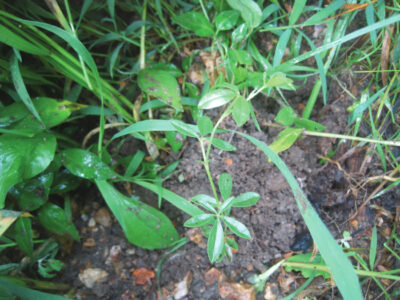
When I discovered that my land was within the original range of these historic and important plants, I searched online and found seeds for sale at Prairie Moon Nursery. My plants are only about 3 inches tall, and I haven’t tasted them yet, as the roots take several years to reach harvesting size, but seeing them return to a bit of their old stomping ground makes me smile every time I pass them by.
European Plants
Many of the plants that filled the larders of early Europeans are half-forgotten, often listed in historical gardening books (if at all!) with the forlorn qualifier of “formerly cultivated.” Just because these plants are difficult to produce commercially, however, doesn’t mean they’re not just as useful, sustaining, and delicious as they were hundreds of years ago. You’ll find that many of these plants store well in a root cellar, indicating their use during long, cold winter months when survival depended on them. Again, this list is (mostly) limited to what I’ve personally grown and doesn’t include other excellent vegetables, such as scorzonera (Scorzonera hispanica), salsify (Tragopogon porrifolius), turnip-rooted chervil (Chaerophyllum bulbosum), Hamburg parsley (Petroselinum crispum var. tuberosum), and good King Henry (Blitum bonus-henricus).
Fava Bean (Vicia faba)
Some may only know fava beans, also known as “broad beans,” from a movie quote about a nice Chianti and a liver of horrifying origins, but ancient people knew this plant from before recorded history. It’s been so long used by humans that its wild counterpart is still unknown (though archaeological digs in Israel have traced its domestication back to at least 10,000 years ago). Eaters from China to Luxembourg (where it’s in the national dish) were sustained by its meaty mature beans, fresh pods, and foliage.
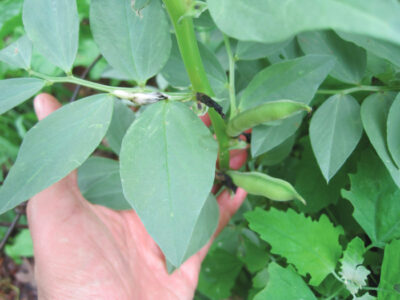
Fava beans are more like cold-hardy peas than common beans in their cultivation needs: They can be planted as soon as the soil can be worked, and they can germinate in surprisingly chilly soil. In warmer regions, they can even be sown in fall and overwintered. Fava’s only real weakness is heat. Whenever the temperature passes 75 degrees F, they’ll drop their blossoms. I had terrible results with my own fava beans because of this. The Ozarks heat up quickly, and even though I direct-sowed my fava beans in February, the 80s would roll in as soon as the beans flowered, giving me a whole lotta nothing for my efforts. Our winters are also too bitter for them to overwinter. Even though this ancient plant is a poor fit on my land, perhaps its incredible food potential will do well for you!
Fava bean seeds are also easy to find, as long as you don’t mind growing the ‘Broad Windsor’ cultivar most often offered. For those willing to delve, however, there’s a dazzling rainbow of different varieties currently in cultivation.
Parsnip (Pastinaca sativa) and Skirret (Sium sisarum)
Hardy, delicious, and long-lasting in storage, parsnips look like oversized white carrots and are sweetly starchy and pleasantly spicy. These undeservedly unpopular plants are my absolute favorite to grow (and eat). These are some of my most bulletproof food plants, quietly producing storable food without much tending. Plant their flake-like seeds in the same sort of soil you could use for carrots, as soon as the soil can be worked. They take what feels like forever to get to harvest size, but the wait is worth it. After fall frosts have sweetened them, they can either be harvested and stored or kept right in the ground for super-easy winter keeping.
Parsnips were adored by the Romans. After the empire’s fall, they were used as a European starchy staple before they were ousted by the arrival of the potato. And before the sugar trade destroyed health, land, and cultures, parsnips were also used as sweetening in many European recipes.

Parsnip seeds are still pretty easy to obtain from most seed catalogs. Some common cultivars are ‘Hollow Crown’ and ‘Harris Model.’
While I’m talking about parsnip, I must mention skirret, even though I’ve not been able to get seeds to grow it (yet!). Skirret is the sort of plant most people haven’t heard about, yet rave about once they discover what it is. It’s an easy-to-grow, long-storage root with the same sweet, starchy eating qualities as parsnip, but get this: It’s a perennial that doesn’t mind boggy soil.
Finding skirret seeds can sometimes be a challenge, as it’s not a well-known plant and the few suppliers that carry them tend to run out quickly. I hope that changes in the future – this plant has a lot to offer!
Rampion (Campanula rapunculus)
You’ve likely heard of rampion and never knew it was anything more than the long-haired heroine of a bedtime story: “Rapunzel” is the German name of this forgotten vegetable. It once held a huge array of names, including ramps (not the same as Allium tricoccum), biennial rampion, creeping bellflower, raiponce, clychlys erfin, kauriinkello, raperonzolo, and rapónchigo, just to name a few. That slew of regional names tells you how widely cultivated this plant once was throughout Europe. Now, it’s been renamed “bellflower,” and it’s sold as an ornamental plant. But for anyone looking to remember its secrets, the edible roots and leaves are still there, waiting to be rediscovered.
I’ve not yet grown this one, but the root, which looks a little like a white carrot, is supposed to have a turnip- or radish-like bite, and the leaves can be used the same way you would spinach. It’s a hardy plant that tolerates poor soil and cold temperatures, typically planted in late summer or early fall for winter harvest.
Finding seeds for rampion may be difficult – try looking for its scientific name instead. You’ll often find yourself in the “flower” section of a seed catalog, but rest assured, if the scientific name is the same, so is the plant.
Turnip (Brassica rapa)
Turnips were probably domesticated in Central Asia, then spread throughout Asia and Europe, where they rose to prominence as an important food in the Greek, Roman, and, much later, British empires. On my homestead, turnips are on the favorite list. These dual-purpose veggies offer nutritious leafy greens as well as a useful, large root. I plant them in early spring, pluck greens through late spring, and harvest the fleshy taproot by the beginning of summer, then replant them in late summer for a second crop of goodness. They’re wonderful pickled, fermented, roasted, turned into slaw, or added to curries.
The most commonly sold turnip cultivar is ‘Purple Top White Globe,’ which I’ve had great success with. There are probably a hundred other cultivars available, however. Take note: Some cultivars, such as ‘Shogoin’ and ‘Seven Top,’ have been developed for huge leaves instead of a bulby root.
Wild Greens
Technically, this isn’t a specific plant or one that you’d even grow in a garden. I’d be remiss, however, if I glossed over the long-standing tradition of identifying, gathering, and eating wild greens. Nearly every European country has in its culinary history a corresponding term, such as ta chòrta, preboggion, and erbe selvatiche, just to name a few. In almost all cultures, these plants are cooked, not eaten as raw salad. This practice of harvesting wild greens has been abandoned by many because it was associated with wartime scarcity, poverty, famine, and negative views of immigrants. I think it’s high time to return to accepting the free gift of good nutrition from the fields and forests.
The Ozark plants included and cooked in my “mess o’ greens” include lambsquarters (Chenopodium album), plantain (Plantago spp.), violet (Viola sororia), shepherd’s purse (Capsella bursa-pastoris), mulberry (Morus spp.), dock (Rumex spp.), dandelion (Taraxacum officinale), and pokeweed (Phytolacca americana).
Like it will with anyone, it took me several years to build up enough familiarity with my land’s plants to forage for them (and, in the case of pokeweed, to process it safely), but now that I have this knowledge, I can harvest plentiful good food most times of the year.
Living History
I hope you enjoy all of your favorite plants in the garden this summer, and if one of these not-quite-as-popular crops catches your eye, track down the seeds and bring some delicious history back to life.
Wren Everett and her husband live on an Ozark homestead, where they seek to live as self-sufficiently as possible.