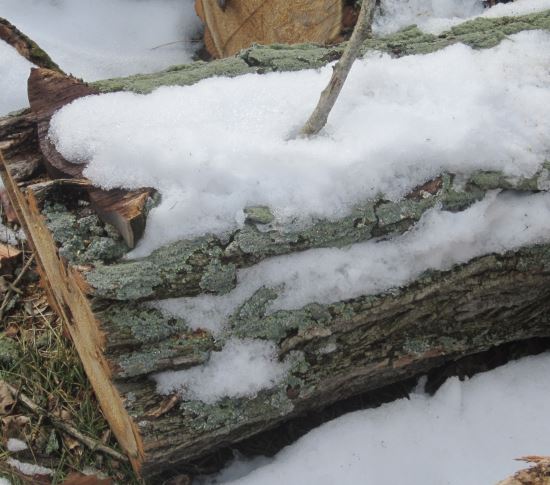
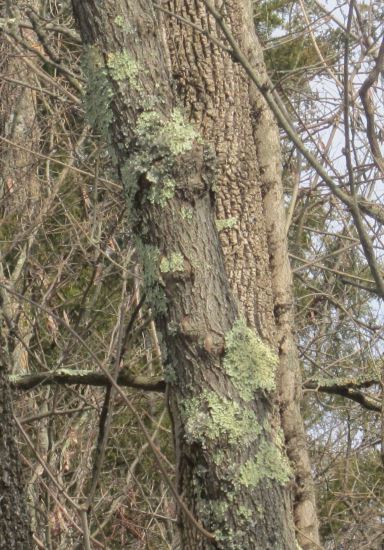
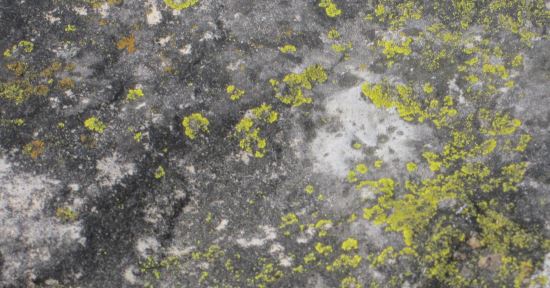
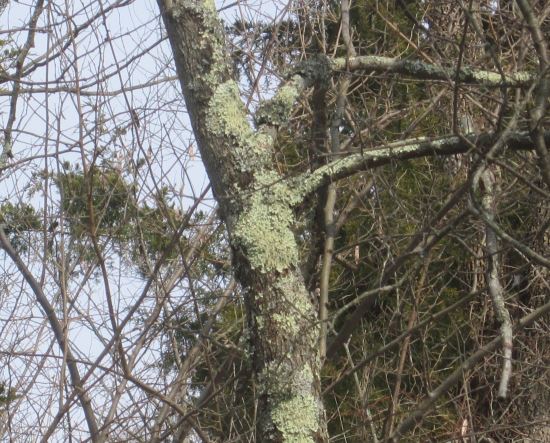
They are in the cemeteries, in the parks, in the woods. They are in every yard and town and city. They may be yellow or green or white or gray or any other color, depending on their home.
Neither plant nor animal, they are a mutualistic symbiosis or a combination of fungus and green alga. We know them as lichen. For the most part they go unnoticed unless one is interested in getting close to a tree or a rock or a tombstone.
This partnership between the fungus and alga was once described by British Columbia University’s Trevor Goward as “a case of fungi that have discovered agriculture.” The man knows a whole lot about lichens, himself being dubbed “the great lichenologist”.
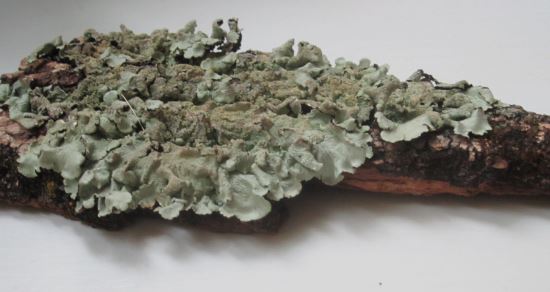
While general words such as moss are used in everyday conversations, one can tell the difference right away. Looking at true moss, a plant with leaves and stems can be seen. Lichens have what some describe as layers, scales, flattened crusts.
Lichens need three things to grow and thrive. Undisturbed surfaces such as those rocks or tombstones, time because they are slow growers and clean air. Lifespans can be up to hundreds of years. The need for moisture is certainly a factor but small enough not to count because lichens can draw moisture from the air. The alga (green) component uses sunlight to make food for the fungus component from water and carbon dioxide. Alga can also provide the fungus with vitamins.
Even in the hottest, driest of summers, lichens can absorb up to 35 times their own weight in water, fog, dew or humidity on those sultry days. This ability makes it possible for lichens to live in deserts and polar regions.
Lichens come in four basic shapes. Flat leaf shaped are called foliose. Crusted lichens may grow into tree bark or rock crevices and is called crustose. A tiny shrub-like shaped lichen, sometimes known as Reindeer Moss (Lapland) is in the category of fruticose. And squamulose are those scaly shaped small rounded lobes that may look like a bunch of shingles.
If you’ve ever enjoyed a model train layout with houses, streets and all things miniature, take a close look at those trees growing next to that train station. Yep, they are made from lichens. In the real world they can be used to map the progression of air pollutants as they are present or not, depending on the quality of air.
Lichens can be used to scent soaps and perfumes. In the past they were used to make soft, earth-tone dyes. For reindeer in Lapland and sheep in Libya’s deserts, lichen are an important food source. And their top importance is their contribution in nature’s soil making process.
So what are those rock pimples and earth wrinkles? Lichen. Other odd names for the dual entity are fog fingers, angel hair, tar-jelly, old man’s beard, freckle pelts, can of worms, black-eye, bloody hearts, cowpie, elf-ear, hairball, tattered rag and toadskin.
Numerous library books can be borrowed to learn more about lichens. When the weather breaks, take a break and go hunting. Start with your backyard. The tiny living organisms are everywhere. If you have a magnifying glass, all the better. Get up close to a tree or rock or a tombstone.
If you really want to explore the science of lichens and don’t mind going on a treasure hunt, find a copy of “Lichens of North America” by Bordo, Sharnoff and Sharnoff. This 828 page tome was published in 2001 at a retail cost of $135. It is said to be the authoritative guide on all things lichen and includes color photos, maps and keys for identification. The book is a six award-winning coffee table size compilation of general information for the public and scientific details for those who want to delve deeper into the world of rock pimples and earth wrinkles.
Contact Connie at mooredcr@Juno.com or Box 61, Medway, Ohio 45341