Ever wonder what kind of damage you might have had following a heavy storm? Ever had to go find and later transport a downed deer? Ever wonder if someone else is or has been on your property? Do you want to know what kinds of wildlife live on your farm?
If your answer to any of these questions is yes, you will need safe passage — safe from thorns, ticks, and in some cases, getting lost. You need trails on your property.
The best trails, of course, have gravel, support structures, and a way to curb weed growth. However, the gravel is too expensive, the structures are hard to come by, and growth is inevitable. I admit I do create a lot of work for myself because in general, I try to avoid herbicides, which may harm wildlife.
Trail Preparation
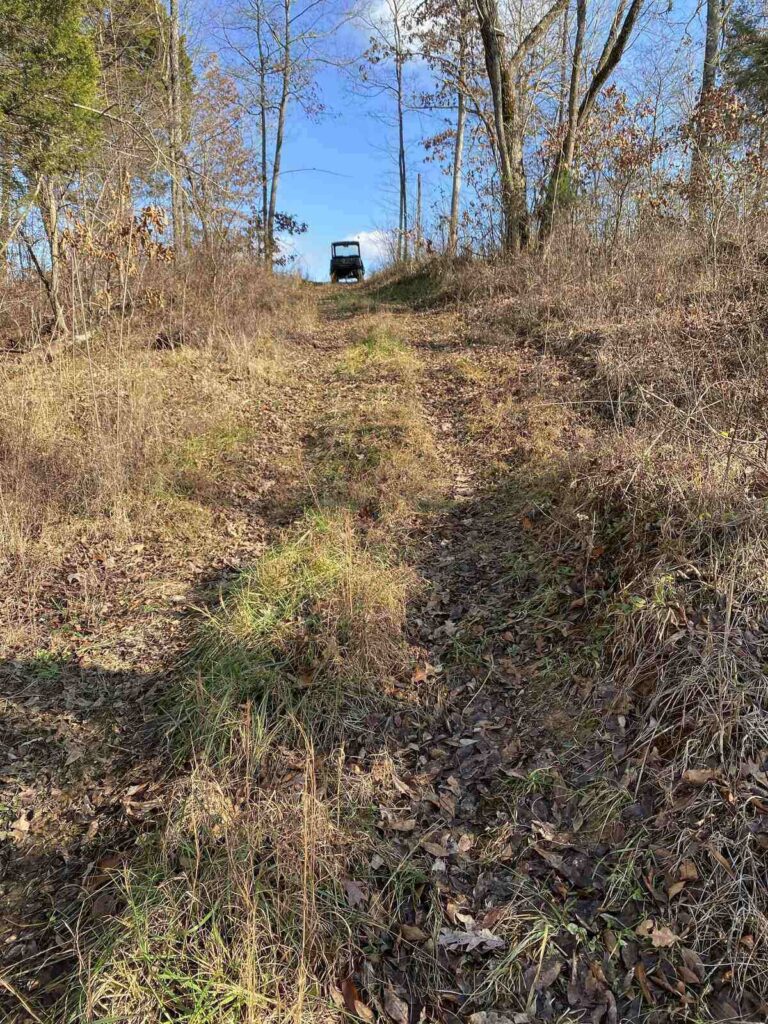
- First, consider how you wish to utilize your trails in terms of walking versus using your ATV or using your truck. This will dictate not only the trail width but also the terrain possibilities. On mine, I have to cross a creek that is at times not dry. That and the terrain equate to yes on the ATV, but no to the truck.
- If possible, wait until you have owned your land for about a year. In the winter, look for old roadbeds and logging roads, how steep the hills are, and evidence of wildlife activity. In summer, look where growth and the thickets are (that you might not want to go through) and look for springs or other water sources that might give you a lot of trouble down the road (look for isolated aquatic and other growth). Also, in a year you will better understand your needs. You will have to balance those needs with the lay of your land — you should always strive to keep things as natural as possible. Minimize impact and let the land guide you.
- Equipment for large trails involving trees. You will need a bulldozer or a phone call to someone who has one. There is nothing else with enough power. Very important: If it is an old logging road, keep the berms — just make sure your machine has enough clearance. Keep in mind that bulldozers just push things periodically into unsightly piles of twisted and broken trees, branches, and brush. This is not very aesthetic and is either very expensive or labor-intensive to rectify. Further, and most importantly, they will usually clear down to the soil — something you should avoid. Planting to prevent erosion is very difficult in woodlands.
- Equipment for smaller trails. Chainsaws (please see my last installment) and weed eaters with appropriate blades will cut through small trees and brush. At purchase, it takes extra pieces. Make sure your chainsaw is rated for each blade.
- Personal protection equipment. Again, see my last blog on chainsaws. Don’t even think about it without heavy leather gloves, long sleeves regardless of temperature, and excellent eye protection.
- Should you need to plant grass for soil erosion prevention — which is not that easy in acidic environments with low light — you might need to place some straw. For my hills, I used those roll-out mats with green mesh that I stake down. They create drainage problems on their own, but also be prepared for a few entangled snakes. Some will be dead and some alive. I was able to get some free and some not, but none were much fun. I advise against such rolls and would use hand-tossed straw from bales mainly on hills.
- Know where you are going before you get there. Mark the trails with orange tape. Do all of your thinking ahead of time to the extent possible. Don’t make it too steep — you will regret it. Make it longer with turns if need be. Less steep may mean less time in the long run.
- Finally, while you want to make everything easier on you and your family, consider how your trails may make it easier for trespassers to use your property. Look at trail entrances as one might look at it from outside the wire so to speak.

Make Your Trail
I am sure there are plenty of ways to make trails, but I relied mainly on the weed eater/blade combination. I followed my orange markers with the weed eater and then went back with the chainsaw for what was too large or for fallen trees and so forth.
It can be slow going and you will need water, food, and a way to communicate — and working alone is less than ideal. But eventually, you will get something that resembles a trail.
If you want to walk or ride on it, though, you will need to cut the vegetation down flush to the ground. Otherwise, you will trip or puncture a tire.
Also, try to know what you are buzzing through. I naively cleared right through large, thick patches of Japanese Stiltgrass (which is very invasive and produces thousands of seeds) and spread the seeds all over the farm. I created a lot of work for myself with that one. You do have to spray for Japanese Stiltgrass, but fortunately nothing strong is required. The point is, know what you are going through. I never gave it a thought.
After a while and after a few passes, you will have yourself a trail. On subsequent outings, you can make it wide enough to accommodate your ATV or truck as the case may be.

Follow Up on Trail Maintenance at Least Twice Per Year
Keep in mind that things grow to the sun. In fact, one way to look for an old road bed is to look for a row of curved trees, just like you can maybe find an old fence row from a row of cedar trees from birds using it as a perch.
I mention sunlight, because you can’t just make a trail and expect it to just stay there. For my needs, I have two rounds of official “trail work days” per year: one in early spring and one in early fall. And anytime I am on the trail, I walk with gloves and one small cutting device to get the unexpected cleared.

Don’t Forget to Enjoy Your Trails
I love walking on my trails. I walk on them preferentially over riding if at all possible to lessen the impact on wildlife. If you need to avoid walking in deer woods, then that is what you need to do. I have 8 to 10 acres for my deer sanctuary I rarely if ever travel. Otherwise, I don’t hesitate to enjoy a slow walk through the woodlands on my trails and old road beds.
I stay out of the woodlands during peak tick season and stay up top, so to speak. I am also prudent in early spring to be mindful of nesting animals.
Finally, by making trails, you have enhanced not only your enjoyment but also the value of your land. Your children or grandchildren are much more likely to join you on your walks through the woods if you have adequate trails. They might even leave their iPads and phones at home!
Bradley Rankin farms several of the 48 acres at Bobcat Ridge Habitat Farm in rural Kentucky, where he and his wife also manage a woodlot to attract wildlife. When he is not tending woodlands and pasture, Bradley enjoys raised-bed gardening, rock collecting, tree identification, and astronomy.
All GRIT community bloggers have agreed to follow our blogging guidelines, and they are responsible for the accuracy of their posts.