How can farmers diversify? Build resilient revenue streams through expanding offerings with farm stays, producing your fuel, or teaching traditional farming and craft skills long lost in today’s world.
I remember visiting local farms as a child and being amazed by the bustling activity: colorful varieties of vegetables, ducks and chickens scuttling around, and herds of roaming cattle. The farmers made a living selling produce, meat, and eggs to nearby residents (and even a few grocery stores) who appreciated what they were doing. For the most part, those days seem to be a thing of the past, at least where I live. Corporate monoculture farms have bought out many of the small-to-medium-sized farms, and agricultural vistas have been replaced by views of shopping malls, condo complexes, and golf courses. Those few small farms that have held on manage to do so by tweaking their offerings, enticing customers to stop by the farm with a variety of unique, value-added products and experiences.
How Can Farmers Diversify?
Leaning into variety over monoculture is at the heart of a diversified farm economy. At its simplest, “diversification” means, if you’ll pardon the pun, “not putting all of your eggs in one basket.” You might be familiar with the term from corporate finance – stock brokers advising their customers to “diversify their portfolios” to ride out rough times – but it’s good advice for farmers and market gardeners too. If your farm relies solely on sweet corn for income, then you’ll be in trouble the year the corn crop fails. You can diversify your income by growing multiple crops and adding livestock (and maybe a corn maze in fall), becoming more able to ride out an otherwise tough year in the process.
In the following profiles, you’ll see how diversification has allowed three farms operating in quite different markets, from Kentucky to Montana to New Hampshire, to flourish in the wake of economic shifts.
Bison and Biodiesel
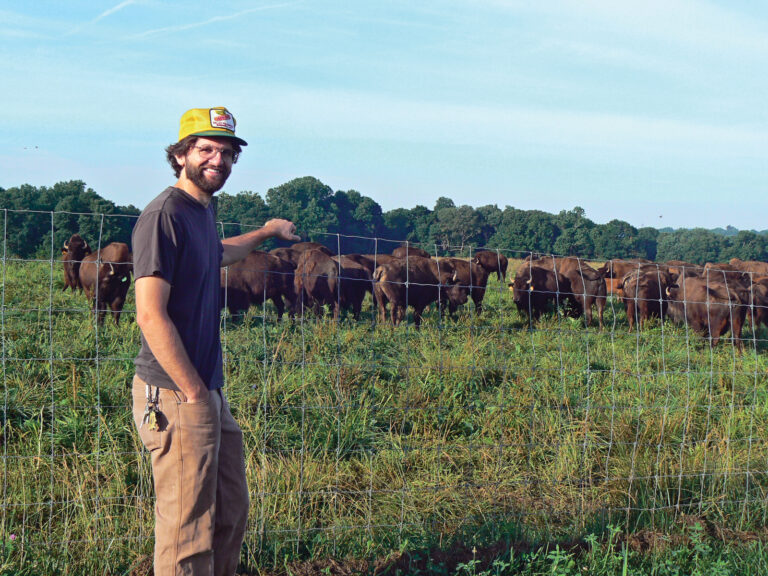
Operating in an area known for its horse farms and bourbon distilleries, Woodland Farm is doing something quite inventive. Located in the town of Goshen, Kentucky, about 30 miles northeast of Louisville, the farm runs its machinery on biodiesel produced right on the property, grows a variety of heirloom crops using strictly organic methods, and raises heritage livestock, including bison. When I arrived for a visit to the 1,000-acre farm, I spotted the bison right away, and I was enthralled by the reminder of America’s precolonial landscape.
Kristopher Kelley, Woodland Farm’s manager, greeted me inside the farm store, busy with people picking up produce. Kelley and his crew run their operation on homemade fuel. He leads the farm’s biodiesel-processing facility, installed in 2009 to convert used cooking oil from Louisville restaurants. Kelley said homemade biodiesel saves the farm a great deal of money every year and goes a long way toward making the farm sustainable.
From the store, we stopped at the farm’s sawmill, which mills trees harvested right on the property and allows Woodland Farm to meet all its lumber needs. Then, we jumped in the truck to visit the heritage-breed animals. The bison are the big draw for customers, but Mulefoot and Hereford hogs, rare French mules, and numerous heritage chickens add to the farm’s diversity. In the gardens, horticulturist Stephanie Tittle and her team grow acres of fresh vegetables and flowers of all types.
Long after my tour, Kelley’s motto stayed with me: “This is how farming should be done.”
Glamping Getaway
Southwestern Montana’s grand vistas and an abundance of wildlife punctuate the drive to Bodhi Farms, nestled in the Gallatin Mountains outside Bozeman. Farm owners Rayner and Tanya Smith exude a love for nature that they bring to their permaculture-focused farm stays. While the pair have grown organic crops for years – sold in an on-site market – they introduced a series of nine “glamping” tipis across their 35 acres of forest and fields to add diversified income to the farms.

“We needed to do something different,” Rayner told me. “There’s a growing interest in organic food and getting outdoors in general. The glamping aspect combines both high-end accommodations with that desire to get out.” Bodhi Farms offers yoga (Tanya is a certified instructor), fly-fishing excursions, massages, and a wood-fired sauna. Visitors can feel at once steeped in nature and pampered with amenities, including room service, happy hours, and a breakfast bar. Farm chef Eric Gunnulfsen prepares meals over wood-fired outdoor stoves.
The wide range of activities has grown over time, and Rayner said the couple was intentional about not offering a new activity until their budget and time allowed. “This is what we offer, and we’re able to do so without losing who we are in the process.”
Traditional Re-Skilling
Imagine the typical family farm of the 1700s and 1800s: Draft animals pull a plow, amber waves of cereal grains sway in a breeze, and you hear the methodical turn of a water wheel. Sanborn Mills Farm is that traditional family farm – but it exists today in Loudon, New Hampshire, about 15 miles northeast of Concord. The farm’s mission is “to sustain and teach traditional farming and craft skills while stewarding its agricultural landscape for social, environmental, and economic benefits.”

Spanning 500 acres, Sanborn Mills grows plants and flowers used for dying textiles, including wool, cotton, and flax. The fields yield flax, corn, wheat, rye, barley, and hay. The farm uses water-powered saw and grist mills to process its grain and lumber, and it produces power from rooftop solar panels. It sells surplus hay to local farmers to feed livestock, and its grains go to a distillery. Any timber not used on the farm is sold by the “grapple load,” full-length and limbed, for clients to haul away to split themselves.
But the farm’s most crowd-pleasing product is its education program. Students enroll in classes for dying textiles, weaving willow, blacksmithing, and working with draft animals. In these ways, Sanborn Mills Farm describes itself as “a center for renewal of the human spirit, a place to cultivate creativity and joy, and an anchor for our individual, collective, and shared experiences.”
These three farms show that diversifying your farm’s economy can take many forms; no one size fits all. Start with a simple offering: a livestock-petting area, a single campsite, or an expanded farmstand. Finding what works best for you and your area is the place to start – and then just go for it.
Dana Benner has written about the outdoors and sustainability for over 35 years. His work appears in regional and national publications.