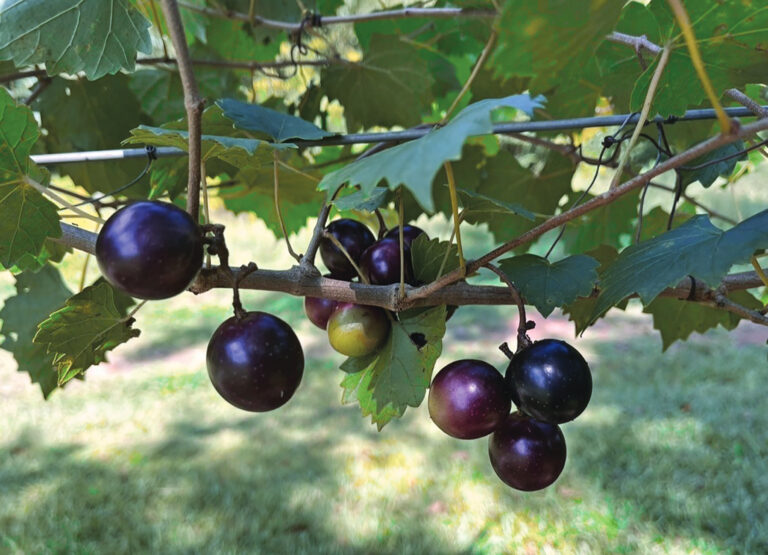
Learn how to grow muscadine grapes, a beginner-friendly southern native grape, during the muscadine season on a muscadine trellis.
Muscadines (Vitis rotundifolia) are the jewel of the South. Well … maybe not the jewel, but here in Georgia, you’d be hard-pressed to find a backyard without at least one vine stretching across a fence, a cattle panel, or some old clothesline that’s somehow still holding on after 30 years.
When I bought my property four years ago, I knew before the paint dried on the front door that muscadines were going into the ground. I’ve been growing grapes for three years now, and let me tell you: These aren’t “plant them and forget them” vines. These beauties are like Southern grandmamas: sweet and generous, but they expect some maintenance. And you’d better show up on time with good old-fashioned manners.
Muscadines are beginner-friendly, tougher than a $10 pair of work boots, abundant once established, and perfect for jelly, wine, juice, fresh eating, and stand-over-the-sink snacking.
Today, I want to pull back the curtain on muscadine care. If you build a solid trellis, water regularly, prune with intention, and feed modestly, you’ll have more grapes than you know what to do with – and a story worth passing down, because muscadine vines don’t just grow food. They also grow memories.
This early summer work – watering, pruning, and fertilizing – is where vines are either made strong and fruitful or are ignored into chaos that can wrestle you to the ground by August. And somewhere in the middle of all of that, there’s a story about family, food, and why these grapes have had a hold on my heart long before I ever planted them.
How to Grow Muscadine Grapes
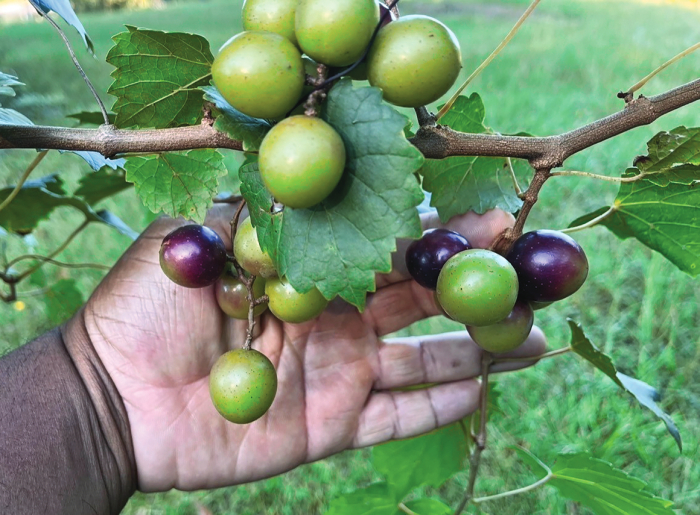
I currently grow several cultivars: ‘Ison,’ ‘Sweet Mix,’ ‘Darlene,’ and, my favorite, ‘Supreme.’ For winemaking, ‘Carlos’ muscadines are great. They produce smaller grapes that grow in dense clusters along the vine.
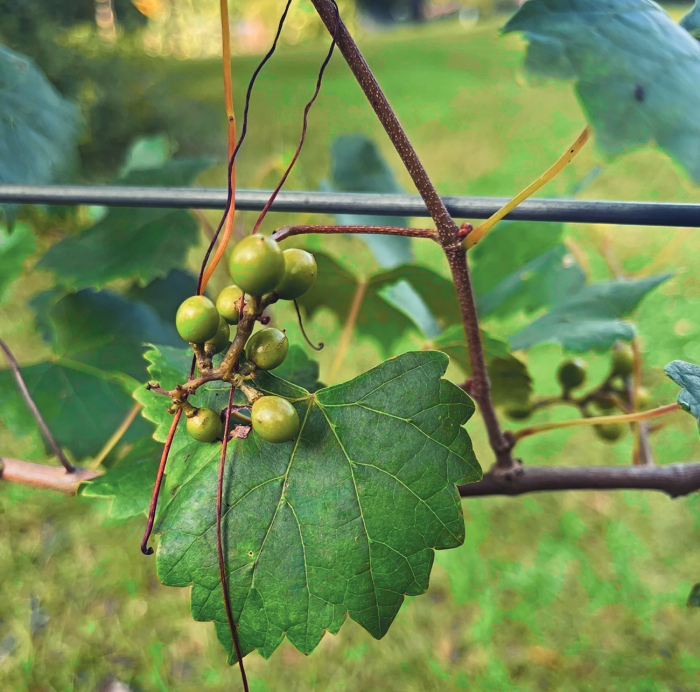
On my homestead, the muscadine vines drink once a week – no more, no less. A timer kicks on in the middle of the night and runs for four hours straight. Not one minute shorter.
Each vine gets 4 gallons every week from two half-gallon-per-hour emitters placed on either side. Slow, steady watering encourages strong roots. If muscadine vines were church folks, this would be equivalent to showing up every Sunday: no drama, no skipping, no “I’ll catch the next one.”
They don’t need pampering, but they do need consistency. That’s the first rule of muscadines.
Muscadine Trellis Growing
If watering is discipline, pruning is communication. It’s you telling the plant where to spend its energy, like a coach redirecting a promising athlete who won’t stop dribbling off-court.
Each muscadine vine is trained with a single trunk and two cordons. The cordons extend horizontally along the trellis in opposite directions, each reaching about 7.5 feet, for a total mature span of roughly 15 feet. From these cordons, little shoots try to branch off in every direction like confused children in a supermarket. Some of them you’ll want to grow. Others? You’ll politely send them to sit down somewhere.
- If the vine hasn’t reached its desired length, pinch side shoots after 6 inches of growth so the plant focuses on lateral development.
- If the vine has reached its full width, terminate the end and let those side shoots grow, because those will be next year’s fruiting arms.
- Keep the trunk bare and clean. No growth down there – you’re not decorating a Christmas tree.
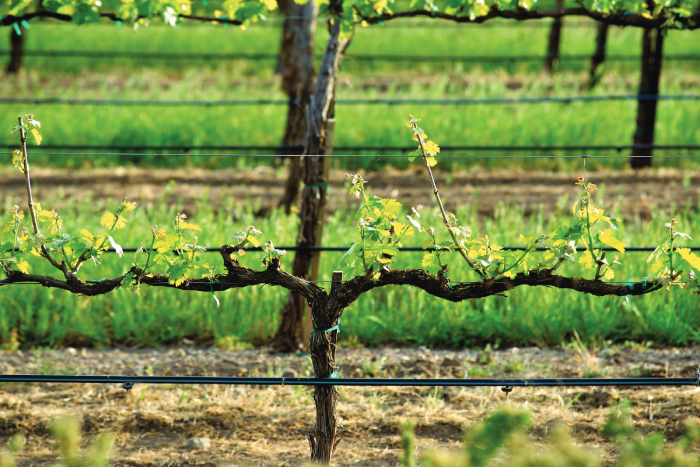
Pruning isn’t about cutting everything. It’s about directing energy exactly where it belongs. Think of it like guiding a teenager with a car key and no plan.
They’ll go anywhere if you don’t intervene.
Muscadines have a wild streak, and that’s part of why folks love them. They’ll climb anything they can wrap a tendril around – old fences, barn corners, trees, even that tool you forgot to put back in the shed. But giving them a solid trellis or arbor isn’t just about tidiness. A good trellis will encourage better airflow, better fruit set, and easier harvesting. It also helps keep the vines off the ground, where pests and diseases like to hang out.
Fertilizing Without Burning
Twice a month – on the 1st and 15th – I’ll fertilize my vines using nitrogen-rich amendments, such as 10-10-10, Chilean nitrate, ammonium sulfate, or calcium nitrate.
But here’s the secret: Never sprinkle fertilizer right next to the plant.
If you do, you’ll burn the plant faster than a forgotten skillet of cornbread. Spread the fertilizer along the water line instead, at least 12 inches away from the trunk. First-year vines get one handful in a circle around the trunk. Older vines get two handfuls, scattered in a long line beneath the drip zone. That long strip of fertilizer encourages roots to stretch wide and strong.
Muscadine Plants Pest
Japanese beetles will eat little holes in muscadine leaves and invite their friends. Ants are attracted to the aphids, and before you know it, your grape vines will be hosting a full backyard barbecue without your permission.
Do I spray? Not usually. A hungry infestation can be a problem, but most summers, the vines shrug it off like a Southerner ignoring humidity. Tough plants make their own arguments.
Speaking of pests: Muscadines invite more friends than foes. Honeybees, native pollinators, predatory wasps, lady beetles, and even small garden birds are drawn to the vines. They come for the nectar, the shade, and the endless little hiding places. In return, they help manage aphids, caterpillars, and mites long before you ever think about reaching for a spray. A healthy muscadine vine is really a tiny ecosystem, buzzing and humming all summer long.
Muscadine Season
Everyone asks the same question: “When do you let them produce fruit?” Here’s the truth: not too early. On young vines, I pluck most of the clusters in spring. Growth first, production later. But I always leave just a few. I want a taste. I want to remember why I’m out there sweating in July, staring at leaves like they’re misbehaving livestock.
My love for muscadines comes from childhood. I had a great-grandmother who grew them. We’d sit on the porch, swinging and eating grapes until someone told us to stop because we’d “mess up our appetite.” We never listened. The sugary snap of those thick-skinned grapes carries the taste of summer: hot days, quiet porches, and good company.
And now that I’m an adult, they’ve always been more than a crop – they’re a memory. The first time I planted my own muscadines here on my Georgia homestead, I felt something familiar stir. The smell of those warm leaves in the sun took me straight back to childhood summers, climbing fences I probably shouldn’t have, reaching for grapes just out of reach, and feeling 10 feet tall when I finally grabbed one. I think that’s why some folks call muscadines the jewel of the South – not just because they shine on the vine, but because they hold memories the way they hold sunlight: gently and with a whole lot of warmth.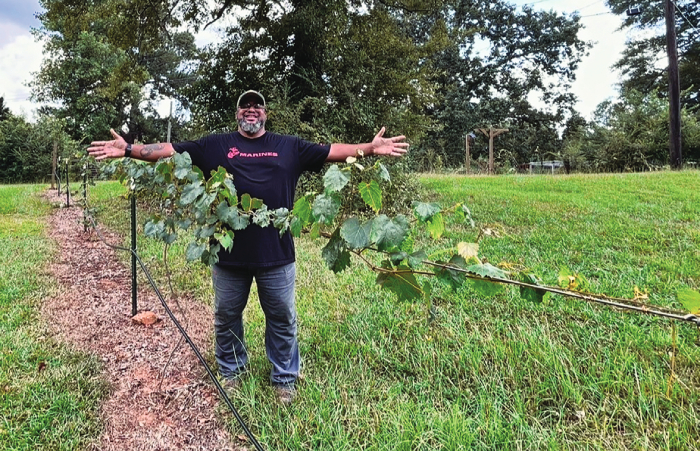
Now, on my own land, I grow muscadines to honor those memories. To bring that taste back into my life. To make sure that what fed the past doesn’t stay there.
Down here in the South, there’s nothing sweeter.
Daniel Tyler is a retired Army veteran and owner of Salty Dawg Homestead in Thomaston, Georgia. He focuses on animal husbandry and the connection between agriculture and mental well-being, with a mission to help others, especially veterans, find healing and purpose through gardening and homesteading.
Originally published in the July/August 2026 issue of Grit magazine and regularly vetted for accuracy.