Do you know when to plant beans, or the differences between growing pole beans vs bush beans? Learn all about how to grow beans at home.
With food prices climbing higher, maintaining a vegetable garden gives you fresh produce and keeps food costs down. If you’re looking to raise enough produce to take a bite out of your food budget, the common bean (Phaseolus vulgaris) is an excellent choice. Along with zucchini (and similar vegetables), indeterminate tomatoes, and greens, beans are among the highest-yielding garden vegetables in terms of food yield per area cultivated.
Beans are nutritious. They’re 40% starch by dry weight and have both insoluble and soluble fiber. The protein content of beans is 25% to 30% by dry weight, which is high compared with most vegetables. They’re also excellent sources of iron, magnesium, zinc, potassium, and folic acid. When paired with rice, beans are nutritionally complete — they supply all the required amino acids for good health. Excessive bean consumption can lead to flatulence, but people who eat beans often usually don’t have problems. Your body adapts to a bean-rich diet.
Bean Varieties: Pole Beans vs Bush Beans
There are around 400 cultivars of common beans. Chickpeas, lentils, peas, and peanuts are also legumes, as are less bean-like plants, such as mesquite, alfalfa, and clover. In addition, two other species in the genus Phaseolus — P. lunatus (lima beans) and P. coccineus (runner beans) — are commonly available to gardeners. The related genus Vigna gives us the adzuki, cowpea, and mung bean. Soybeans (Glycine max) are catching on as a garden crop. Coffee beans, vanilla beans, castor beans, and cocoa beans bear only a visual similarity to true beans and aren’t legumes.
Common beans have two growth habits: pole beans vs bush beans. Pole beans require a trellis or similar structure to support vines that climb vertically and spread horizontally. Bush beans have an upright growth habit and don’t need support; they don’t grow nearly as tall as pole beans and thus yield less. However, many excellent bush bean cultivars are available.
Beans are eaten at various stages. You eat the seed pod with snap beans (string or green beans), which are thicker than other bean types, with seeds just starting to develop when harvested and eaten. You can, however, let the seeds mature and harvest them for replanting next year. In some older cultivars of green beans, a tough layer of tissue — the “string” — develops along the length of the pod where it’s joined. Newer cultivars (stringless) have been bred so the string isn’t as tough. Snap beans are often green, but yellow (wax beans) and purple snap beans are also common.
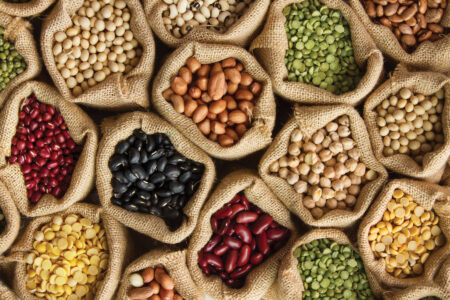
Shelled beans are harvested when the seeds are mature and have yet to dry out. Dry beans are left in the garden until the seeds dry out. Then gardeners discard the shells and eat the seeds. Shelled beans are eaten fresh, while dry beans can be stored for years if kept in a cool, dry place. Popular shelled and dry beans include pinto, black, kidney, great northern, navy, cannellini, and ‘Anasazi’ beans. Most of these offer multiple cultivars to choose from, in pole or bush habit (or, for some, both).
Where and How to Grow Beans at Home
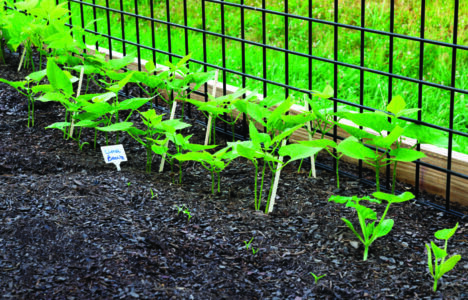
Beans do best in full sun but will grow adequately with as little as six hours a day. In the northern hemisphere, pole beans cast a shadow to the north, so plant them on the northern edge of your garden or somewhere they won’t shade other plants that thrive in the sun. Commercial bean trellises are available, or you can construct your own. The simplest type is literally a pole with 3 to 5 lines of heavy twine extending from the top to near the base, like a maypole. Your trellis must be sturdy enough to withstand the wind when the plants have climbed it.
Beans do best in well-drained, fertile soil. As with other legumes, beans form nodules on their roots — called “rhizobia” — that harbor nitrogen-fixing bacteria. Dinitrogen gas (N2) is the most abundant gas in our atmosphere but isn’t usable by plants. Nitrogen-fixing bacteria combine atmospheric nitrogen (N2) with six hydrogen ions (H+) and form two molecules of ammonia (NH3). The nitrogen in ammonia is usable by plants. The relationship between the bacteria and the legume is symbiotic — the plant trades sugars and other nutrients to the bacteria, which supplies the plant with a usable form of nitrogen.
There’s a popular myth that legumes “leak nitrogen” into the soil and planting legumes increases soil fertility. Unfortunately, this isn’t true. The bacteria produce enough nitrogen for themselves and nearly enough for legume crops, but don’t waste energy producing excess nitrogen that dissolves into the soil. Nitrogen from these bacteria ends up in the plant. If you compost or shred your bean plants and stir them into your garden soil, you can reclaim much of this nitrogen. When planting beans, use a “complete” fertilizer whose NPK (nitrogen, phosphorus, and potassium) rating is more P and K than N, whereas you may want more N for other green crops.
Plant beans 6 to 8 inches apart in rows 2 to 3 feet apart. Seed packets generally give instructions on spacing for particular cultivars. Plant with slightly tighter spacing in a small area, such as a raised bed. For example, plant the beans in a quincunx pattern — the pattern of dots designating a “5” on a six-sided die. If you plant beans in rows and columns with 9-inch spacing in both directions, plant a bean in the middle of each group of four; every plant will be spaced a little more than 6 inches from its neighboring plants.
When to Plant Beans
Beans germinate and grow best when soil temperatures are between 70 and 80 degrees Fahrenheit. Waiting for these temperatures for when to plant beans in the spring may delay planting. As such, most gardeners wait to plant until the soil temperature is above 60 degrees. Snap beans take around two months to grow, while shelled and dry beans generally take 3 to 4 months.
To speed germination, soak seeds in water for around three hours immediately before planting. This isn’t required, however. If growing beans for the first time, you may choose to treat them with an inoculant that coats them with nitrogen-fixing bacteria. Those bacteria will already be present if you’ve previously grown beans in your garden. Even if you haven’t grown beans before, the appropriate bacteria are likely present already. However, inoculating the seeds ensures that the rhizobia form quickly and supply nitrogen to the plants early in their development. To treat the seed, place it in a bag with inoculum added. Shake the bag to lightly coat the seed and then plant it.
Caring for Beans
Besides watering and weeding, there’s little to be done while the beans grow. If possible, avoid overhead watering, as it can cause fungal problems on the leaves. If you’d like, add a second dose of fertilizer when the bean pods first appear around the one-month mark. Interestingly, beans are heliotropic — their leaves track the sun as it arcs across the sky.
Harvesting Beans
Pick snap beans when they’ve reached their full length (often around 6 inches) but are not yet showing “bumps” from seeds within the pods. The seed packet should give an estimate of how many days it will take the plants to mature. However, this is just an estimate. When you first think shelled beans are ready, pick one or two pods and open them. If the beans are indeed ready, harvest the rest. If not, wait a few days and try again.

Dry beans are ready to harvest when the pods have turned brown and dried out. If your dry beans are just about ready to harvest, watch the weather. Harvest a bit early if you have rain in your forecast. Wet bean pods will yield sprouted or mildewed beans. Harvest dry beans when the pods aren’t quite dry by pulling the whole plant up and hanging it somewhere to dry.
Conclusion
Whether growing pole or bush beans, these vegetables are a simple, nutritious addition to both your pantry and garden. Knowing the basics for how to grow beans at home will set the foundation for successful harvests for many years to come.
Chris Colby is an avid gardener who lives in Bastrop, Texas, with his wife and cats.