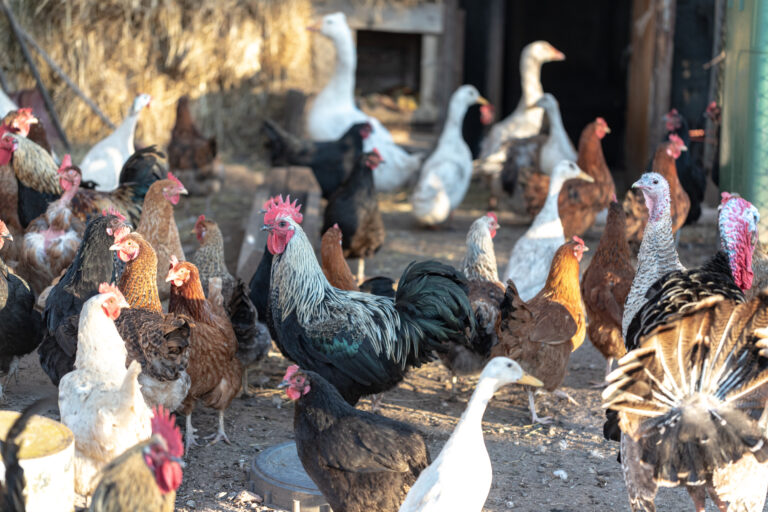
Poultry is a popular addition to farms and backyards everywhere. When shopping for birds, though, beginners may be overwhelmed by the hundreds of poultry breeds available. A good place to start is by learning the difference between heritage and crossbreed poultry, and evaluating which type is best for your situation.
The Livestock Conservancy (TLC) is a nonprofit organization whose mission is to protect endangered poultry and livestock breeds. TLC defines heritage poultry as those whose characteristics have been standardized (usually called “standard bred”) by the American Poultry Association (APA). A heritage breed bird can mate naturally without extreme measures of assistance; has a slow growth rate; and has a long, productive outdoor life span. Usually, heritage birds produce eggs for a longer period of their lives and have greater disease resistance than crossbreeds. Many gorgeous birds are found among the heritage breeds, and you’ll be able to show them. When heritage birds mate with each other, they produce true to type, with the same characteristics as their parents.
Heritage breeds produce about half dark meat and half white meat. Even though heritage poultry take longer to grow to adulthood, some people prefer the flavor and believe they’re worth the wait.

Crossbred birds are often developed commercially to replicate specific characteristics, such as heavy meat or egg production. They can’t be bred true to type on your property. This is one reason they’re disparaged, but they’re useful for providing diverse genetics within lines. Careful selection can produce stock with better production rates or greater disease resistance.
Crossbreeds can be anything from a backyard mix to birds bred for specific commercial purposes. An example is Golden Comet hens, which can average nearly one egg a day at only 16 weeks of age. Another example is that of sex links – chickens bred so farmers can determine their sex by color immediately after hatching.
Here are some heritage and crossbred chicken, turkey, duck, and goose options to evaluate for your own property.

Poultry Breeds: Chickens
Cornish Cross. The famous Cornish Cross revolutionized the meat industry, having been selected to grow quickly and develop large breasts. While most chicken breeds are ready to be harvested at 4 to 6 months, the Cornish Cross is ready at about 8 weeks. These birds can’t be kept long term, as they’ll develop leg issues because of their weight.
Easter Egger. Any crossbred chicken that lays blue-to-green-colored eggs is known as an Easter Egger. Many have been crossed with the heritage Ameraucana breed. They usually weigh about 6 pounds, lay approximately 240 eggs a year, and are friendly birds, although the hens can be a bit flighty.
Rhode Island Red. A classic American heritage breed, Rhode Islands have a striking red color and a dual-purpose nature, producing quality meat and brown eggs. Roosters usually weigh over 8 pounds and hens over 6 pounds; the latter can lay 200 eggs per year. TLC Watch category.
White-Faced Black Spanish. This heritage breed’s name comes from its white face and black body feathers. Excellent meat birds and good layers, this breed is known for the large size of its white eggs. Somewhat flighty and lacking hardiness, adult roosters weigh about 8 pounds and hens about 61⁄2 pounds. TLC Critical category.

Poultry Breeds: Turkeys
Bourbon Red. This handsome heritage turkey has dark-red plumage. Toms often weigh 23 pounds and hens 14 pounds. Interest in Bourbon Reds is reviving because their meat is rich and flavorful, and their foraging habits make them fantastic pasture birds. TLC Watch category.
Beltsville Small White. Indicative of its name, the Beltsville Small White is on the smaller side, between 10 and 17 pounds for hens and toms, respectively. This heritage breed was developed to fit better into home ovens and to suit smaller families. This makes them a fantastic bird for modest properties, where they’re easy to manage and can be allowed to breed naturally. TLC Critical category.

Broad-Breasted White. Developed for commercial production, this crossbred meat bird reaches weight quickly, as with the Cornish Cross chicken. At 20 weeks, toms will be 40 pounds and hens will be 25 pounds. About 70 percent of the meat produced by a Broad-Breasted White is white meat. Because of their size, they typically need to be artificially inseminated.
Orlopp Bronze. This crossbred turkey was developed to satisfy a specific market for meat. Hens reach 23 pounds by 18 weeks of age; males take a little longer, but will weigh about 40 pounds at 20 weeks.

Poultry Breeds: Ducks and Geese
Dutch Hookbill duck. Known for their docile temperament, these heritage ducks are distinguished by a downward-turning bill. Dutch Hookbills can lay more than 225 eggs a year. They’re great foragers, but their flying ability may be a problem for some property owners. TLC Critical category.
Saxony duck. This all-purpose heritage breed is known for both eggs and meat. Saxonies are good foragers and excellent layers, producing up to 240 large eggs annually. Mature birds weigh between 6 and 9 pounds. Although they don’t grow as quickly as some breeds, their meat is renowned for its excellent flavor. TLC Threatened category.
Golden 300 Hybrid duck. This crossbred duck is a wonderful layer, often producing more than 300 eggs yearly. Developed by the Cackle Hatchery for commercial egg production, Golden 300 Hybrids have a docile personality.
Steinbacher goose. These heritage geese originated in Germany and are calm and outgoing. They’re great meat birds, with an average weight between 11 and 15 pounds. TLC Critical category.
Pilgrim goose. This calm, friendly heritage breed is auto-sexing, meaning the goslings maintain gender-specific coloring into adulthood. A useful medium-weight meat breed, the Pilgrim reaches weights of 13 to 14 pounds. TLC Threatened category.
Homegrown crosses. A cross of any of your favorite homestead geese can exhibit excellent qualities. You may find it fun to play around with crossing and developing your own individual geese especially suited to your land.

Incubation Tips for Healthy Chicks
Incubation is similar for chickens and turkeys as far as humidity, but ducks require higher levels throughout incubation and into hatching. Chickens and turkeys require 50-55% humidity during incubation and 70% during hatching, while ducks require 55-60% during incubation, and 80% at hatching. It may not seem like a huge difference, but it can be critical for a successful waterfowl hatch. If your incubator and hatcher struggle to reach those levels, try adding a saturated sponge. The pores on the sponge allow for a greater evaporative surface and can help raise the humidity to the necessary levels.

Conservation Priority List
The Livestock Conservancy organizes endangered heritage poultry breeds into several categories, including the following.
Critical
Poultry breeds with an estimated population of fewer than 500 birds in the U.S., and fewer than 1,000 birds globally.
Threatened
Breeds with fewer than 1,000 birds in the U.S., and fewer than 5,000 globally.
Watch
Breeds with fewer than 5,000 birds in the U.S., and fewer than 10,000 globally.
Virginia Montgomery is a full-time writer and beginning homesteader who runs a small backyard farm with her family.
Hatcheries
- www.CackleHatchery.com, 417-532-4581
- www.ChickenScratchPoultry.com, 618-643-5602
- www.FreedomRangerHatchery.com, 717-964-4287
- www.McMurrayHatchery.com, 800-456-3280
- www.MetzerFarms.com, 800-424-7755
- www.MyersPoultry.com, 814-539-7026
- www.StrombergsChickens.com, 800-720-1134