What is forage? Good soil and optimum harvest times can improve grasses, forbs, and brush in pastures for livestock forage.
Nature made the most of our four-legged friends with digestive systems that were designed to digest coarse, cellulose-laden plant material. As part of a diversified ecosystem, much of the world’s topography is perfectly suited to the growing of forages such as grasses, forbs and brush. Due to the variability of soils and terrains, not all of our arable land can be used to grow corn and soybeans, or fruits and vegetables that are easily cultivated for human consumption. Most forages, which are indigestible for simple-stomached humans, when consumed by wild or domesticated animals, provide an indirect means by which we attain additional food and fiber from the earth.
Whether you own one cow, goat, sheep, horse, donkey, llama or alpaca, or you own several hundred, you know that forages are the foundation of their nutrition and health. You’ve no doubt been confronted with the issue of forage quality and been confused about what it means and how it relates to the health of your animals.

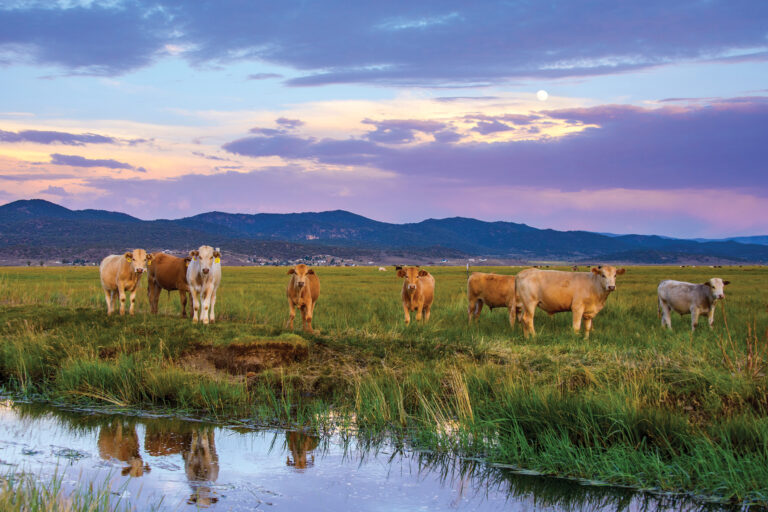
When we discuss forages within the context of domestic animal agriculture, we are generally referring to grasses and legumes that are grown in pastures or on hillsides for grazing, or specifically grown in fields that are accessible for the production of hay or silage. Whether you own or rent a few acres of land that you use for pasture, or you raise forage on a large scale, you’ve probably seen that your animals will quickly devour some species while they turn their noses up at others.
Quality Equals Nutrition
The bottom line for what determines forage quality is based upon the level of nutrition – energy and protein – that it can supply to your animals. The more biologically immature a plant is, be it grass or legume, the more carbohydrates and protein it has to offer when it’s consumed. And depending upon the purpose or goals for which you are engaged in animal agriculture, whether it’s for food, fiber or pleasure, the higher the quality – meaning digestibility – of the forage, the easier it will be for you to attain your goals.

Plants such as grasses and legumes, like every other living organism, follow a life cycle that includes growth, maturation, reproduction and expiration. At the beginning of their life, plants emerge from seeds and derive nutrients from the soil, starting off small and tender. As they grow, they become taller, and when the time is right, they produce seeds. While all this is happening, the structural and molecular makeup of the plant is constantly changing. Photosynthesis creates sugars and proteins that start off in leaves and tender stems. As the plant matures, stems must become thicker and stronger to support the weight of the plant, leaf production in many plants is replaced by flowering (but not in all plants), and eventually the protein and energy is diverted into seed production.
Chemically, all plants are made up primarily of carbohydrates, proteins, vitamins and minerals. Most plants also have some fats (lipids), but, for the most part, that has little to do with the quality, palatability or digestibility of the plant. Every plant has its own unique combination of carbohydrate fractions that influence its digestibility. When a plant is young, much of the carbohydrates are in the form of simple sugars such as glucose or fructose. As the plant matures, the sugars develop into pectins and starches, and eventually into cellulose. It’s the ongoing development of these cellulosic matrices that are responsible for the structure and rigidity of a stem. As plant material ages, another structural carbohydrate called lignin tends to accumulate and it is largely indigestible, except by highly specialized invertebrates.
Early Vegetative Is the Best
Forages in the early or mid vegetative state offer the best nutrition for your animals. At these stages of growth, the plant – grass or legume – will still have a larger leaf-to-stem ratio, meaning that there is more protein to be found in the plant and that the sugars have not been completely converted to cellulose. Another term used when describing forage quality is the “fiber” content, which is synonymous with the accumulation of cellulose and lignin. The more mature a plant becomes, the higher the fiber content and the less digestible it will be in your animals’ digestive systems. The fiber level in all plants is inversely proportional to both protein levels and digestibility.

In spring, you’ll find that the new growth in your pastures is often lush after the winter rains or snows. This is the time when the plants will be in the early vegetative stage and be the most nutritious for your animals. Remember, though, these plants don’t know that you want to use them for animal feed. They have only one goal, biologically, and that is to reproduce themselves and propagate their species. So in a very short time, your grasses will shoot up and produce a seed head – or if you have clover, it will flower.
Ask Lots of Questions
If you own a few animals and have a pasture with “some sort of grass or weeds” and you are new to the forage quality game, it will probably take you a few seasons to get the hang of what sort of forage you can grow, how fertile your soils are, and how much fertilizer or compost you may want to add. You will also come to know how well or how poorly your horses, cows, goats or sheep do on it, and how much supplementation you will need to compensate for the lesser quality forages.
Don’t be afraid to talk to neighbors or call your local extension agent. By spending some time observing your animals’ grazing habits, you’ll discover that they have a natural knack for choosing the best fare – provided the pasture isn’t grazed down to the nubs, which is a whole different problem. When pastures are overly mature or overgrown, your animals will avoid the broadleaf weeds or the overly mature, stemmy plants, and will instead focus on the tender grasses that are closer to the ground.
The forages you grow or purchase are the foundation for your animals’ diets, health, growth and production, and the better the quality of forage, the more efficiently your animals will utilize it. For your cows, goats and sheep, which are ruminants, or for your horses, which are hindgut fermenters, all foraging species require a minimum of 30 percent of their diets to be vegetative and forage plant material in order for their digestive systems to function properly.

If you’re a grazier and prefer to pasture your animals as much of the year as possible, you’ll find that it’s both a science and an art to figure out how much nutrition you can get from a paddock or field. You’ll need to do some arithmetic to see how many pounds of feed your animals will consume per day, and then determine if your acreage can keep up with those nutritional requirements. You’ll need to determine the optimal stocking density of a pasture so as to stay ahead of the grass – not letting it get too mature – but at the same time being careful not to over-graze the system. Rainfall, temperature and hours of daylight will also influence how many animals you can keep on a paddock and how well the yield holds up to keeping your animals properly fed.
Making Hay
Along with pasturing and grazing, forages are also harvested and dried for hay or ensiled and preserved as high-moisture forage. While there are certain procedures that influence the quality of the final hay and silage product – such as protein degradation due to overheating in the case of hay and silage, or spoilage due to a poor ensiling process – the nutritional quality of hay and forage crop silages is still mostly dependent upon stage of plant maturity, just as it is as a fresh forage.

Excessively mature forages with low fiber digestibility cannot be reversed by making it into hay or silage, and the protein levels are not magically resurrected by mowing and baling or ensiling. You can’t make a silk purse out of a sow’s ear.
Sample Your Forages
Beyond the process of subjective evaluation in the field and monitoring animal performance, or lack thereof, the next level of sophistication in determining forage quality is through analysis by a forage testing laboratory. The accuracy of forage testing in commercial laboratories, both with near-infrared technology (NIR) and the wet chemistry process, has evolved significantly in recent years and continues to do so as new tests are developed and the biology of plant components and how they function in an animal’s digestive system are better understood.

An explanation of the complexities of the many different assays a laboratory can perform on plant tissue and the mathematical formulas used to determine energy levels are beyond the scope of this article. However, knowing some of the most basic components of forage – such as protein, fiber and caloric potential – enables animal owners to determine what level of nutrition a certain forage will provide an animal, as well as helping to determine a market value or pricing point for the forage when buying or selling.
Forage sampling equipment is available online, and with the help of an animal nutritionist or your local university extension personnel, you can determine if a certain forage will provide the necessary nutrition, and if there are better alternatives based upon quality and cost of forages available. Excellent recommendations are also available from agronomists and soil scientists who can guide you in the right direction for optimal management of pastures and rotational grazing techniques as well as fertilizing and harvesting of forage crops.
Whether you live in a region of the country that lends itself to smaller pastures that depend on rainfall, or in more arid regions that require irrigation, forage for domestic animal agriculture is grown just about everywhere. Focusing on high-quality forages will always be a benefit to your animals.
Learn more about making your own hay by reading Choose the Right Hay Baler.
John Hibma is a ruminant nutritionist, a member of the American Registry of Professional Animal Scientists (ARPAS), and a freelance writer residing in Connecticut.